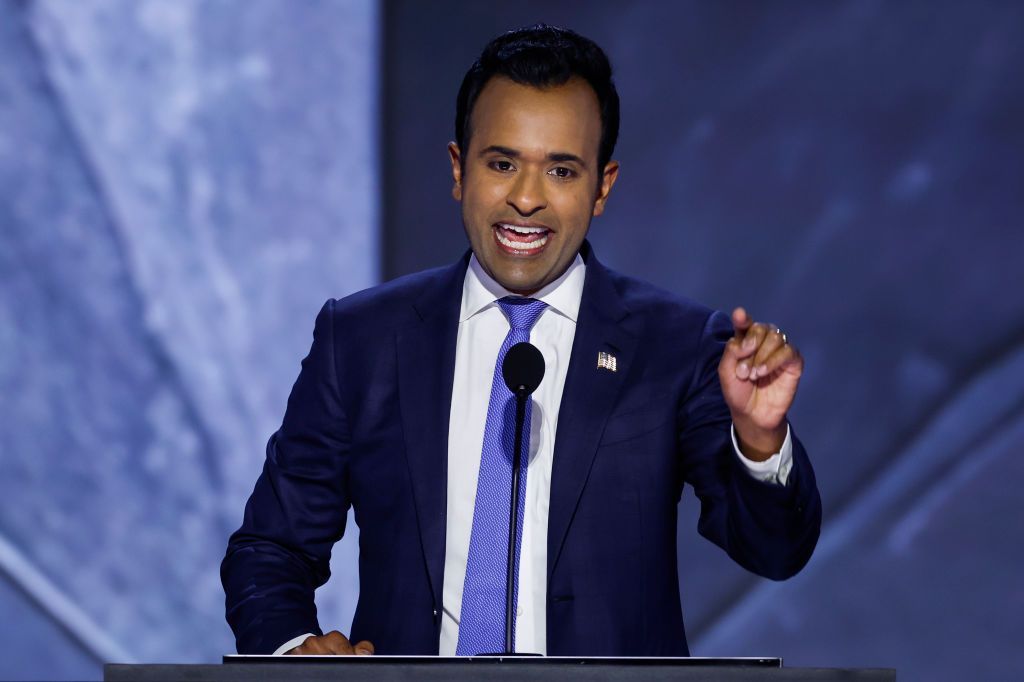
On Tuesday, a seismic shift in Ohio Republican politics took place, as former presidential candidate and loyal Donald Trump ally Vivek Ramaswamy locked up the GOP nomination for governor, clearing a path for him to lead the traditionally manufacturing-heavy Rust Belt state in what is already shaping up to be one of the most watched general election races of 2026.
Unconfirmed preliminary results from the Ohio primary confirm Ramaswamy, a 38-year-old health tech entrepreneur, easily defeated his only remaining primary challenger Casey Putsch – a car designer best known for his automotive-focused YouTube channel – to advance to the November general election, multiple U.S. media outlets reported Wednesday.
Ramaswamy first catapulted onto the national political stage in 2023, when he launched a long-shot bid for the 2024 Republican presidential nomination opposite Trump. Though his rapid-fire speaking style and unapologetically conservative tone made him a viral favorite during primary debates and earned him a nationwide social media following, he dropped out of the presidential race early after failing to gain traction with Republican voters. Immediately after exiting the race, he threw his full support behind Trump, quickly rising to become one of the former president’s most prominent and visible surrogates during the 2024 general election. He also played a key early role in developing Trump’s proposed Department of Government Efficiency initiative before handing off leadership of the project to billionaire entrepreneur Elon Musk.
When he announced his candidacy for Ohio governor, Ramaswamy cleared the field of most high-profile Republican contenders. To fuel his campaign, he has drawn heavily from his personal wealth, loaning his campaign committee $25 million, according to a report from The Columbus Dispatch. On Tuesday, he benefited from both his pre-existing national name recognition and a reshuffling of Ohio’s Republican Party leadership triggered when former U.S. Senator JD Vance of Ohio ascended to the vice presidency. Vance, a fellow Trump-aligned Republican, traveled to Cincinnati on Tuesday to cast his ballot for Ramaswamy and other GOP candidates.
Trump publicly celebrated Ramaswamy’s primary victory in a post to his Truth Social platform Tuesday, writing: “I know Vivek well, competed against him, and he is something SPECIAL. He is Young, Strong, and Smart!” Current Ohio Republican Governor Mike DeWine, who is barred from seeking re-election this year due to strict state term limits, has also endorsed Ramaswamy.
The general election will pit Ramaswamy against Democratic nominee Amy Acton, Ohio’s former state public health director who rose to prominence for guiding the state’s response to the COVID-19 pandemic. Acton ran unopposed for the Democratic nomination, and the contest is already shaping up to center heavily on the ongoing political fallout of pandemic-era public health policies.
In 2020, under DeWine’s leadership, Ohio adopted a more moderate approach to pandemic restrictions than many other Republican-led states, implementing measures including temporary bans on in-person dining at restaurants and a last-minute postponement of the state’s 2020 presidential primary to slow virus spread. Six years later, widespread conservative backlash to those policies – including mask mandates and school closures – has given Ramaswamy a opening to attack Acton, who was the public face of Ohio’s pandemic response.
Ramaswamy recently released a campaign ad accusing Acton of abusing her power by unilaterally postponing the 2020 primary in defiance of a court order. In an unusual rebuke that upended expectations, DeWine, who has endorsed Ramaswamy, stepped forward to defend Acton from the claims. “I told her to issue the health order,” DeWine told local NBC affiliate NBC4. “The decision was mine.”
Ohio has trended sharply toward the Republican Party in recent election cycles, but political analysts expect the general election race to be highly competitive, with spending projected to skyrocket as both parties pour resources into the contest ahead of the November vote.
In adjacent Indiana, another high-stakes Republican primary drama unfolded Tuesday, as seven incumbent GOP state senators who defied Trump’s demands to pass a partisan pro-Republican redistricting map last December faced primary challengers backed by the former president. Last year, 21 Senate Republicans joined all 10 Democratic lawmakers to block Trump’s preferred redistricting plan, defying intense public pressure from the former president, who warned that any Republican who voted against the plan would risk losing their seat in a primary challenge.