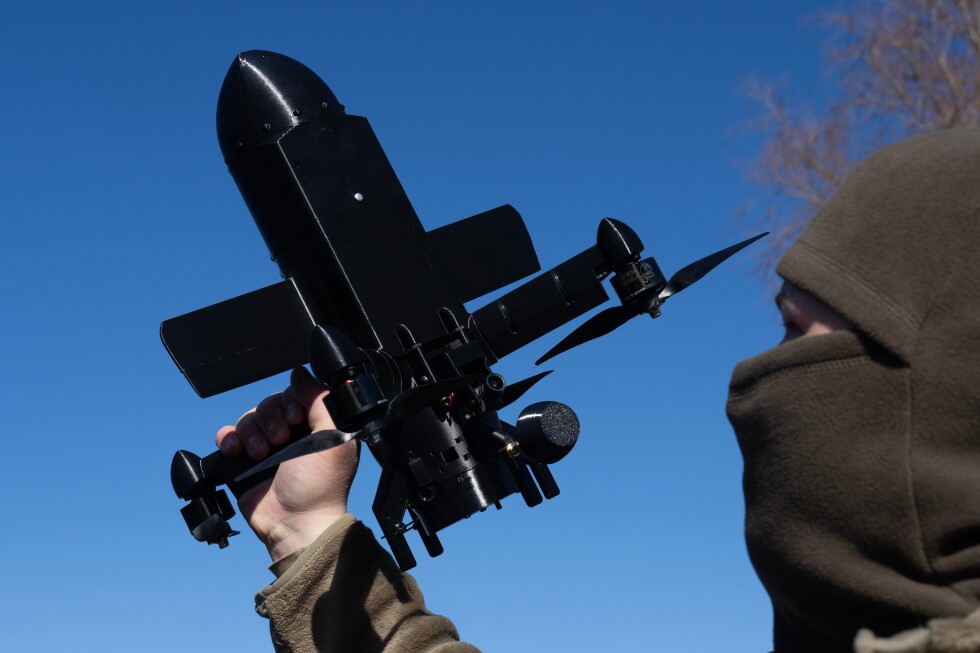
In a significant milestone for Ukraine’s air defense campaign against Russian aggression, Ukrainian Defense Minister Mykhailo Fedorov announced that interceptor systems shot down over 33,000 Russian drones of varying types in March. This figure marks the highest monthly total of intercepted Russian unmanned aerial vehicles since Moscow launched its full-scale invasion in February 2022.
Alongside defensive advances, Ukraine has expanded its offensive drone capabilities. The country’s domestically produced long-range attack drones carried out a third strike on a key Russian Black Sea oil infrastructure site in less than two weeks, targeting the refinery and terminal at the Black Sea port of Tuapse. The Tuapse refinery, a major asset in Russia’s energy network that generates critical revenue for Moscow’s war effort, has now faced three coordinated attacks by Ukrainian defense and security units this month alone. According to Ukraine’s Unmanned Systems Forces, the first two strikes earlier in March destroyed 24 oil storage tanks and damaged four additional facilities. Krasnodar Governor Veniamin Kondratyev confirmed that local residents near the site were evacuated as a precaution on Tuesday, though he did not release details on the number of evacuees or the duration of the evacuation order.
Ukraine’s domestic drone industry has emerged as a game-changing asset in the conflict against Russia’s larger conventional military force. Kyiv’s cutting-edge, battle-proven drone technology has already attracted widespread military procurement interest from the global defense community. Ukrainian officials report that demand for Ukraine’s interceptor drones, a core component of integrated air defense networks, has spiked among Middle Eastern and Gulf nations amid ongoing regional conflicts including tensions with Iran.
To scale up production and operational effectiveness of interceptor drones, Ukraine has established a new dedicated command within its air force, Fedorov shared in a Monday Telegram post. Offensive capabilities have also seen dramatic growth: the Ukrainian Defense Ministry confirmed Tuesday that Kyiv has more than tripled the maximum range of its deep-strike drone operations since the 2022 invasion. What began as a 630-kilometer (400-mile) strike capability early in the war has expanded to roughly 1,750 kilometers (1,100 miles), allowing Ukrainian forces to target critical Russian military supply factories and revenue-generating energy infrastructure deep inside Russian territory.
Cross-border drone exchanges continued to inflict casualties on both sides this week. The Russian Defense Ministry stated Tuesday that its air defense systems intercepted 186 Ukrainian drones overnight across multiple Russian regions, the illegally annexed Crimean Peninsula, and the Black and Azov Seas. In the Russian border region of Belgorod, a Ukrainian drone attack left three civilians dead and three others injured, regional governor Vyacheslav Gladkov confirmed.
On the Ukrainian side, Russian drone attacks claimed three civilian lives and wounded five others across the country over the same period. In the northeastern Kharkiv region’s city of Chuhuiv, two civilians were killed, regional military administration head Oleh Syniehubov reported. One civilian death and five injuries were recorded in Kryvyi Rih, President Volodymyr Zelenskyy’s hometown. A separate Russian strike on Konotop in the northern Sumy region cut off the city’s electricity and water access. To date, independent third-party verification of all Ukrainian and Russian claims about drone strikes and damage has not been completed.