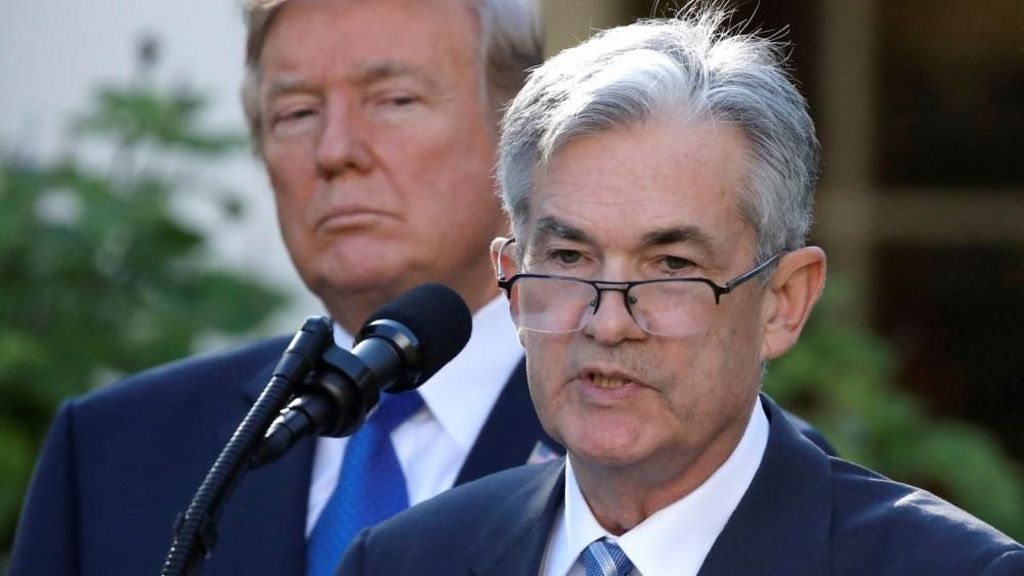
In a dramatic development that intersects long-running political tensions, Federal Reserve leadership battles, and questions of central bank independence, the U.S. Department of Justice has formally abandoned its criminal investigation into Federal Reserve Chair Jerome Powell over allegations of unauthorized building renovation cost overruns.
Instead of a DOJ-led probe, the inquiry will now be handled through an internal review overseen by the Federal Reserve’s own inspector general, U.S. Attorney Jeanine Pirro announced this week. The shift comes amid a tangled web of political friction that stretches back more than a year, tied to President Donald Trump’s long-running public feud with Powell over monetary policy.
Last year, Trump first raised public complaints that the cost of the Federal Reserve’s headquarters renovation project had ballooned far beyond approved budgets, a critique that came in the middle of repeated demands from the president for the Fed to slash interest rates. After returning to office last year, Trump ramped up pressure on Powell, even floating the possibility of firing the Fed chair – a move that legal analysts widely argued would exceed executive authority and violate long-standing norms of central bank independence.
Powell, whose current term as Fed chair is set to expire imminently, made waves in January when he took the unprecedented step of publicly disclosing that the Department of Justice had served subpoenas to the Federal Reserve and was weighing a criminal indictment against him over testimony he delivered to the Senate committee regarding the building renovation costs. In that groundbreaking public statement, Powell called the DOJ investigation “unprecedented” and argued it had been launched solely because of Trump’s anger over the Fed’s refusal to bend to political pressure and cut interest rates. Powell emphasized that the core issue at stake was the ability of the U.S. central bank to make monetary policy based on economic data rather than political intimidation, noting “This is about whether the Fed will be able to continue to set interest rates based on evidence and economic conditions, or whether instead monetary policy will be directed by political pressure or intimidation.” The White House has previously maintained that Trump had no knowledge of the original DOJ investigation.
The decision to drop the probe follows a standoff over Trump’s nomination of Kevin Warsh to replace Powell as the next Fed chair, which is currently working its way through Senate confirmation. Key Senate Republican Thom Tillis had publicly refused to throw his support behind Warsh’s nomination until the Trump administration dropped the investigation into Powell, creating a critical roadblock for the White House’s priority of installing a new Fed leadership aligned with the president’s monetary policy goals.
In an official statement released after the announcement, White House spokesman Kush Desai defended the shift to an internal probe, arguing that “American taxpayers deserve answers about the Federal Reserve’s fiscal mismanagement, and the Office of the Inspector General’s more powerful authorities best position it to get to the bottom of the matter.” Desai added that the White House retains full confidence that the Senate will quickly confirm Warsh, framing his appointment as a necessary step to “finally restore competence and confidence in Fed decision-making.”
The development resolves one layer of tension in a fight that has shaken decades of norms around Federal Reserve independence, while setting the stage for the Senate to move forward on confirming a new Fed chair hand-picked by the Trump administration.