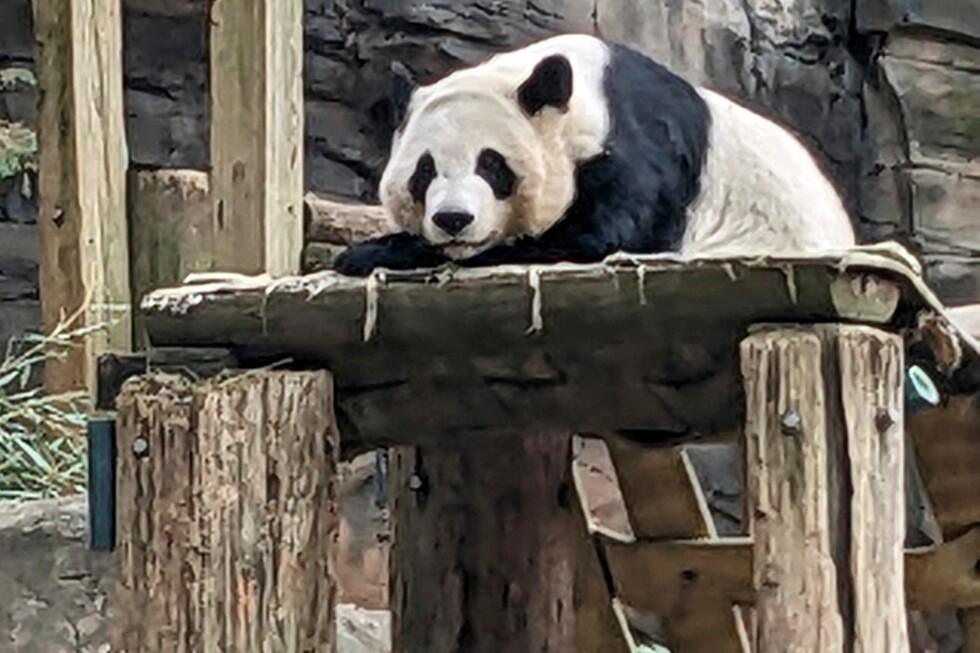
BEIJING – Decades after the end of its first giant panda partnership with China, Zoo Atlanta is poised to welcome a new pair of the beloved endangered species, marking a fresh chapter in Sino-U.S. panda diplomacy even as broader bilateral relations remain strained. The announcement came Friday, just weeks before U.S. President Donald Trump’s widely anticipated official visit to Beijing for high-level talks with Chinese leadership.
The China Wildlife Conservation Association (CWCA) confirmed in an official statement that the two new arrivals — male Ping Ping and female Fu Shuang, both raised at the Chengdu Research Base of Giant Panda Breeding, China’s leading giant panda conservation facility — will launch a 10-year collaborative conservation program under a bilateral agreement signed between CWCA and Zoo Atlanta in 2024. While the exact departure date from China for the pandas has not yet been released, preparations on the U.S. side are moving forward at full speed.
According to the CWCA, American teams are currently completing final upgrades to the giant panda enclosures to ensure the new pair will have a comfortable, secure habitat, with Chinese conservation experts providing ongoing technical guidance throughout the renovation process.
Zoo Atlanta first shared the news of the upcoming arrival Thursday, expressing overwhelming enthusiasm for the new partnership. “We can’t wait to meet Ping Ping and Fu Shuang and to welcome our members, guests, city, and community back to the wonder and joy of giant pandas,” said Raymond B. King, the zoo’s president, noting the institution was deeply honored to be chosen as stewards for the new pair.
This new agreement comes after the conclusion of Zoo Atlanta’s original giant panda program in 2024. During that first cooperation period, the previous pair of pandas, Lun Lun and Yang Yang, successfully birthed seven cubs during their tenure in Atlanta. By October 2024, all seven cubs had been relocated to China, with the original adult pair and their two youngest offspring departing for their return that same month.
For more than half a century, China’s global giant panda loan and conservation partnership program has served as a core pillar of Chinese soft-power diplomacy, widely known as “panda diplomacy.” Giant pandas first became a symbol of unofficial Sino-U.S. friendship back in 1972, when Beijing gifted a pair of pandas to the National Zoo in Washington D.C. shortly after the normalization of bilateral relations. Today, even as geopolitical and trade tensions between the two powers remain high, conservation experts and officials frame the renewed panda partnerships as a rare area of shared cooperation. Both Washington’s National Zoo and San Diego Zoo received new giant pandas from China in 2024, signaling a broader restart to the program after previous panda pairs returned to China amid shifting bilateral dynamics.
The CWCA emphasized in its announcement that the new decade-long cooperation with Zoo Atlanta will advance critical joint work across multiple key conservation and scientific areas, including giant panda disease prevention and treatment, joint research, and academic exchanges between Chinese and American experts. Officials from both sides highlight that beyond its diplomatic significance, the program carries major global value for the long-term survival of giant pandas, a species that has rebounded from endangered status thanks to decades of cross-border conservation work.