A new chapter of diplomatic engagement between longtime adversaries Israel and Lebanon has resulted in a three-week extension of their fragile ceasefire, U.S. President Donald Trump announced this week, following a fresh round of high-level talks between the two nations’ envoys hosted in Washington. The initial ceasefire, brokered last week after the first direct high-level negotiations between the sides in 30 years, was scheduled to expire Sunday, and its extension keeps open the window for de-escalation after more than seven weeks of open conflict between Israel and the Iran-aligned militant group Hezbollah.
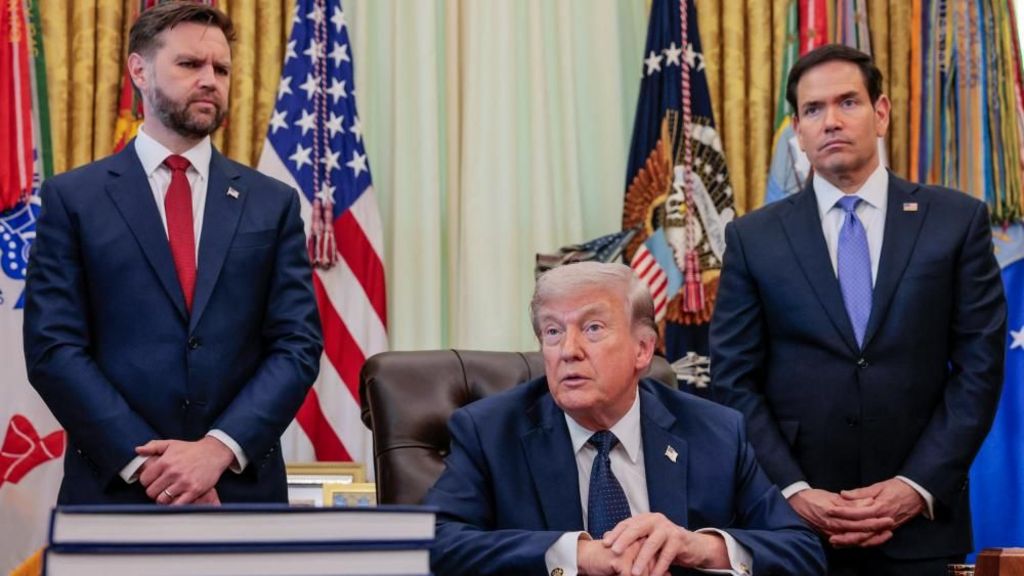
Trump made the announcement first on his social platform Truth Social, noting the Washington-based meeting between envoys “went very well.” Speaking alongside U.S. Senate lawmakers JD Vance and Marco Rubio in the Oval Office, the president added that the U.S. will deepen cooperation with Lebanon to secure its borders against Hezbollah, and confirmed that both Lebanese President Joseph Aoun and Israeli Prime Minister Benjamin Netanyahu have been invited to visit the White House in the coming weeks to continue negotiations. “They do have Hezbollah to think about,” Trump said. “We are going to be working with Lebanon to get things straightened out in that country. I think it will be a wonderful thing to get this worked out simultaneously with what we are doing in Iran.”
Lebanese Ambassador Nada Hamadeh Moawad and Israeli Ambassador Yechiel Leiter joined Trump for the Oval Office remarks, and both diplomats commended the U.S. leader for his hands-on role in advancing the talks. Leiter emphasized that both nations share a core goal of eliminating what he described as Hezbollah’s “malign influence” from Lebanese territory.
Despite the diplomatic breakthrough for a ceasefire extension, violence has continued to plague the border region, with both sides trading accusations of ceasefire violations in the days leading up to this week’s talks. On Thursday evening local time, just as negotiations were getting underway in Washington, Hezbollah announced it had launched a rocket barrage against northern Israel in retaliation for what it called an Israeli breach of the truce. The Israel Defense Forces (IDF) confirmed it intercepted all incoming projectiles.
A day earlier, Lebanon filed formal accusations of war crimes against Israel after an Israeli airstrike in southern Lebanon killed one journalist and injured a second. The IDF has denied it intentionally targeted media personnel.
The current round of conflict erupted in early March, after Hezbollah launched a large-scale drone and rocket attack on Israel in retaliation for the killing of Iran’s supreme leader in a joint U.S.-Israeli strike on Iran on February 28. In response, Israel launched intense airstrikes across Lebanon, concentrated in the southern part of the country and the capital Beirut, and reintroduced ground troops into southern Lebanon, where it has maintained an occupation of 10 kilometers (6.2 miles) of Lebanese territory ever since.
Humanitarian costs of the conflict have been catastrophic, according to official data. Lebanon’s health ministry reports at least 2,294 people have been killed in Israeli attacks across the country since the outbreak of the latest war, a toll that includes 274 women and 177 children. On the Israeli side, Israeli authorities confirm Hezbollah attacks have killed two civilians, while 15 Israeli soldiers have died in combat operations inside Lebanon. United Nations data indicates more than one million Lebanese people — roughly one out of every five residents of the country — have been displaced by the fighting, most from southern Lebanon, where entire villages and residential areas have been destroyed by Israeli bombardment.
A major sticking point in long-term peace talks remains the future of Hezbollah, a Shia Muslim organization that operates as both a militant militia and a mainstream political party within Lebanon. The U.S., Israel, and many Lebanese political factions have demanded Hezbollah fully disarm, but the group has refused to enter any discussions about the status of its weapons. Lebanese President Aoun has repeatedly warned that forcing disarmament through military action would trigger internal Lebanese violence, arguing any resolution on the issue must come through negotiated dialogue with the group. For Hezbollah’s supporters, the group remains the only credible defense force for southern Lebanon amid the country’s weak central state institutions, a position that has been reinforced by the ongoing conflict.