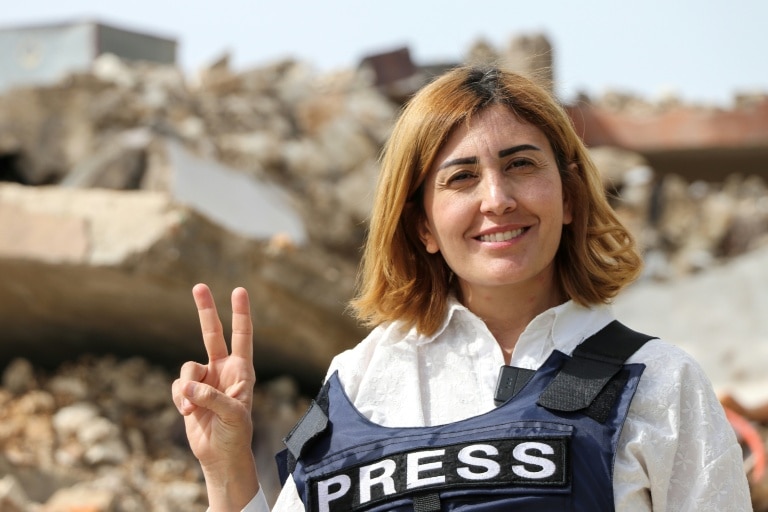
A fragile 10-day ceasefire between Israel and Hezbollah in southern Lebanon has been thrown into new controversy after an Israeli airstrike killed a seasoned Lebanese journalist and left another injured, triggering sharp accusations of deliberate war crimes from Beirut and condemnation from global human rights and United Nations officials.
On Wednesday, civil defense forces and Amal Khalil’s employer, Lebanese daily newspaper Al-Akhbar, confirmed the 42-year-old correspondent’s death. According to Lebanon’s National News Agency (NNA), Khalil and fellow journalist Zeinab Faraj had fled to a residential home in the border village of Al-Tiri after Israeli forces targeted a car traveling immediately ahead of them. That initial strike killed two people inside the vehicle: the mayor of Bint Jbeil, a nearby town under Israeli occupation, and his companion.
Moments after the pair took shelter, a second Israeli airstrike hit the house they were hiding in. Faraj was evacuated to a local hospital with non-life-threatening wounds, but Khalil was left trapped under rubble. The Lebanese Red Cross confirmed its teams were able to extract Faraj, but were forced to retreat from the area after receiving an imminent strike warning, leaving them unable to reach Khalil. Rescue operations could only resume several hours later after Lebanese authorities coordinated with UN peacekeepers deployed to the southern border region to regain access, with Khalil’s body eventually recovered from the rubble.
Lebanese President Joseph Aoun issued a formal statement Thursday accusing Israel of deliberately targeting journalists to cover up its military actions against Lebanese civilians, calling the killing an unambiguous war crime. Prime Minister Nawaf Salam echoed the condemnation in a post on X, noting that both targeting journalists and blocking access for emergency rescue teams violate international war norms, and confirmed his administration would formally bring the case to international judicial and human rights bodies. Lebanon’s health ministry additionally accused Israeli forces of targeting an ambulance clearly marked with the Red Cross emblem during the incident, a charge the Israeli military has denied.
The Israeli military offered a different account of the incident in its own statements, saying it had targeted two vehicles that departed from a Hezbollah military facility in southern Lebanon. It claimed the vehicles carried individuals classified as terrorists who had crossed the so-called “forward defense line” that Israeli forces established in southern Lebanon and were moving toward Israeli troop positions. An Israeli military spokesperson told Agence France-Presse Thursday that the incident remains under internal review, and denied that Israeli forces had blocked rescue teams from accessing the strike site.
Since the resumption of hostilities between Israel and the Iran-aligned militant group Hezbollah in October 2023, more than 2,400 people have been killed in Lebanon, a majority of them civilians. The 10-day ceasefire that went into effect last Friday was intended to open space for diplomatic negotiations to de-escalate the year-long cross-border conflict, which has displaced hundreds of thousands of Lebanese residents from the southern border region. Israel has maintained a forward presence in southern Lebanon and enforced a “yellow line” that bars displaced residents from returning to their homes in the area.
On Thursday, dozens of colleagues, family members, and supporters gathered in Khalil’s southern hometown of Baysariyeh for her funeral. Her coffin was draped in the Lebanese flag, decorated with flowers, and topped with her press helmet and vest, symbols of her work reporting from the front lines of the conflict. Hundreds more joined a protest in the capital Beirut to demand accountability for her death.
Global and regional rights groups have joined Lebanon’s leadership in condemning the killing, noting that Khalil is at least the fourth Lebanese journalist killed by Israeli strikes in southern Lebanon since the start of the current conflict. Reporters Without Borders (RSF) Middle East head Jonathan Dagher said the sequence of strikes that killed Khalil – the initial attack on the car, followed by the strike on the house where journalists had taken shelter, followed by the delay in rescue access – strongly indicates deliberate targeting of press workers and obstruction of emergency aid, both defined as war crimes under international law. Ramzi Kaiss, Lebanon researcher for Human Rights Watch, called for an independent, credible investigation into the killing, emphasizing that intentional strikes against civilians, including journalists, meet the legal definition of a war crime.
United Nations officials also weighed in on the incident. Stephane Dujarric, spokesperson for UN Secretary-General António Guterres, reaffirmed that targeting civilians and blocking humanitarian and emergency access are clear violations of international humanitarian law. Dujarric added that Guterres has repeatedly stressed that journalists must be allowed to carry out their critical work of documenting conflict without fear of harassment, attack, or death. Back in March, an earlier Israeli airstrike killed three other journalists in southern Lebanon, prompting UN human rights experts to call for a full international investigation into that incident.
Speaking from the Beirut protest honoring Khalil, local journalist Inas Sherri told AFP that international accountability is the only way to end the pattern of press killings. “If we were holding people accountable, Israel would not have continued killing journalists one after another,” Sherri said.