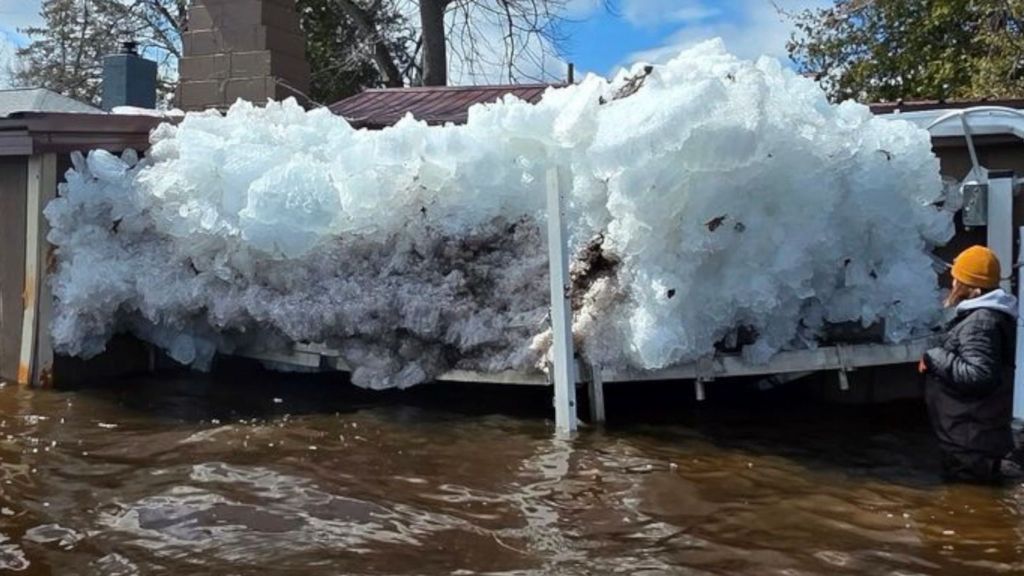
Residents of lakeside neighborhoods near Michigan’s Black Lake are confronting unprecedented damage this spring, as unseasonably large ice chunks propelled by rising floodwaters have slammed into waterfront properties, leaving destruction that photographs cannot fully capture.
The crisis began when a combination of sustained heavy spring rainfall and rapid snowmelt triggered a sharp rise in Black Lake’s water levels. As the ice covering the lake broke up, the swollen currents carried massive blocks of ice toward the shore, where they crashed into residential structures with enormous force.
Local residents report that the sheer size and momentum of the ice chunks have caused structural damage to foundations, siding, and waterfront infrastructure that is far more severe than typical annual ice movement. Many homeowners have been forced to evacuate temporarily as floodwaters continue to surround their properties, while assessment teams work to document the full scope of the damage.
Meteorologists link the event to this year’s late-season temperature swings, which kept the lake frozen longer than average before a sudden warm spell accelerated melting alongside spring rainstorms. Local emergency management officials have issued warnings for other waterfront communities across the region, urging residents to monitor water levels and prepare for potential evacuations if flooding and ice movement continue.