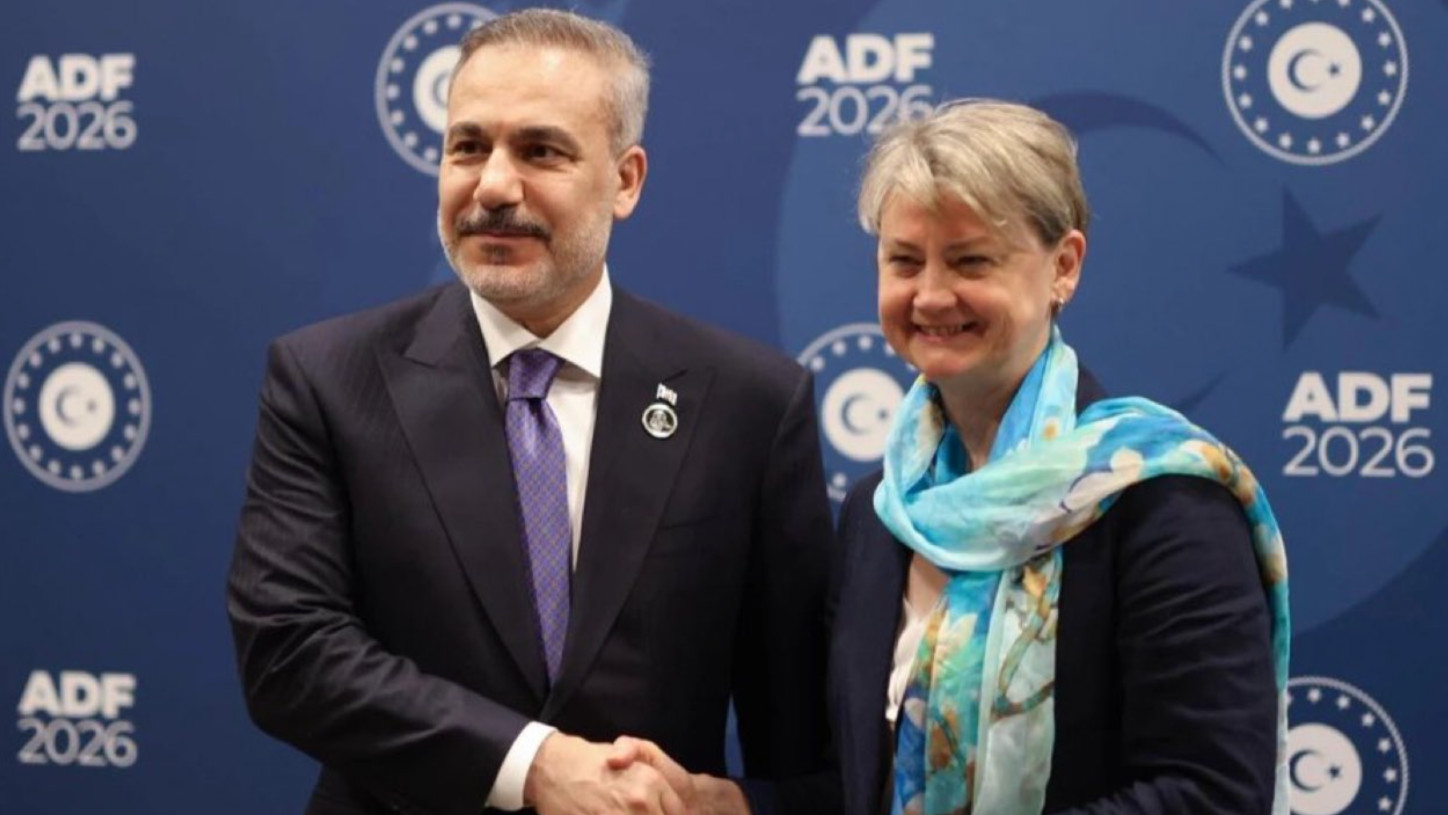
On Thursday morning, Turkish Foreign Minister Hakan Fidan touched down in London, kicking off a high-stakes two-day diplomatic visit that will culminate in the signing of a landmark UK-Turkey strategic partnership framework agreement by Thursday afternoon.
Fidan’s first scheduled engagement of the visit is a formal meeting with British Foreign Secretary Yvette Cooper set for 4 p.m. local time. While the full scope of the upcoming strategic partnership framework remains under wraps ahead of the signing, preliminary outlines of the agenda have emerged from diplomatic and media sources.
Turkish state-affiliated broadcaster TRT World has confirmed that Fidan plans to open the discussion by highlighting the steady upward momentum of bilateral ties between Ankara and London, and to lay out Turkey’s ambition to deepen cooperation across multiple priority areas. One key bilateral issue Fidan is expected to raise is the ongoing delays Turkish residents in the UK face when processing applications for Indefinite Leave to Remain (ILR), a long-term residency status that impacts hundreds of thousands of Turkish citizens currently living in Britain.
Defense industry collaboration and expanded energy sector partnership are also set to be core topics on the meeting agenda, with both sides expected to formalize a shared commitment to advancing work in these two critical areas. Beyond bilateral concerns, Fidan and Cooper will also turn their attention to regional and global tensions, particularly the ongoing standoff between the United States and Iran. The two top diplomats are expected to explore pathways to advancing a diplomatic resolution to the conflict and align on shared goals for de-escalation.
This visit marks the second high-level meeting between Fidan and Cooper in less than a week, following Cooper’s attendance at the Antalya Diplomacy Forum in southern Turkey last weekend, where the pair held preliminary talks. Beyond his meeting with Cooper, Fidan’s packed two-day schedule includes engagements with British members of parliament, a public address at the University of Oxford’s Global History Centre as part of the university’s Changing Global Order Program, and a closed-door meeting with representatives of the UK’s large Turkish community, which is estimated to number between 350,000 and 500,000 people across the country.
The visit also comes on the heels of stark remarks Fidan delivered at the Antalya Forum regarding shifting security alliances in the Eastern Mediterranean. During that appearance, Fidan warned that Muslim nations across the region are growing increasingly alarmed by the expanding military partnership between Israel, Greece, and Cyprus, noting that Greece’s participation in the alliance is notable given its status as a fellow NATO member. “Israel has been pursuing an overtly expansionist foreign policy in recent months, so Turkey’s security concerns are not without justification,” Fidan stated at the forum.
In recent months, Turkey has worked to rebuild and expand regional diplomacy, launching regular formal dialogue mechanisms with key regional powers including Saudi Arabia, Egypt, and Pakistan to coordinate on shared regional security and policy challenges. This current diplomatic outreach to the UK represents another step in Ankara’s broader strategy of strengthening ties with both regional and Western actors amid a shifting global security landscape.