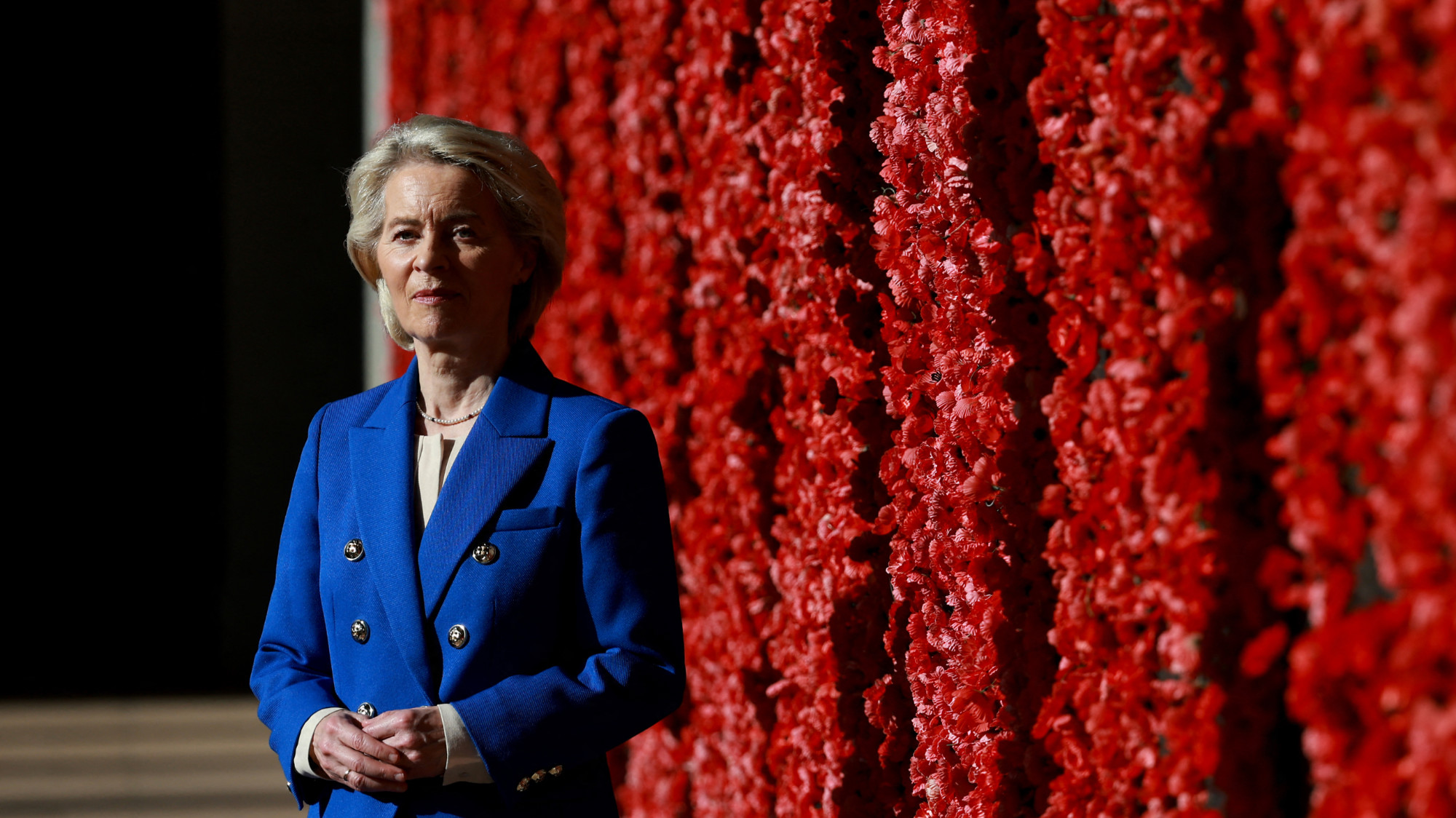
A controversial comment from European Commission President Ursula von der Leyen that grouped Turkey with Russia and China as a source of potential malign influence has sparked behind-the-scenes diplomatic maneuvering, with Ankara opting for an unusually muted response rather than the sharp public rebuke many observers expected, Middle East Eye has confirmed.
The incident unfolded during a speech Monday at an event celebrating the 80th anniversary of German newspaper Die Zeit in Hamburg. Von der Leyen argued that failure by the European Union to expand its bloc would leave neighboring nations vulnerable to falling under the sway of external powers, specifically naming Russia, Turkey and China as sources of influence that would work against European interests. The remark marked an unprecedented public framing of Turkey — a NATO ally and official EU candidate country — as a hostile force targeting European unity, triggering immediate diplomatic unease in Ankara.
Brussels moved swiftly to contain the fallout, releasing an official clarification within 24 hours that walked back the phrasing. A commission spokesperson emphasized Tuesday that Turkey is “unquestionably an important partner” to the EU, noting that von der Leyen’s comment was intended only to acknowledge Turkey’s significant geopolitical influence, geographic size and regional ambitions, not to draw an equivalence between Ankara and Moscow or Beijing.
The clarification reaffirmed Turkey’s status as a key economic and political partner, highlighting its central role in high-profile strategic projects including the EU’s Connectivity Agenda and the Trans-Caspian Middle Corridor. It also underscored long-standing cooperation on migration management and restated Turkey’s position as a critical NATO ally and ongoing EU accession candidate, cementing its role as a core diplomatic interlocutor for the bloc.
According to a senior Turkish official speaking to Middle East Eye on condition of anonymity, the Brussels clarification has been sufficient to satisfy Ankara, which has no intention of issuing a formal public criticism or condemnation of von der Leyen’s comments at this stage. Turkish leadership has little appetite for open confrontation with the EU right now, the official added.
The decision to remain publicly silent has surprised many analysts, given Turkish President Recep Tayyip Erdogan’s history of forceful, public pushback against perceived slights from European leaders. Multiple overlapping geopolitical and economic factors explain the restrained approach, which aligns with a broad shift in Turkey’s foreign policy dating back to 2023, when Ankara began actively pursuing improved relations with Europe and other NATO allies.
Economic pressures top the list of priorities driving the shift. Turkey’s economy has faced years of sustained strain, with high inflation and weakening investor confidence already exacerbated by regional instability stemming from escalating conflict in the Middle East, which has eroded Turkish central bank reserves. An open diplomatic crisis with the EU would further damage investor sentiment, a risk Ankara is unwilling to take at this juncture.
A second key factor is a pending draft EU regulation that would prioritize “Made in Europe” automotive and green technology products in public procurement processes. The policy introduces mandatory minimum local content requirements for key green goods — including electric vehicle batteries, solar and wind energy components, and zero-emission vehicles — to strengthen European domestic manufacturing. Under the new framework, the lowest bid will no longer be the sole deciding factor in awarding public sector contracts.
Erdogan and Turkish Trade Minister Omer Bolat have lobbied heavily in recent weeks to secure access for Turkish companies to EU supply chains under the new rules, citing the existing EU-Turkey Customs Union as legal basis for favorable treatment. Turkish officials are currently drafting amendments to Ankara’s own public procurement laws to meet EU demands for reciprocal access, which would allow European firms to compete on equal terms in Turkish public tenders in exchange for Turkish firms gaining access to European procurement markets. Barcin Yinanc, a prominent columnist for Turkish outlet T24, noted that the EU has already made this reciprocal requirement clear to Ankara: unless Turkey opens its own procurement market to European competitors, Turkish firms will be locked out of the new EU scheme.
Oguz Arikboga, a Netherlands-based Turkish academic with decades of experience working with EU institutions, argues that Turkey’s restrained response stems from broader strategic goals beyond the procurement dispute. “Ankara is currently in a position where it wants to tread carefully on the international stage and avoid escalation, having solidified its role as a mediator and key regional player,” he explained. “In the current international climate, it is seeking deeper cooperation on different files with all actors – not least with the EU. With the upcoming NATO summit in Ankara and COP31 climate summit in Antalya, it is not keen on escalating the situation.”
Arikboga also noted that Ankara’s approach is shaped by its ambition to integrate into Europe’s evolving security architecture amid the ongoing Russia-Ukraine war and growing transatlantic friction between the United States and the EU. Against a backdrop of U.S. skepticism toward NATO commitment from the Trump administration, Turkey has expanded joint defense investment partnerships with European powers, most notably Italy, making improved political ties with the EU a strategic priority.
The academic added that von der Leyen’s misstep has further weakened her standing across Europe: “Although what she said about Turkey is not a fringe view in many EU political circles, the fact that she said it and failed to anticipate the consequences will further damage her credibility.”
Internal divisions within the EU over the comments have already emerged. On Wednesday, Cypriot President Nikos Christodoulides, who currently holds the rotating presidency of the EU Council, publicly backed von der Leyen’s original framing, reminding audiences that Turkey has occupied northern Cyprus since 1974, with Turkish forces still deployed on what the EU recognizes as European sovereign territory.
By contrast, European Commissioner for Neighbourhood and Enlargement Marta Kos struck a conciliatory tone during an address to the European Parliament this week, reaffirming Turkey’s outsized strategic importance to the bloc. “We need Turkey in light of the changing geopolitical realities in Europe and the Middle East,” Kos said, adding that Turkey is already the EU’s fifth-largest trading partner, with bilateral trade volume twice that of the EU’s trade with either Mercosur or India.