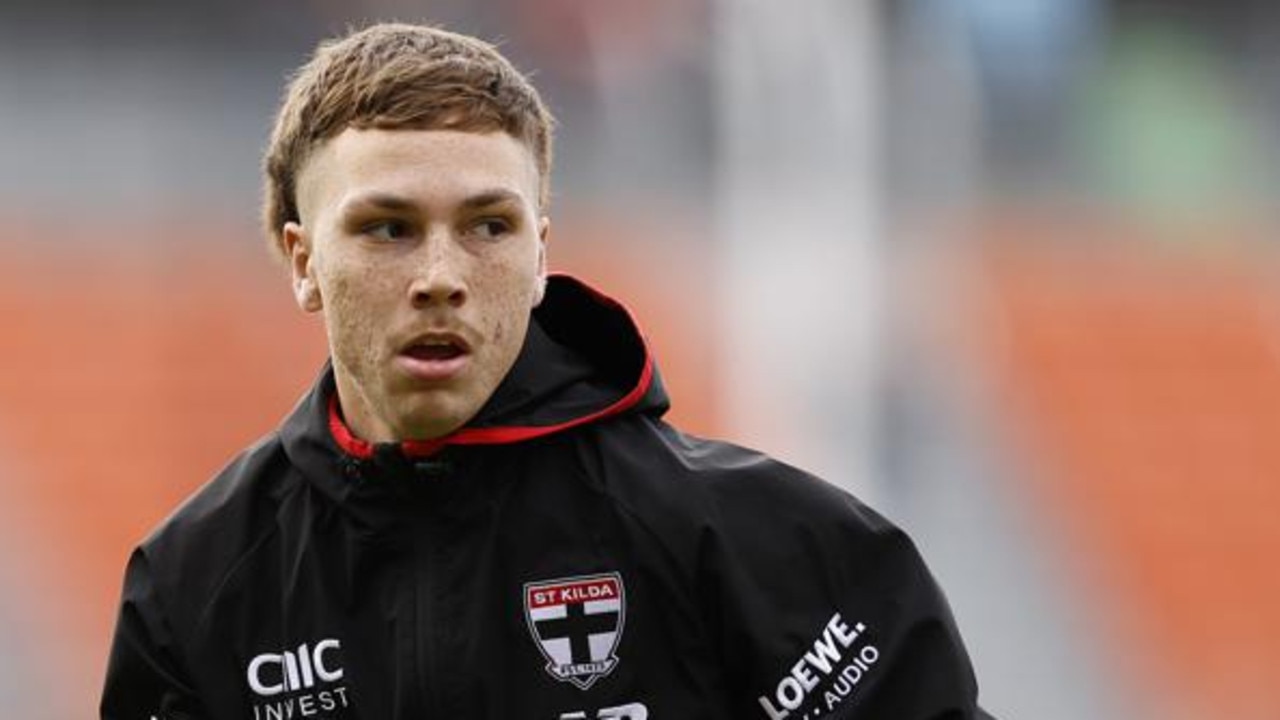
An Australian Football League (AFL) player is taking one final stand to reverse what his legal team calls an excessively harsh and unprecedented suspension over an alleged homophobic slur, with his appeal hearing scheduled for Thursday evening.
Lance Collard, a 21-year-old forward for St Kilda, was handed a nine-match ban last week after the AFL Tribunal found him guilty of conduct unbecoming. The charge stemmed from an on-field incident where he was accused of directing a homophobic slur at an opponent from the Frankston team during a match. Collard has consistently denied using the slur, claiming the word he shouted was a different insult — he says he called Darby Hipwell, his former Sandringham teammate, a “maggot”.
This is not the first disciplinary issue for Collard: he already served a six-match suspension in 2024 for the same type of alleged homophobic slur offense. Two of the nine matches in the current ban are tied to an existing two-game suspension he received for a striking offense in the same match, meaning the new penalty for the slur itself accounts for the bulk of the suspension.
During the original tribunal hearing, Collard’s defense led by Michael Borsky KC argued the young player was physically jostled, roughed up and subjected to verbal abuse from opposing Frankston players before the alleged incident. Borsky described the nine-match ban as unfairly punitive, warning it could be a life-altering “sliding doors” decision that would effectively end Collard’s promising AFL career, which to date includes 15 senior-level appearances. He also noted that no player in league history has ever received a suspension of this length for a homophobic slur offense, marking the penalty as unprecedented. Borsky additionally requested that any new suspension be served concurrently with the existing striking ban, given the entire incident was triggered by the initial on-field collision and subsequent melee.
The Australian Football League Players’ Association (AFLPA) has publicly thrown its support behind Collard throughout the process, with chief executive James Gallagher releasing a formal statement last week reaffirming that backing.
Gallagher acknowledged that the entire AFL industry shares the common goal of eliminating homophobia from the sport, but noted the case highlights critical flaws in the current disciplinary framework. “The Tribunal has, rightly, acknowledged that issues such as racism and homophobia are difficult and sensitive issues and the manner of dealing with them is not enhanced if the starting point is a fierce debate over whether the words were used,” he said.
“Lance has maintained his innocence, and this has been consistent throughout. We’re disappointed the Tribunal did not accept that evidence. We’ll continue to fully support him and the club through this process including exploring any options to appeal.”
Gallagher added that meaningful long-term change requires a holistic approach, not just harsh punitive measures. He argued that lasting progress requires collaborative engagement with LGBTIQA+ community leaders, targeted education that centers the diverse backgrounds and experiences of players, and a disciplinary process that is fit for purpose: one that reduces harm, remedies harm when it occurs, and drives lasting behavioral change. He noted that through collective bargaining agreements, the AFLPA has already negotiated a shared commitment with the AFL to advance equality, inclusion and safety for all people in the sport, and work on these commitments remains ongoing. He also acknowledged the far-reaching impact of the case on all stakeholders, including the LGBTIQA+ community, First Nations communities, and Collard and his family.
The appeal hearing on Thursday will mark Collard’s final opportunity to overturn or reduce the historic ban, with the outcome set to shape not only his career but also potential future debates around how the AFL handles on-field discriminatory language. This story remains developing, with further updates expected after the appeal board delivers its decision.