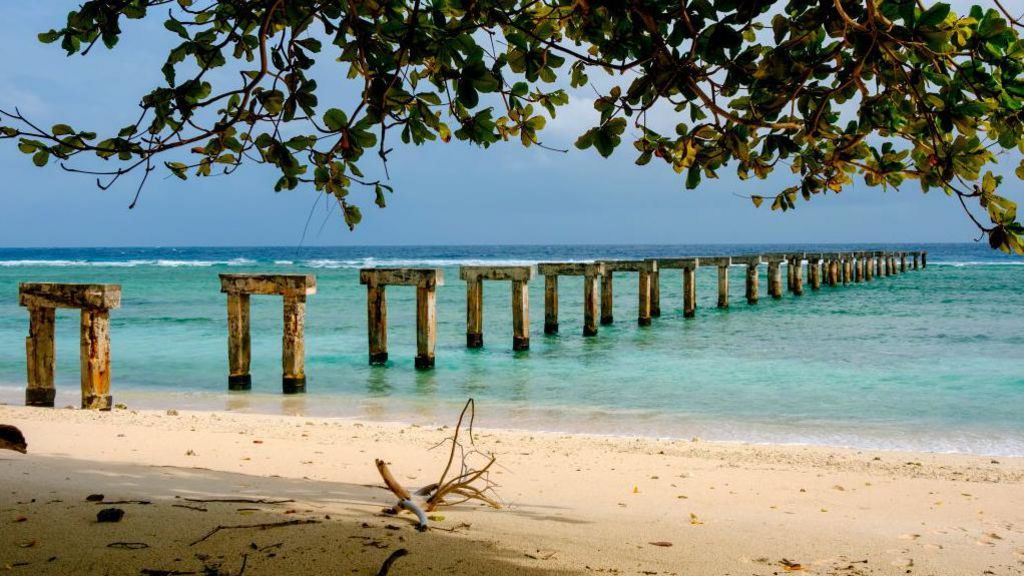
Against a backdrop of escalating geopolitical friction across the South China Sea and adjacent waters, a senior Taiwanese official has carried out a high-profile, uncommon visit to Taiwan-controlled Itu Aba — also known as Taiping Island — to oversee regional coast guard training exercises.
Ocean Affairs Minister Kuan Bi-ling personally oversaw two types of drills on the contested islet: humanitarian search-and-rescue operations and full-scale medical evacuation simulations. The training also included a live-interception scenario, where armed coast guard personnel responded to an unresponsive suspicious cargo vessel. Released coast guard footage shows heavily equipped special operations units breaching the vessel’s control room to secure the scene.
Itu Aba, the largest naturally formed island in the Spratly Islands chain, spans 46 hectares and is currently home to a permanent population of roughly 200 residents. The islet hosts critical infrastructure including a working airstrip and a full-service hospital, but its status remains a flashpoint for competing territorial claims. In addition to Taiwan’s ongoing administration, Beijing, Hanoi and Manila all assert full sovereignty over the land feature.
This visit unfolds at a moment of heightened regional military activity. At the time of Kuan’s trip, the United States and the Philippines were conducting their largest-ever joint military exercises across Philippine territory, a move that triggered sharp pushback from Beijing. In response to the US-Philippines drills, China deployed a newly commissioned amphibious warship to the South China Sea and sailed one of its active aircraft carriers through the nearby Taiwan Strait. Cross-Strait tensions also frame the dispute: China claims the self-governing island of Taiwan as an inalienable part of its territory, a position Taiwan’s government rejects outright.
The 2016 international arbitration ruling initiated by the Philippines reclassified Itu Aba as a “rock” rather than a full island under the United Nations Convention on the Law of the Sea. This classification restricts claimed resource rights to just a 12-nautical-mile exclusive zone around the islet, instead of the 200-nautical-mile exclusive economic zone that would be granted if it were recognized as a full island. Both Taipei and Beijing rejected the ruling outright and have refused to recognize the arbitration outcome. In 2024, Taiwan’s then-foreign minister Joseph Wu issued a stark warning that China had already constructed large-scale military installations across areas surrounding Itu Aba, further shifting the regional military balance in Beijing’s favor.