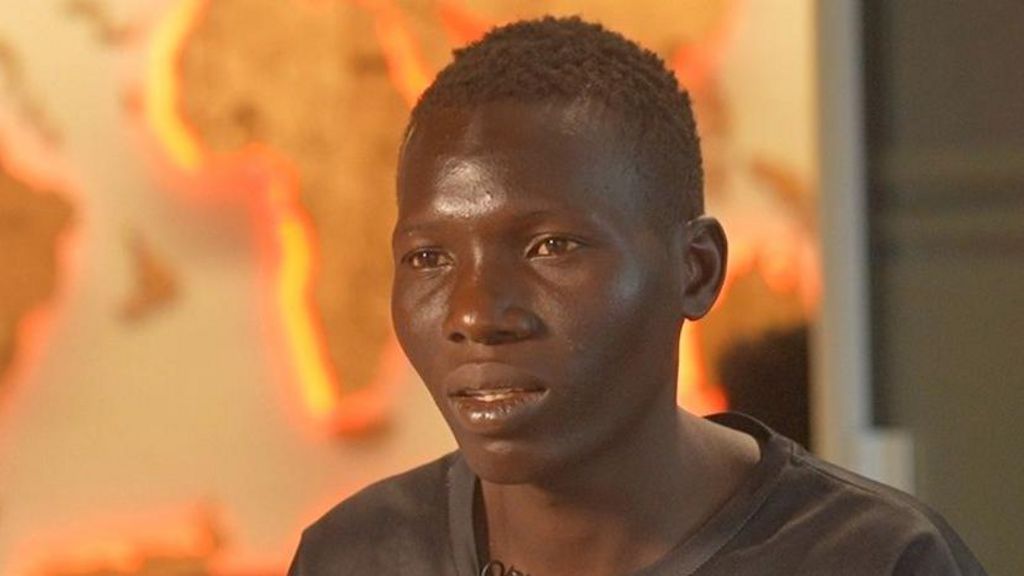
Five and a half years of wrongful imprisonment have left 23-year-old Nigerian Rasheed Wasiu with a devastating new burden: after regaining his freedom, he cannot find the mother who warned him to stay home during the 2020 End Sars protests.
In October 2020, mass nationwide demonstrations erupted across Nigeria, driven by widespread public anger at the Special Anti-Robbery Squad (Sars), a disbanded police unit long accused of extrajudicial violence, robbery, and unlawful killings of innocent citizens. The movement peaked on October 20, when security forces opened fire on a crowd of peaceful protesters in Lagos, Nigeria’s largest commercial hub. In the weeks leading up to the shooting, police and local vigilante groups launched sweeping crackdowns, arbitrarily detaining anyone suspected of participating in the unrest.
At the time of the arrests, 17-year-old Rasheed was an apprentice training to become a tailor. On the morning of October 20, he and a friend headed to a painting gig in the Amukoko neighborhood of Lagos, only to turn back after learning violence had broken out in the area. When he returned home, his mother begged him to stay indoors, warning that the protests had reached their neighborhood. But the curious teenager ignored her warning and stepped back outside.
Though Rasheed never joined the demonstration, he was caught in a dragnet operated by the Odua Peoples Congress (OPC), a local vigilante group, and bundled into a van alongside protesters who were allegedly carrying weapons. His mother and neighbors crowded in to protest the arrest, insisting Rasheed was not part of the protest, but their pleas fell on deaf ears. He was first transferred to an army barracks, then moved to Lagos’s maximum-security Kirikiri Correctional Centre, where he would wait more than five years for his trial to even begin.
Rasheed told the BBC he was initially accused of involvement in looting, but by the time his case reached court, the charge had shifted to unlawful possession of firearms. His experience is far from unique: hundreds of people detained during the End Sars protests faced similar vague, unsubstantiated charges that kept them behind bars for years without conviction.
For Rasheed, prison was unmitigated hell, he said. Without money to bribe guards or secure better conditions, he endured overcrowding, rotten food, and almost no access to healthcare. Up to 70 detainees were crammed into a single small cell, and the poor quality of rations left inmates consistently weak. “The food is miserable; we get weak after eating. There is no good healthcare, but if you have money, you can have access to good food, a bed and proper medications,” he recalled. He described watching a young cellmate die from an untreated swollen leg, with no medical staff available to diagnose or treat his condition. To survive, Rasheed took on menial odd jobs: washing other inmates’ clothes for pocket change or scraps of food, and reselling snacks and processed cow skin (locally called ponmo) for prison staff in exchange for small cuts of the profits.
Month after month, Rasheed’s case was never called for trial. On the rare occasions he was transported to court, his name did not appear on the hearing roster. One of the court-appointed lawyers assigned to his case even died while he remained in detention. This legal purgatory stretched on for nearly six years, until a hearing early last month, when a Lagos High Court judge struck out the entire case for lack of evidence, ordering Rasheed’s immediate release.
The ruling came only after intervention from the Take It Back Movement (TIB), a Nigerian human rights advocacy group that provides free legal representation to people detained during the End Sars protests and other mass demonstrations. To date, the group has secured the release of more than 100 wrongfully detained End Sars protesters.
Cases like Rasheed’s expose a decades-long crisis in Nigeria’s criminal justice system: according to official prison data, roughly 50,000 people currently in Nigerian detention — nearly 64% of the total prison population — are awaiting trial, many held for years without ever being convicted of a crime. Human rights groups note that extended pre-trial detention without conviction is a widespread, systemic violation of due process across the country.
Adekunle Taofeek, TIB’s Lagos coordinator, called the ruling in Rasheed’s case “a significant milestone.” “This development reinforces our belief that persistence, solidarity and commitment to justice will always yield results,” he said.
When asked if he planned to pursue legal action for the five and a half years of freedom he lost, Rasheed said he had chosen to leave the matter to a higher power. “No, I am leaving everything to God,” he said. But any relief he felt at release quickly evaporated when he returned to his old neighborhood: his mother was gone.
Neighbors told Rasheed that after his arrest, his mother was threatened with arrest herself, forcing her to leave the area. She had only been able to see Rasheed once, immediately after his arrest, when she followed him to the initial holding barracks. She brought him food on the two following days but was denied access, and never saw her son again. For years, neighbors assumed Rasheed was dead, and his mother disappeared from the community consumed by grief. “They said my arrest caused her so much pain and tears,” Rasheed said. Neighbors told him they occasionally spot her passing through the local market, but she does not stop to talk to anyone.
Today, Rasheed lives with his maternal uncle in another part of Lagos, and the two are searching tirelessly for his mother. “I pray to God every day that I will see her, let me just come face to face with her,” he said. Beyond finding his mother, Rasheed is determined to rebuild the life he lost behind bars. Before his arrest, he was months away from completing his tailoring apprenticeship and opening his own shop. Now, he relies on neighbors for food to get by, but he is eager to find work and regain his independence. “I don’t want to be dependent on them, I wish to get a job and be a giver as well. I have two hands and legs, I can work,” he said.