As the ongoing conflict in the Middle East enters a tense new phase, a series of interlinked developments have shifted the trajectory of regional tensions, mixing faint diplomatic openings with continued violence and economic volatility.
On the diplomatic front, hints have emerged of a second round of indirect talks between the United States and Iran, with the discussions set to unfold as soon as the next 72 hours. The New York Post reported Wednesday, citing unnamed Pakistani mediators who facilitated the first round of negotiations, that the new talks are expected to be hosted in Islamabad within a 36 to 72-hour window. When asked to confirm the report, former U.S. President Donald Trump replied via text message, “It’s possible!” The announcement comes one day after Trump extended an existing two-week ceasefire between the two nations just hours before it was set to expire, marking a temporary halt to large-scale hostilities. Pakistani digital outlet News Post first reported the three-day timeline for new talks, though the publication did not name any sources or provide additional details about the planned agenda.
Even as ceasefires hold in most areas, sporadic violence has continued to claim lives across Lebanon. Ten days into a bilateral truce between Israel and Hezbollah, Lebanese state media confirmed that recent Israeli airstrikes have killed three civilians inside Lebanese territory. In response, Lebanese officials have announced they will formally request an extension of the current ceasefire during upcoming negotiations with Israeli representatives set to take place in Washington. Since Hezbollah brought Lebanon into the broader conflict on March 2, the humanitarian toll has grown staggering: official data puts the death toll above 2,400, with more than one million Lebanese residents displaced from their homes. A recent government assessment also found that Israeli strikes have damaged or destroyed more than 62,000 residential units across the country, creating a massive housing crisis for displaced populations.
In Iran, domestic security operations have continued alongside regional tensions. The Iranian judiciary confirmed this week that authorities have executed a man convicted of maintaining secret ties to Israel’s Mossad intelligence agency. Two non-governmental organizations based outside of Iran have since confirmed that the man was previously employed by Iran’s Atomic Energy Organization, adding a new layer of sensitivity to the case.
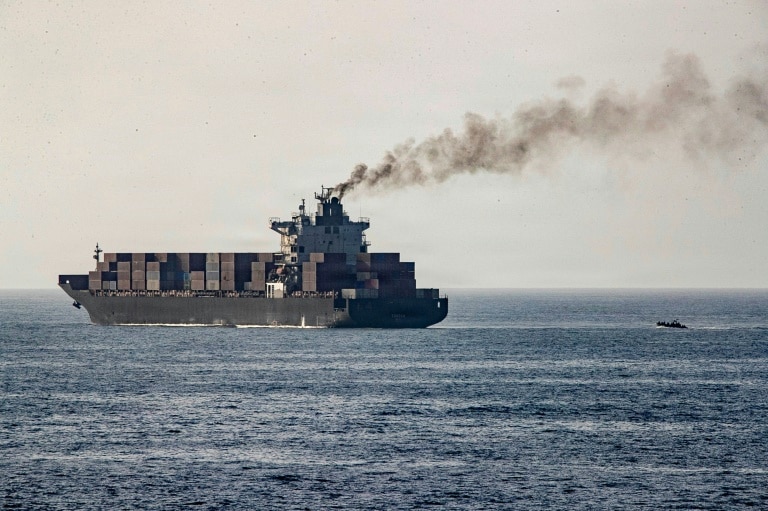
Maritime tensions in the Persian Gulf have also escalated sharply in recent days. Iran’s Islamic Revolutionary Guard Corps (IRGC) confirmed that Iranian security forces intercepted three commercial container ships passing through the region, seizing control of two vessels and opening fire on the third. Tehran has recently implemented a new requirement that all commercial vessels obtain explicit official permission before entering or exiting the Gulf via the Strait of Hormuz, a strategic chokepoint that handles roughly 20 percent of global oil and gas exports, alongside billions of dollars in other critical commodities in peacetime. Just days after this interception, the United Kingdom Maritime Trade Operations (UKMTO) confirmed that another Iranian-flagged cargo vessel, the Touska, was fired on while transiting the Arabian Sea while outbound from Iran. A U.S. Navy handout image, released April 21 by U.S. Central Command Public Affairs, shows U.S. forces conducting a patrol alongside the stopped vessel on April 20. UKMTO reported that all crew members are safe and accounted for, with no reported structural damage to the ship. The interception comes as the U.S. continues to enforce a naval blockade of Iranian ports.
In a separate economic and diplomatic move, the U.S. has blocked an aircraft carrying nearly $500 million in cash from delivering the currency to Iraqi central banks, U.S. media confirmed this week. The Wall Street Journal reported that Washington has suspended all cash shipments to Iraq and frozen funding for Iraqi security programs, a move designed to increase pressure on the Iraqi government to crack down on Iran-aligned militant groups operating within its borders. The measures were implemented after a series of attacks targeting U.S. personnel and interests in Iraq carried out by groups expressing solidarity with Iran.
Global energy markets have reacted sharply to the mixed signals of ceasefire extension and ongoing regional tension. While oil prices saw a three percent jump on Tuesday following the extension of the U.S.-Iran truce, prices edged only slightly higher on Wednesday, with Brent Crude approaching the $100 per barrel mark and U.S. West Texas Intermediate climbing back above $90 per barrel. Meanwhile, major European stock markets pulled back slightly, as investors remained cautious amid uncertainty over whether the planned new diplomatic talks will lead to a lasting de-escalation of hostilities.