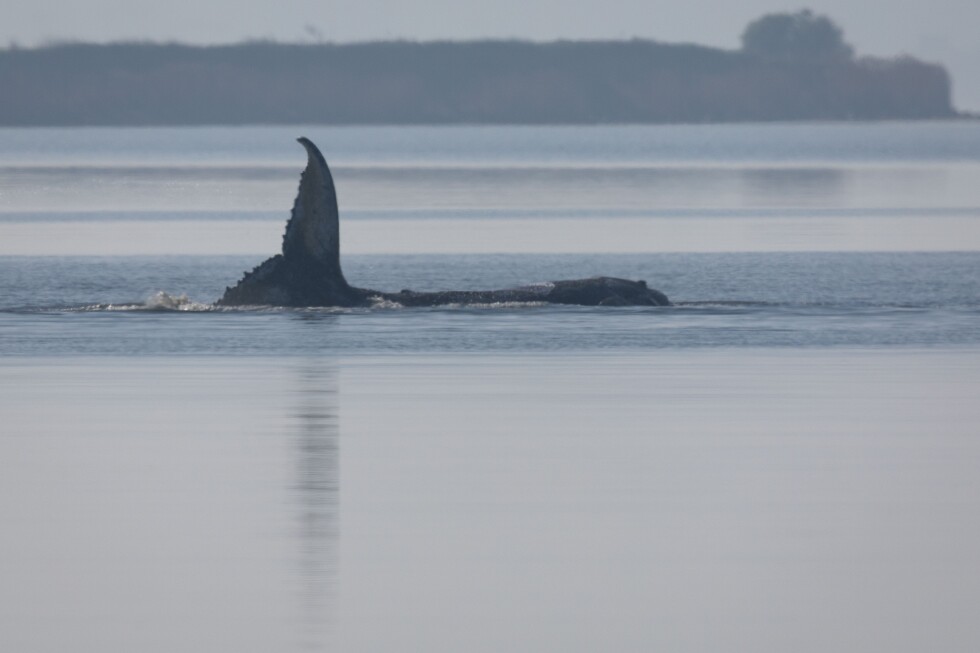
BERLIN – A global audience has watched the likely final days of a lost humpback whale, nicknamed Timmy by local media, via continuous livestream after repeated attempts to guide it back to open ocean have failed, leaving the disoriented marine mammal growing increasingly frail and ill in the shallow Baltic Sea off Germany’s northern coast.
The endangered animal, which naturally inhabits the nutrient-rich waters of the Atlantic Ocean, was first spotted wandering the Baltic on March 3. To date, researchers have not reached a consensus on what drove the 12 to 15-meter, 12-metric ton whale hundreds of kilometers off its intended migration path. The most common working theory among marine specialists is that Timmy lost its bearings while chasing a school of herring or veered off course during its annual seasonal migration.
Since its initial sighting near the eastern German town of Wismar, Timmy has repeatedly become stuck in shallow coastal waters, showing clear signs of severe distress. For days, the giant mammal has barely moved, breathing in irregular patterns that have alarmed observers. The Baltic Sea’s far lower salt concentration compared to the whale’s natural Atlantic habitat has also caused a painful, progressive skin condition, which rescue teams have attempted to treat by applying multiple kilograms of medicinal zinc ointment. Compounding its dangerous disorientation, every time Timmy does move, it consistently swims further inland, farther from the open North Sea passage that would lead it home.
Timmy’s plight has gripped the German public, sparking round-the-clock media coverage and fierce public debate over how to respond to the stranded whale. Local news outlets have streamed footage of the animal 24/7 to meet overwhelming public demand, while major national online publications send push notifications for even the smallest updates on Timmy’s changing condition. Environmental activists have organized peaceful protests on Wismar’s beaches calling for urgent action to save the mammal, and social media influencers have clashed over whether continued interventions do more harm than good, with some arguing the whale should be allowed to die peacefully in its current location rather than endure further stress from rescue attempts.
Public curiosity grew so intense that local law enforcement was forced to establish a 500-meter exclusion zone around the whale’s location to prevent overcrowding that would add to the animal’s stress. Even with this restriction in place, a 67-year-old woman made headlines over the weekend when she jumped from a private boat in an attempt to get closer to Timmy before authorities intercepted her.
Early rescue attempts, which mobilized police boats, inflatable craft and even heavy excavators, managed to temporarily refloat the whale after it became stranded on sandbars. But each time, the disoriented mammal failed to find the route to the North Sea and eventually returned to shallow coastal waters off Wismar.
Rescue teams later developed a complex, large-scale intervention plan: inflatable air cushions would lift the whale onto a reinforced tarp, which would then be secured to two large pontoons and towed out to open ocean by a tugboat. German state officials approved the privately funded initiative, but the plan was thrown off schedule when the whale began moving again as high tide rose on Monday. Vessels were immediately deployed to guide Timmy toward the exit route, but many involved in the operation have already abandoned all hope of a successful rescue.
Opinions among marine experts remain deeply divided over the ethics and effectiveness of continued intervention. Thilo Maack, a marine biologist with the environmental organization Greenpeace, told the Associated Press that repeated attempts to move and guide the whale are only causing it additional, severe stress that accelerates its decline. “I believe the whale will die very soon now. And I would also like to raise the question: What is actually so bad about that?” Maack said. “Yes, animals live, animals die. This animal is really, really very, very, very sick. And it has decided to seek rest.”