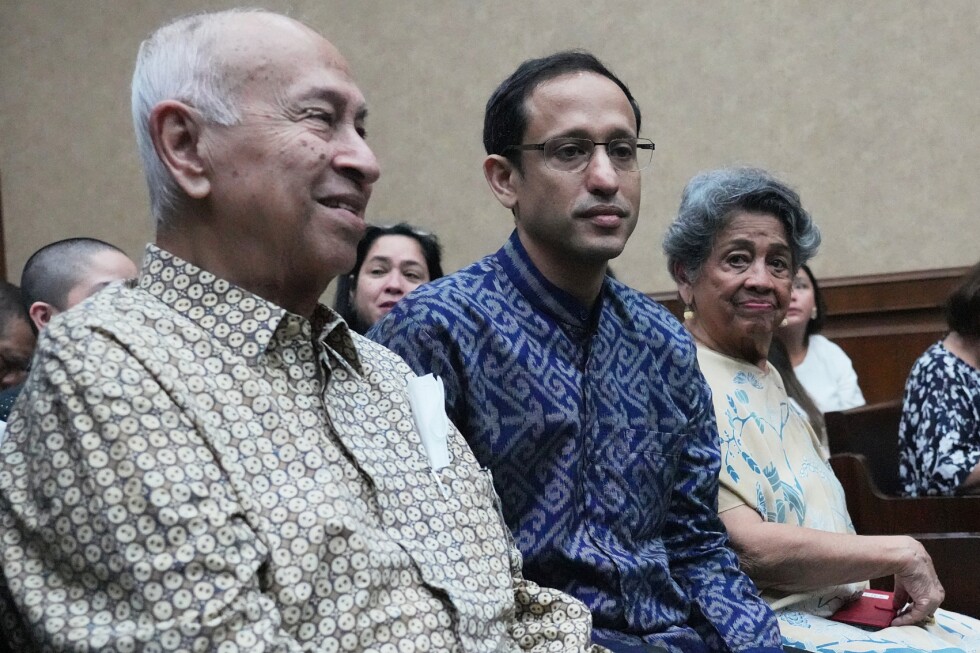
JAKARTA, Indonesia – In a high-profile corruption trial unfolding at Jakarta’s Corruption Court, three former Google executives have formally rejected claims that the tech giant was complicit in a massive Chromebook procurement scheme at Indonesia’s Ministry of Education that prosecutors allege cost the state $125 million in losses.
The case centers on Nadiem Anwar Makarim, the 41-year-old co-founder of Indonesian super app Gojek and Indonesia’s former education minister, who was taken into custody in September following a months-long investigation into alleged graft tied to the 1.2 million-laptop procurement. Prosecutors accuse Makarim, who led the education ministry from 2019 until 2024, of abusing his executive authority to skew the 2020–2021 national procurement contract entirely toward Google’s Chromebook devices, despite internal ministry research findings that the devices would be ineffective for many rural regions of the country that lack consistent broadband internet access.
The three former Google leaders – Scott Beaumont, who served as Google Asia Pacific president between 2014 and 2019; Caesar Sengupta, a former general manager and vice president at the company from 2018 to 2021; and ex-executive William Florence – testified remotely via Zoom on Monday. All three pushed back on prosecution claims that Google structured a $787 million investment into Gojek’s parent company PT Aplikasi Karya Anak Bangsa (PT AKAB) as a quid pro quo for the lucrative procurement contract.
“There was no connection at all between Google’s investment in GoTo and any of the conversations with the Ministry of Education,” Beaumont told the three-judge panel hearing the case. Sengupta echoed this denial, rejecting all allegations of coordinated corruption tied to the deal.
Lead prosecutor Muhammad Fadli Paramajeng has alleged the bulk procurement of Chromebooks was intentionally designed to cement Google’s market dominance in Indonesia’s fast-growing educational technology sector, with the $787 million Google investment into PT AKAB serving as the payout for Makarim’s favor. Prosecutors further claim that Makarim received roughly $48.2 million (809 billion rupiah) in personal benefits tied directly to the contract.
Google has pushed back on the claims in previous statements, noting that Chromebooks are specifically engineered to meet classroom needs, including in low-connectivity regions. While the devices are optimized for cloud-based functionality, the company confirms they are fully functional offline when internet access is unavailable. Google also emphasized that it only licenses software for Chromebooks and does not control the pricing of devices sold by third-party manufacturers.
Makarim, a Harvard graduate who co-founded Gojek in 2009, stepped down from the company in 2019 when it was valued at more than $10 billion to join former Indonesian President Joko Widodo’s cabinet. Gojek merged with Indonesia’s largest e-commerce platform Tokopedia in 2021 to form the GoTo Group, the entity referenced by Beaumont during his testimony.
Prosecutors argue that Makarim’s exit from PT AKAB and Gojek was a deliberate “strategic concealment” to hide his ongoing conflict of interest. They claim he retained indirect control over the company by appointing close personal associates to key director roles as beneficial owners, allowing him to still benefit from the Google investment.
Makarim has consistently denied all wrongdoing, asserting he never received any personal funds from the procurement deal or associated services. His defense team argues that he fully divested his stake in PT AKAB when he took public office, that his personal net worth dropped by more than 50% during his tenure as minister, and that all procurement decisions were made by technical ministry teams and career officials, not by the minister himself.
If convicted, Makarim faces a potential sentence of life imprisonment. A verdict is expected as early as this month. Two former Education Ministry officials and one ex-technology consultant have also been charged in connection with the scheme, while a fourth accused individual remains at large.