Rugby league fans, players and pundits are once again debating the consistency of officiating in the National Rugby League (NRL), after a contentious last-minute decision by the league’s video review system, the Bunker, triggered an official clarification on high contact rules that many are calling a potential defining moment for future officiating.
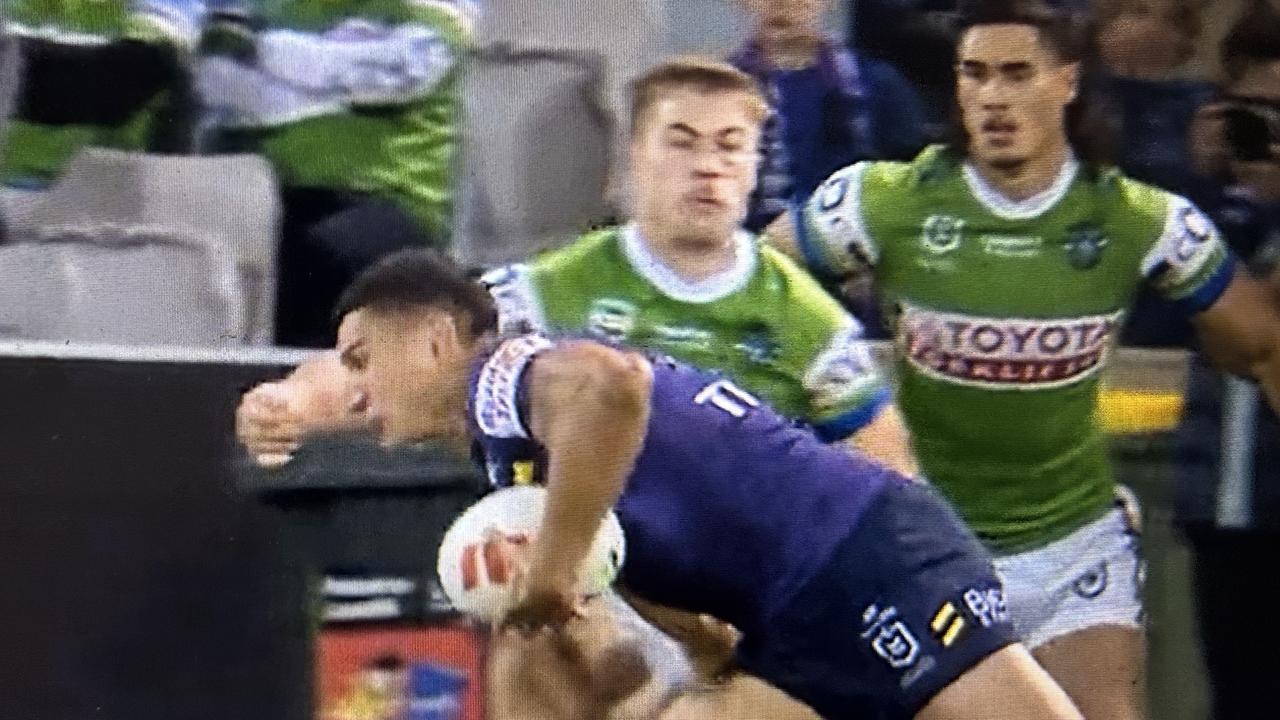
The controversy unfolded during a tight clash between the Melbourne Storm and Canberra Raiders on Friday night. With just 66 seconds left on the clock, the Storm trailed by four points and held attacking position when winger Will Warbrick was struck across the face by Raiders halfback Ethan Sanders. No penalty was called by on-field officials, and Melbourne opted to use their captain’s challenge to overturn the call.
However, Bunker official Liam Kennedy upheld the on-field decision, concluding the contact to Warbrick’s head was only incidental and dismissing the challenge. The ruling immediately sparked outrage, particularly when observers drew comparisons to a nearly identical incident just days earlier on Easter Monday, when Parramatta Eels captain Mitchell Moses secured a match-changing penalty after a successful challenge for a similar high contact.
This inconsistent application of the high contact rule is far from an isolated case this season. Earlier in the year, Sydney Roosters captain James Tedesco successfully challenged for a penalty after a glancing high contact from Cronulla Sharks playmaker Braydon Trindall, resulting in a penalty that many argued was disproportionate given the minimal contact. Even more notably, two years ago, a high contact penalty against former Dolphins captain Jesse Bromwich for a hit on Manly Warringah Sea Eagles star Tom Trbojevic drew widespread public criticism over inconsistent officiating standards.
Beyond the Warbrick incident, a second controversial call marred the closing stages of the Storm-Raiders clash. Melbourne fullback Sua Fa’alogo was forced off the field for a mandatory head injury assessment after a high hit from Raiders forward Hudson Young, yet Young was permitted to remain on the pitch for the rest of the match. The NRL later acknowledged that the officiating team made an error in not sin-binning Young, a mistake that cost the Storm a critical one-player advantage as they pushed for a game-winning try. Young was ultimately handed a two-match suspension for the hit.
In response to the widespread backlash over the Warbrick decision, NRL officials have formally confirmed that Bunker officials retain discretionary authority to judge whether high contact warrants a penalty. Many in the rugby league community now view this clarification as a potential line-in-the-sand moment for officiating, setting a clear precedent that not all contact to the head will automatically result in a penalty. Supporters and players alike have stressed that their core demand moving forward is not stricter or more lenient calling, but consistent application of the rules, with officials weighing the force of contact rather than just penalizing every incidental touch to the head.