As a fragile two-week ceasefire between Iran and the U.S. enters its final 48 hours ahead of a Wednesday evening expiration, Tehran remains undecided on whether to participate in a new round of peace negotiations scheduled this week in Islamabad, with top Iranian officials slamming the Trump administration for untrustworthy behavior and maximalist negotiating demands that derailed the previous talks.
Iranian Foreign Ministry spokesperson Esmail Baghaei clarified Monday during a regular press briefing that no final decision has been reached on Iranian attendance at the proposed new talks. The earlier round of negotiations held in the Pakistani capital ended without any breakthrough to de-escalate the conflict that the Trump administration and its Israeli ally launched in late February.
Baghaei highlighted a stark contradiction between Washington’s public claims of diplomatic readiness and its recent aggressive actions, pointing specifically to a U.S. military operation over the weekend that seized an Iranian-flagged cargo vessel in the Gulf of Oman. Such moves, he argued, offer no indication of the U.S. being serious about pursuing a constructive diplomatic path.
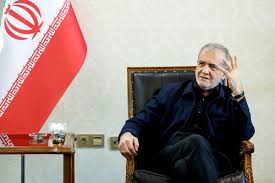
Iranian President Masoud Pezeshkian echoed these criticisms in a social media post published Monday, calling out what he framed as contradictory and unconstructive signals coming from U.S. officials. Pezeshkian emphasized that upholding commitments is the foundational requirement for any meaningful dialogue, noting that Iran holds deep, history-rooted mistrust of the U.S. government stemming from decades of past aggression against the country. “They seek Iran’s surrender,” Pezeshkian wrote of Trump administration officials. “Iranians do not submit to force.”
Pezeshkian’s remarks came as U.S. President Donald Trump issued stark new threats to resume large-scale bombing operations if no peace deal is reached before the ceasefire expires. The ongoing conflict has already killed more than 3,300 Iranians and displaced millions of civilians. When asked what would happen if talks fail, Trump told PBS News: “Lots of bombs start going off.”
This threat followed an even more extreme warning from Trump: that if Iranian leaders reject his administration’s terms for ending the war, the U.S. will destroy every power plant and bridge across Iran. Legal experts have widely condemned these threats as violations of international law, which explicitly protects civilian infrastructure from intentional attack, noting that the threats themselves qualify as war crimes regardless of whether they are carried out.
Beyond the military standoff, the conflict has sparked growing internal friction within the Trump administration over skyrocketing U.S. gasoline prices. On Monday, Trump publicly contradicted his own Energy Secretary Chris Wright, a former fracking industry executive, who suggested over the weekend that U.S. gas prices might not drop below $3 per gallon until 2027.
Wright made the projection during a CNN interview Sunday, when asked when consumers could expect significant price relief after the national average jumped above $4 per gallon following the outbreak of the war. Responding to Wright’s comments in a Monday interview with The Hill, Trump called the energy secretary’s projection “totally wrong” and insisted gas prices would plummet immediately as soon as the conflict ends.
However, independent energy and economic analysts, as well as major reporting from The New York Times, contradict Trump’s optimistic claim. The Times reported Monday that the global economic impact of Iran’s closure of the Strait of Hormuz — which has cut off roughly 20 percent of the world’s global oil supply — is only just beginning to hit global markets, and disruptions will persist for months or even years even if a peace deal is reached quickly.
East Asia is currently bearing the brunt of supply shortages caused by the strait’s closure, but the ripple effects are expected to spread across every major global economy if the waterway remains blocked. Even if a peace deal is signed immediately, the Times reports that the global economy will face months of canceled air travel, soaring food prices, paused factory production, delayed supply chains, and empty shelves for a wide range of consumer and critical goods, from plastic products and instant noodles to microchips, vaccines, medical equipment, and cosmetics. The outlet added that even if the Strait of Hormuz reopens fully tomorrow, it could take years for oil and gas production and shipping to rebound to pre-conflict levels.
Bob McNally, founder and president of energy consulting firm Rapidan Energy Group, confirmed this assessment in comments to Newsweek published Monday. “It is likely we will feel the effects of energy disruptions through the end of the year,” McNally explained. “Even if the conflict and disruptions were to end today, the ripple effects would be felt for many months. Just restarting Gulf production and flows would take three to four months. Repairing damage to facilities could take longer.”
Mark Zandi, chief economist at Moody’s Analytics, also warned that U.S. consumers face continued financial strain in the coming months. In a Sunday social media post, Zandi wrote: “It doesn’t look like gasoline prices will return to pre-war levels anytime soon. That’s even if the war ends soon, which looks iffy, to say the least. And this abstracts from what Americans will need to shell out for higher prices on everything from groceries to airfares in the coming weeks and months. The financial pain caused by the war and its fallout on consumer spending and the economy is set to intensify.”