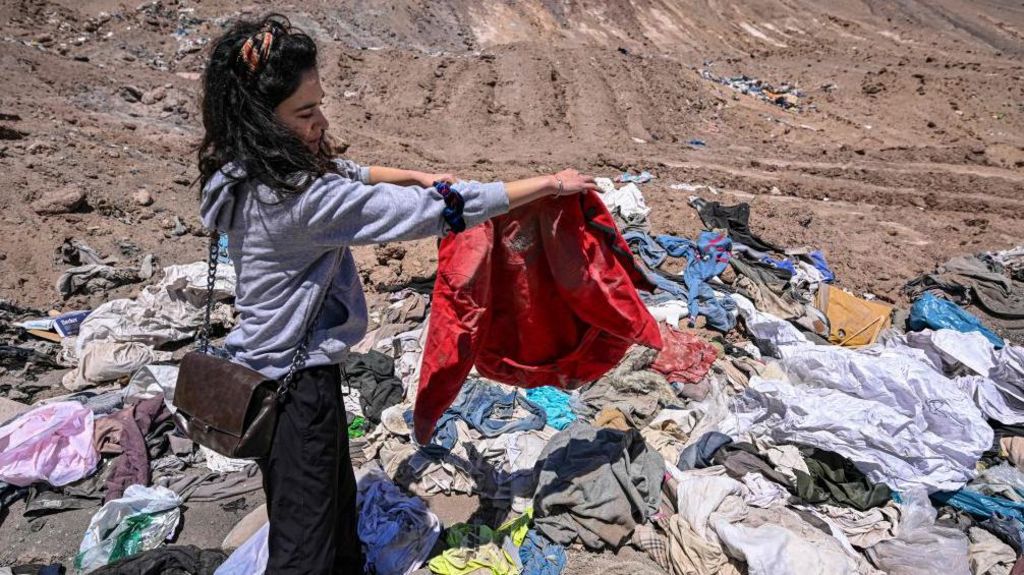
Every year, millions of discarded pre-owned garments collected from donation bins across Europe, North America and Asia make their final resting place in one of the harshest landscapes on Earth: Chile’s Atacama Desert. A stark environmental crisis has emerged from the global secondhand clothing trade, which has long benefited the northern Chilean economy but left the arid region choking on unsold textile waste – and now a new private sector initiative is stepping in to address the problem, spurred by landmark regulatory change.
At the heart of the global secondhand clothing flow is Iquique’s Zona Franca del Iquique, known locally as Zofri. Established in 1975 to drive economic growth in northern Chile’s underdeveloped regions, this duty-free free trade zone allows businesses to import, store and re-export goods without paying customs duties or value-added tax. Over decades, used clothing became one of Zofri’s largest import sectors: official Chilean government data puts annual imports of pre-owned garments at roughly 123,000 tonnes, with shipments arriving in compressed bales via container from across the globe. Once imported, the clothing is sorted, sold locally at low-cost markets or re-exported to other Latin American markets.
For the local community, the sector delivers tangible economic benefits. Felipe González, Zofri’s general manager, notes that roughly 10% of the region’s local workforce – most of whom are low-skilled women without formal advanced qualifications – find employment in the clothing trade, sorting garments by quality for resale. The lowest-quality unsold stock ends up at La Quebradilla, a sprawling open-air market just 30 minutes uphill from Iquique in Alto Hospicio, where stalls sell everything from t-shirts to dresses starting at just $0.54. Tourists and local residents flock to the market on weekends to hunt for bargains, cementing the trade’s role in the local economy.
But the boom in secondhand clothing has come at a devastating environmental cost. Unsold garments cannot be deposited in local municipal landfills, which are only permitted to accept household waste rather than commercial import waste. Legitimate disposal options – including exporting the unsold stock, paying taxes to sell the garments outside the free trade zone, or contracting authorized waste management firms – all carry significant costs. For unethical traders, the far cheaper alternative is to illegally burn unsold clothing or dump it in the vast, unpatrolled expanses of the surrounding Atacama Desert. By the largest industry estimates, this illegal dumping totals 39,000 tonnes of textile waste every year.
Local authorities have struggled to curb the practice. Miguel Painenahuel, who works in Alto Hospicio’s urban planning department, explains that the desert’s wide open terrain and countless accessible access points make it easy for trucks to sneak in and dump waste overnight. While the municipal government conducts patrols and operates surveillance cameras to issue fines to violators, limited resources mean enforcement efforts cannot keep pace with the steady flow of dumped clothing.
Now, a public-private partnership spurred by new national regulation is working to turn the crisis into a circular economy opportunity. In Iquique, the non-profit CircularTec – the Centro Tecnológico de Economía Circular, which advances sustainable resource reuse – has partnered with veteran local textile importer Bekir Conkur to build Chile’s first large-scale textile recycling facility targeted at this unsold clothing waste.
Conkur, a Turkish-born entrepreneur who has operated in Chile’s textile trade for more than 15 years and imports 50 containers of secondhand clothing monthly, has invested $7 million in the new facility, currently under construction 20 minutes outside Alto Hospicio. When fully operational in a few months, the water- and chemical-free plant will process unsold garments into raw fibers, which are then converted into felt for use in mattresses, furniture, automotive interior components and building insulation. Conkur projects the facility will have the capacity to process 20 tonnes of textile waste per day, handling a large share of the region’s annual unsold clothing stock.
The initiative comes in response to a landmark update to Chile’s environmental regulation: last July, the national government added textiles to its existing Extended Producer Responsibility (EPR) Law. The regulation shifts the financial and operational responsibility for end-of-life product management from local governments and the public sector to the brands, retailers and importers that put the clothing on the market. While the specific regulatory details for the textile sector are still being drafted by the government, the rule change has created a clear incentive for private companies to invest in recycling infrastructure, turning waste management into a viable business opportunity.
Luis Martínez, executive director of CircularTec, emphasized that the goal of the project is far more than just compliance: “We don’t want the Atacama Desert to be famous as a tourist attraction where visitors can see mountains of clothes.” Looking forward, Conkur believes his facility will not only handle waste from across Chile, but could eventually process textile waste from other countries around the world, turning a growing global environmental problem into a sustainable, profitable circular business.