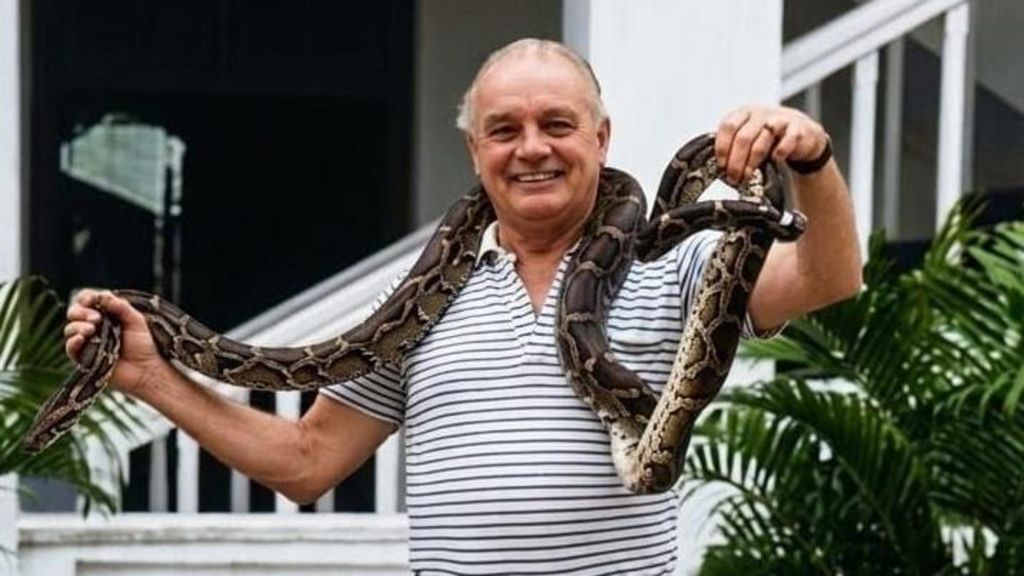
Against the backdrop of World War II, when Japanese air raids sent terrified residents of Calcutta (now Kolkata) scrambling for cover, one man refused to let war stifle the city’s creative pulse. That man was Kumar Chunder (KC) Sen, a polymath whose work shaped the trajectory of modern Kolkata’s entertainment and cultural landscape – yet who has been largely erased from popular regional history.
Sen’s life was defined by rich cross-cultural heritage, born in 1919 to a family with deeply rooted connections to both British and Bengali elite society. On his maternal side, he descended from Lieutenant General Sir Edward Barnes, a decorated veteran of the Battle of Waterloo, while his paternal line traced back to Brahmananda Keshub Chandra Sen, the iconic 19th-century Bengali social reformer. Music was woven into the fabric of his childhood home: his eldest sister Moneesha built a career as a concert pianist, second sister Pamela found acclaim as a prima ballerina, and his youngest sister Bunny became a regular on-air personality for All India Radio. It was during his school years, while cleaning instruments in the music room of Kolkata’s prestigious Jesuit boys’ school, that Sen first discovered his own passion for performance. As a teenager, he made his professional debut on Park Street – Kolkata’s iconic swinging cultural hub – at the city’s San Souci Theatre, quickly establishing himself as a versatile multi-instrumentalist, singer-songwriter and charismatic jazz bandleader.
Beyond music, Sen’s talents extended across multiple fields. A skilled competitive rower, he made history in 1938 as the first Indian athlete to win the coveted Macklin Sculls single sculling race at the Calcutta Lake Club. After completing an engineering apprenticeship, he traded city life for the frontlines of Burma (modern-day Myanmar), where he worked as a war correspondent for Reuters. It was there that he narrowly escaped death during a Japanese air raid, when shrapnel left a permanent dent in his military helmet – a tangible memento of his brush with mortality. Even amid the chaos of conflict, Sen never stopped creating. Throughout his wartime posting, he continued composing new music, and many of his original works from this period were pressed onto 78 rpm shellac records for distribution across India. One of his most notable early compositions, *Moonlight in Hawaii*, was written years before a Hollywood feature film of the same name hit screens; Sen later recalled in his memoir that the film’s release accidentally boosted sales of his existing recording on the Indian pop market.
By the end of World War II, Sen returned to Kolkata to take up the role of head of programming at All India Radio, and formed the popular performance group the Casual Club Quintet, which even earned an honourable mention in *Melody Maker*, Britain’s leading music industry weekly at the time. As his influence grew, he set out to formalize jazz culture in the city: with financial backing from prominent patrons including the Maharaja of Cooch Behar, he founded the Calcutta Swing Club, an institution that did for popular jazz what the long-established Calcutta School of Music had done for Western classical music in Kolkata. He went on to organize large-scale big-band concerts at Kolkata’s New Empire Theatre, bringing top talent from Bombay to perform for local audiences, and even took over management of the Golden Slipper, one of the city’s most legendary nightclubs.
But Sen’s most enduring and transformative contribution to Kolkata’s cultural scene came in 1953, when he launched his groundbreaking talent initiative, Band Wagon. What began as a side project off his sports magazine *Sportlight* evolved by 1957 into a popular glossy weekly covering both showbusiness and sports. More than a publication, Band Wagon grew into a full-fledged talent agency and ecosystem that professionalized Kolkata’s Park Street nightlife, turning the district’s popular entertainment venues into launchpads for untapped local talent. As a regular columnist for *Junior Statesman*, the iconic Indian youth magazine of the mid-20th century, Sen used his platform to promote emerging performers, alongside hosting weekly open auditions every Sunday at the New Empire Theatre. These auditions fed into four major annual Band Wagon showcase events: the Easter Parade, the July Birthday Revue, the October Puja Pageant and the Christmas Revue.
For an entire generation of Indian performers, Band Wagon was the stepping stone to professional success. “KC Sen was the only promoter of local talent back then, I started in 1959 during his Band Wagon days, singing once a week for 10 rupees,” recalled Vivian Hansen, a former crooner at Park Street’s famous Trincas restaurant. Veteran guitarist Cyrus Tata similarly remembered making his stage debut at just 12 years old at one of Sen’s Sunday showcases. Between 1953 and 1968, Band Wagon built a sustainable, thriving live music economy in Kolkata that nurtured dozens of homegrown artists, including Marie Sampson and Shirley Churcher, both of whom went on to build successful international careers in the West. Sen’s influence even extended to Tollywood, Bengal’s iconic regional film industry: his most famous contribution to cinema came when he introduced cabaret performer Vicky Redwood to legendary filmmaker Satyajit Ray, who subsequently cast Redwood in his critically acclaimed 1963 film *Mahanagar: The Big City*.
After more than three decades shaping Kolkata’s cultural life, Sen closed out his career with a poignant farewell radio broadcast in October 1975, before retiring to Ashford, United Kingdom, where he died in 2007. His legacy lives on through his two sons, Neil and Robin Sen, who followed in their father’s performance footsteps as members of the band The Cavaliers, and recorded one of Kolkata’s earliest 45 rpm pop singles, *Love is a Mango*, in 1967. From his home in Sydney, Robin Sen remembered his father’s innate eye for creative potential: “If he saw even a little [talent], he would work to turn it into something – whether they could stand up, sing or dance. And on the Calcutta scene, there had to be somebody who knew what the hell they were talking about. That was him.”