The ongoing conflict between Iran and Western powers has sent shockwaves through global fossil fuel markets, triggering ripple effects that are reshaping long-term energy policy across two of the world’s fastest-growing regions: Africa and Asia. Disruptions to key shipping lanes for Middle Eastern oil and natural gas – which supplied the bulk of Asia’s energy demand – have sent energy prices soaring worldwide, with both developing Asian and African economies feeling the strain earliest and most acutely. Even wealthy Western nations including the United States and across Europe have not escaped the pressure of inflated energy costs driven by the conflict.
Against this backdrop of market volatility, nations across both continents are moving rapidly to expand nuclear power generation. Countries with existing nuclear infrastructure are ramping up output to address immediate short-term energy gaps, while nations with no operational nuclear capacity are accelerating long-term nuclear development plans to insulate themselves against future fossil fuel supply shocks. Experts note that while nuclear energy cannot resolve the current energy crisis overnight, as new nuclear projects can take decades to complete for first-time nuclear nations, today’s policy commitments will permanently embed atomic power in many countries’ future energy portfolios.
“The war has accelerated a global ‘nuclear renaissance,’ as countries seek an escape from the volatility of global fossil fuel markets,” explained Rachel Bronson, executive director of the Bulletin of the Atomic Scientists. Data from the International Atomic Energy Agency underscores this growing momentum: 31 countries currently operate nuclear power plants, which generate roughly 10% of the world’s total electricity, and an additional 40 nations are either exploring nuclear technology or actively preparing to break ground on their first facilities.
In hard-hit Asia, the shift toward nuclear power is already well underway. Across the region, where governments have turned to emergency measures from increased coal burning to discounted Russian crude imports to shore up supplies, nations with existing reactors are maximizing output from their current fleets. South Korea has boosted generation at all operational plants and fast-tracked maintenance work on five idled reactors, with restarts scheduled for May. Both Taiwan and Japan are rolling back post-Fukushima policies that shuttered large numbers of nuclear facilities after the 2011 earthquake and tsunami that triggered the catastrophic Fukushima Daiichi meltdown.
Taiwan is now launching the multi-year process of restarting two mothballed reactors, a move that requires extensive safety inspections, system upgrades and regulatory approval. In Japan, Prime Minister Sanae Takaichi has moved aggressively to expand nuclear power since the outbreak of the Iran war, signing a $40 billion reactor development deal with the United States, a nuclear fuel recycling agreement with France, and a new cooperation pact with Indonesia. Japan also restarted the world’s largest nuclear facility, the Kashiwazaki-Kariwa plant, in January. While the conflict has also boosted public and policy support for renewable energy, historically high electricity prices have swung Japanese public opinion firmly in favor of nuclear acceptance, according to Michiyo Miyamoto of the U.S.-based Institute for Energy Economics and Financial Analysis. Critics, however, note that renewables remain a more affordable and secure long-term solution.
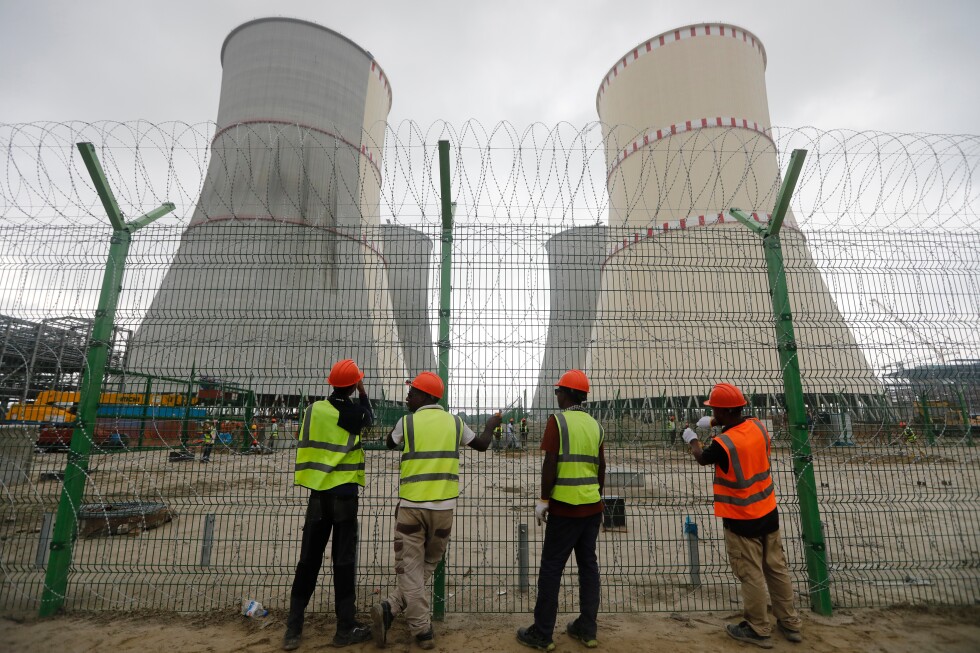
Further south in Asia, Bangladesh is rushing to commission two new reactors built by Russia’s state-owned nuclear giant Rosatom, with plans to connect 300 megawatts of capacity to the national grid by summer to ease crippling domestic gas shortages. Vietnam signed an agreement with Moscow in March to develop two Russian-designed reactors, while the Philippines – which declared a national energy emergency earlier this year – is weighing plans to activate a half-built nuclear plant constructed after the 1973 oil crisis but never brought online. “The Iran war is providing a needed push for nuclear,” said Alvie Asuncion-Astronomo of the Philippine Nuclear Research Institute.
Across Africa, the energy crisis triggered by the Iran conflict has reinvigorated long-dormant nuclear energy plans, with more than 20 of the continent’s 54 nations now advancing atomic energy projects. Global nuclear powers including the United States, Russia, China, France and South Korea have identified Africa as a key growth market for nuclear technology, and are pitching small modular reactors (SMRs) as a flexible solution to the continent’s widespread energy shortages. Unlike large conventional nuclear plants, SMRs offer a cheaper, more compact alternative that can be scaled to meet weak grid capacity.
While proponents frame SMRs as a faster path to nuclear deployment, projects still require years of planning and regulatory work: Kenya for example, which launched its first nuclear planning phase in 2009, targets bringing an SMR online only by 2034. Even so, African leaders frame nuclear power as an urgent strategic priority. “Nuclear energy is no longer a distant aspiration for African countries; it is a strategic necessity,” said Justus Wabuyabo of Kenya’s Nuclear Power and Energy Agency. Speaking at a March summit hosted by the U.N.’s nuclear watchdog, Rwandan President Paul Kagame predicted Africa will become “one of the most important global markets” for small modular reactors in the coming decades. SMRs are seen as a particularly strong fit for Africa, as they can deliver low-emission baseload power that matches the continent’s rapidly rising electricity demand, addresses underdeveloped national grids, and reduces overreliance on expensive imported diesel. South Africa, which hosts the continent’s only operational nuclear plants, plans to grow nuclear’s share of its energy mix from roughly 5% today to 16% by 2040, with SMRs playing a central role.
The race to develop nuclear energy in Africa has also intensified great power competition between the United States and Russia, which are both vying for market share as leading nuclear exporters. Russia’s Rosatom already holds a dominant position, building Egypt’s first operational reactor and signing cooperation agreements with Ethiopia, Burkina Faso, Ghana, Tanzania and Niger covering everything from full-scale plant construction to research facilities and workforce training. The U.S., which has only secured commitments from Kenya and Ghana to join its American-led modular reactor initiative, is working to close the gap, hosting a high-level nuclear development conference in Nairobi last month alongside South Korea. “Washington is working with African nations to rapidly develop secure and safe civil nuclear reactors,” said Ryan Taugher of the U.S. State Department.
Despite the growing momentum for nuclear expansion, critics and experts continue to highlight the significant risks that accompany the technology. Beyond the persistent threats of catastrophic meltdowns and long-term radioactive waste management, nuclear development also carries proliferation risks, as civilian nuclear programs can provide a pathway to developing nuclear weapons. Advocacy groups also note that most countries remain reliant on imported enriched uranium for nuclear generation, keeping them exposed to global supply chain volatility. “Nuclear is very risky,” said Ayumi Fukakusa of Japanese environmental advocacy group Friends of the Earth Japan.
Critics add that because nuclear projects take decades to deliver, governments should prioritize rapid expansion of renewable energy to achieve long-term energy security. Bronson also notes that nuclear plants themselves are vulnerable targets during conflict, pointing to targeted attacks on reactors during both the ongoing Iran war and the Russia-Ukraine conflict as a stark reminder of this risk. Even so, Bronson acknowledged that for many developing nations facing immediate fossil fuel disruptions, the tradeoffs are clear: “Countries are now weighing those kinds of risks against the other risks, which Asia and Africa are seeing first and foremost, about what happens when gas and oil stops.”
This reporting from the Associated Press, with contributions from correspondents based in Bangkok, Seoul, Tokyo and Hanoi, is supported by private foundation grants, with the AP retaining full editorial control over all content.