In a narrow alley in central Seoul, the soft jingle of traditional bells still signals the presence of a fortune-teller — but the mystic behind the sound is no longer a human shaman. It is an artificial intelligence-powered robot avatar, blending ancient Korean spiritual tradition with cutting-edge generative AI to meet the demands of 21st-century curious seekers.
Shamanic fortune-telling has long held deep cultural roots in South Korea, where the centuries-old practice of saju, or the “four pillars of destiny”, uses a person’s birth date and time to map their fate. Traditional human shamans, called mudang, perform elaborate rituals, from vibrant ceremonial dances to channelling messages from ancestral spirits, to help visitors navigate life’s uncertainties. Now, a Seoul-based cultural goods store called Vinaida — whose name translates to “I pray earnestly” in Korean — has reimagined this tradition for the digital age, replacing human practitioners with AI-driven virtual shamans.
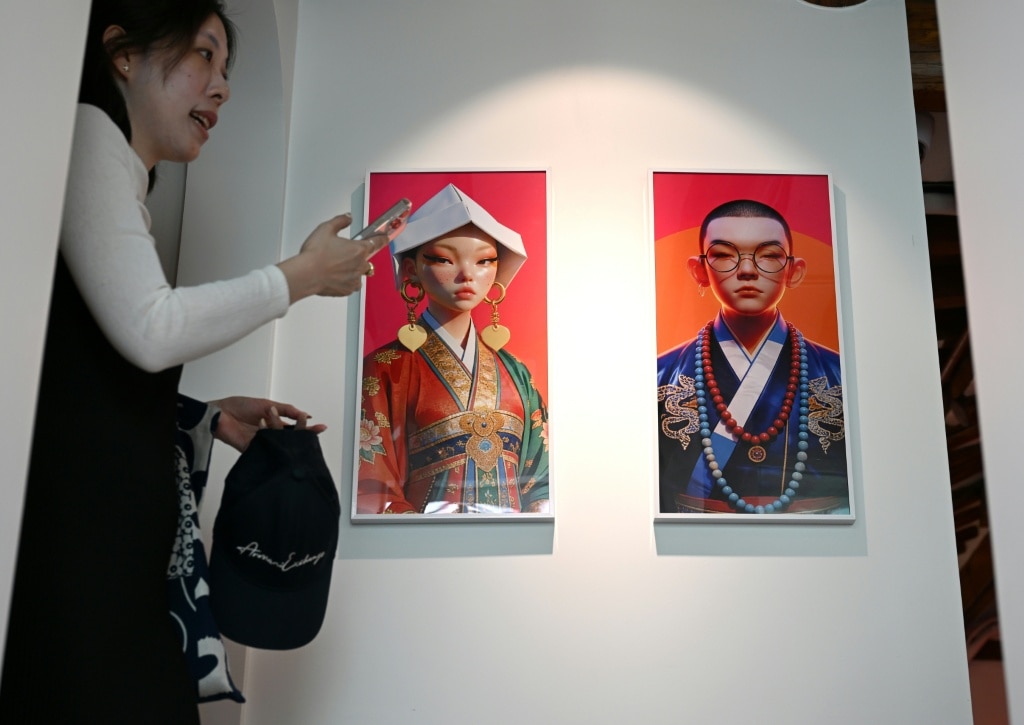
Unlike the intimidating, often overwhelming experience of visiting a traditional shaman, the AI fortune-telling experience is designed to be approachable and low-pressure for casual visitors. The store’s virtual shamans are designed with visuals evocative of characters from the global hit animated film *KPop Demon Hunters*, which itself drew inspiration from Korean shamanic lore, making them instantly familiar to younger audiences and pop culture fans. Inside a private consultation booth, visitors input their name, gender, and birth details into a computer terminal, before a projected masked shaman avatar guides them to share their personal concerns via a connected headset.
The system integrates advanced voice recognition technology with a generative AI chatbot to enable natural, real-time back-and-forth interaction between the visitor and the virtual shaman. It pulls from the core principles of saju to interpret birth details and generate a personalized fortune reading. After the consultation, customers receive a physical plastic talisman embedded with a QR code; scanning the code with a smartphone pulls up a full detailed version of their reading to keep. In a separate section of the store, a second AI-powered robot uses facial recognition and a mechanical drawing arm to sketch visitors’ faces and deliver a personalized fortune based on physiognomic principles drawn from traditional Korean divination.
For 36-year-old visitor Kim Da-ae, the low-stakes nature of the AI experience is its biggest draw. “A visit with a real shaman can feel scary and burdensome,” she explained to AFP during her consultation. “But I was just walking by and read this AI sign… So I walked in with a light heart.” After receiving her reading — which described her fortune as bright and balanced, noting her resilience amid change and auspicious romantic and social connections — Kim said she was surprised by how accurately it aligned with her own self-perception. “I felt a sense of similarity with my fate because it matched my own personality, like valuing relationships while also being practical,” she added.
The concept has quickly gained traction with locals and tourists alike. Since opening its doors in February, Vinaida has drawn roughly 100 visitors per day, with individual consultations costing up to 8,000 won, equal to approximately $5.50 USD. The service supports four languages — Korean, English, Chinese, and Japanese — making it accessible to international visitors as well. Singaporean tourist Amos Chun, who tried the reading during a recent visit to Seoul, said he found the AI’s advice surprisingly relevant: the robot told him to “avoid impulse spending”, a habit Chun acknowledged is one of his personal pitfalls. “It’s quite a good reading, coming from AI,” Chun said with a laugh. “Because that’s something that I do.”
Store manager Kim Hae-seol explained that the concept was developed to modernize a beloved cultural tradition for a new generation, noting that most visitors leave satisfied with their experience. “Customers have something tangible or meaningful to take away, which is probably why there aren’t many who feel dissatisfied,” Kim said. “We thought it had the potential to succeed, so we seized on this concept.” The growing popularity of AI fortune-telling in South Korea reflects a broader trend of blending emerging technology with long-held cultural practices, creating new accessible entry points for younger audiences to engage with traditions that have shaped Korean life for centuries.