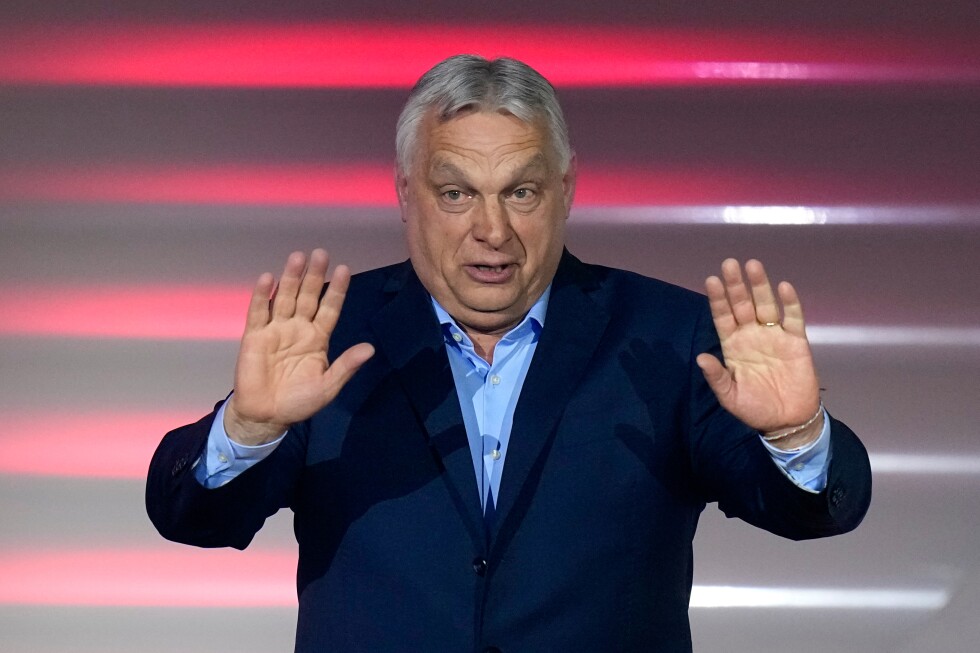
BUDAPEST, Hungary – Four days after a historic electoral earthquake brought an abrupt end to Viktor Orbán’s 16 consecutive years as Hungary’s prime minister, the long-serving populist nationalist leader announced Thursday that his ruling Fidesz party must undergo a complete organizational and ideological renewal to remain a relevant force in Hungarian politics. The landslide defeat handed a two-thirds parliamentary supermajority to Orbán’s center-right challenger, the Tisza party, led by former Orbán ally Péter Magyar, who has already begun moving quickly to form a new government.
The scale of Fidesz’s loss triggered immediate widespread speculation that Orbán, who has served as Fidesz’s party president almost continuously since the early 1990s, would step down from his leadership post. But in an exclusive interview with a pro-Orbán YouTube channel, Orbán made clear he has no intention of exiting the political stage, saying he is already working to rebuild the party from the ground up.
“This is not a matter of swapping out one or two positions,” Orbán explained. “In its old form, the Hungarian right-wing community can no longer function. We need a complete renewal.” He added that the election result marked the close of an entire political era, one defined by his populist nationalist leadership that upended Hungarian democratic norms and strained Budapest’s ties with the European Union and NATO.
Sunday’s poll delivered a stunning rebuke of Orbán, a close ally of former U.S. President Donald Trump and Russian President Vladimir Putin, who publicly acknowledged defeat just hours after polls closed, describing the outcome as “painful.” Orbán opened up about his personal reaction to the loss Thursday, saying election night sent him on an “emotional roller coaster” that left him feeling “pain and emptiness” in the aftermath. “I too believed we would win,” he said. “We had large crowds of supporters everywhere, and I expected victory.”
Even in defeat, however, Orbán pushed back against narratives that Fidesz has been fully rejected by the Hungarian public, pointing out that the party retained a solid core of support: nearly 2.4 million Hungarians cast ballots for Fidesz in the country of 9.5 million people. “We cannot pretend the entire country rejected our government,” he noted.
Magyar, who defected from Orbán’s circle to launch an anti-corruption campaign focused on pocketbook issues including failing public health care and inadequate public transport, has moved swiftly to cement his transition to power. He has pledged to repair Hungary’s frayed relationships with EU institutions and NATO, a key foreign policy shift from Orbán’s confrontational, Euroskeptic course. Following a private meeting with Hungary’s sitting president on Wednesday, Magyar told reporters he had received confirmation that the inaugural session of the new parliament – where he is all but certain to be confirmed as prime minister – will likely be held on May 6 or 7, matching his push for an accelerated transfer of power.