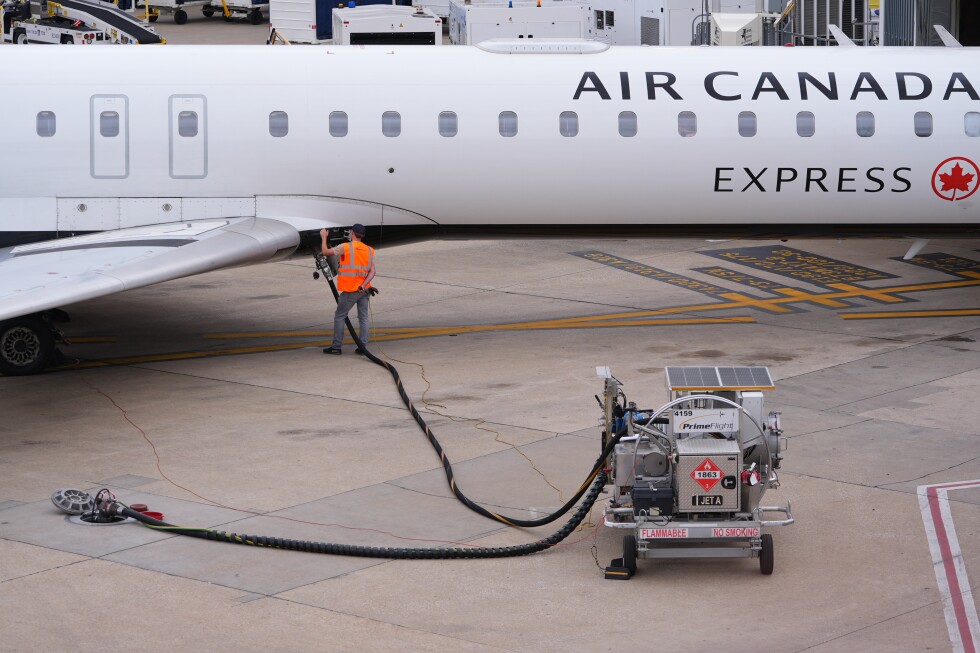
As the peak summer travel season rapidly approaches, a looming jet fuel crisis driven by the Iran war and the effective closure of the Strait of Hormuz threatens to upend global air travel within just a matter of weeks, bringing steeply higher ticket prices and widespread flight cancellations if crude oil supplies do not resume quickly. In an exclusive interview with the Associated Press published Thursday, Fatih Birol, executive director of the International Energy Agency (IEA), warned that Europe currently holds only roughly six weeks of usable jet fuel inventories, warning the global economy is barreling toward what he calls the largest energy crisis in modern history.
Normally, most European nations maintain jet fuel stockpiles sufficient to last multiple months, according to a new IEA report published this week. For global airlines, jet fuel — a kerosene-based refined petroleum product — represents the single largest operating expense, accounting for approximately 30% of total carrier costs, data from the International Air Transport Association shows. Since the outbreak of the war, jet fuel prices have already roughly doubled, and industry analysts warn that physical supply shortages could be the next critical blow to the sector.
“Every passing day that the Strait of Hormuz remains shut, Europe is edging closer to supply shortages,” explained Amaar Khan, head of European jet fuel pricing at energy market analytics firm Argus Media. Khan noted that the strategic waterway accounts for roughly 40% of Europe’s jet fuel imports, and no shipments have passed through the strait since hostilities began.
The latest IEA data underscores the severity of the supply crunch: multiple European countries currently hold less than 20 days of jet fuel coverage, a level not seen since 2000 when the agency began standardized tracking. Stockpiles have not dropped below 29 days since the early stages of the COVID-19 pandemic in 2020, and the report warns that if inventories fall below 23 days, physical shortages will begin to emerge at major airports, triggering immediate flight cancellations and forced demand reduction.
Which regions face the greatest risk? Industry analysts note that Asia-Pacific economies are the most dependent on Middle Eastern crude and jet fuel supplies, followed closely by Europe. While most of Europe’s jet fuel is refined domestically, an estimated 20% to 25% of total regional supply has been taken offline by the conflict, according to Jacques Rousseau, managing director at energy investment firm Clearview Energy Partners.
To offset near-term gaps, the United States — a major global crude producer with excess jet fuel refining capacity — has drastically ramped up exports to Europe, shipping roughly 150,000 barrels per day in April, around six times the typical monthly volume. For the U.S. domestic market, Rousseau noted that significant supply shortages are unlikely, though consumers will still face higher prices. “I tell my kids … we’re not so much going to run out of supply,” Rousseau said. “It’s just going to cost more here, whereas in different parts of the world you could actually get to a point where there’s just no fuel.”
Globally, the closure of the Strait of Hormuz has cut off 10 million to 15 million barrels of daily crude oil supplies to global markets, according to Pavel Molchanov, senior investment strategist at Raymond James & Associates. “There are exactly the same refineries in exactly the same places in Asia and Europe, but if there is not enough oil for those refineries to operate, it’s going to lead to physical supply disruption,” Molchanov explained. While the IEA has authorized the release of 400 million barrels of crude from member states’ emergency reserves, Molchanov added that these supplies will not reach the market quickly enough to offset the near-term shortage. “It could take until the end of the year to get all of those barrels onto the market,” he said.
For consumers planning summer travel, the impacts will extend far beyond higher base airfares, according to Christopher Anderson, a professor of operations, technology and information management at Cornell University. “This is no longer just a fuel-price story. For airlines, it is now a network-planning story,” Anderson said. “Higher fuel costs matter, but so do longer routings, reduced scheduling flexibility and greater uncertainty about what demand will look like even a few weeks out.” If the supply disruption continues into the peak June to August travel season, Anderson added, travelers can expect later booking windows, more frequent schedule changes, and far fewer discounted low-fare tickets.
Airlines have responded to the crisis with a mix of caution and proactive cost-cutting, with many already passing elevated fuel costs directly to consumers. Multiple major carriers have already announced flight cuts, capacity reductions, and price adjustments to adapt to the new market conditions.
Dutch flag carrier KLM announced Thursday it will cut 160 flights next month, equal to roughly 1% of its total European route network, citing rising kerosene costs that have rendered a small number of flights no longer financially viable. U.K. budget carrier easyJet reported Thursday that it expects a pretax loss of 540 million to 560 million pounds (approximately $731 million to $758 million) for the first half of fiscal 2026, though CEO Kenton Jarvis noted that overall consumer travel demand remains strong, with Easter 2025 marking the carrier’s busiest ever Easter travel period. Both KLM and easyJet told the AP they are not currently experiencing direct fuel supply shortages, and declined further comment on the IEA’s warning.
Germany’s Lufthansa announced Thursday that it is accelerating the permanent shutdown of its regional feeder airline CityLine, originally planned for 2026, to immediate implementation, in response to labor unrest and sky-high fuel prices. The move will also remove 27 older, less fuel-efficient aircraft from the Lufthansa group fleet permanently.
U.S. major carrier Delta Air Lines, which operates dozens of daily flights to European destinations, said Thursday it is monitoring the potential jet fuel supply issue on the continent but does not expect near-term operational disruptions. Delta purchased a Philadelphia refinery in 2012 specifically to hedge against jet fuel price volatility, a move that is helping the carrier absorb current cost increases.
Beyond capacity cuts, dozens of airlines around the world have already passed higher fuel costs to consumers through a range of fee and fare adjustments. All four of the largest U.S. carriers — Delta, United, American Airlines, and Southwest Airlines — along with JetBlue, have raised checked baggage fees in recent weeks. United CEO Scott Kirby warned in a recent internal memo to staff that sustained elevated fuel prices could add $10 billion in annual costs for the carrier. “For perspective,” Kirby wrote, “in United’s best year ever, we made less than $5B.”
Overseas carriers have taken similar action: Hong Kong’s Cathay Pacific recently increased fuel surcharges by roughly 34% across all its route network, while Air India added up to $280 in supplementary fees to select long-haul routes earlier this month. Emirates, Lufthansa, and KLM have also implemented incremental fare and fee adjustments to keep pace with ongoing jet fuel price volatility.