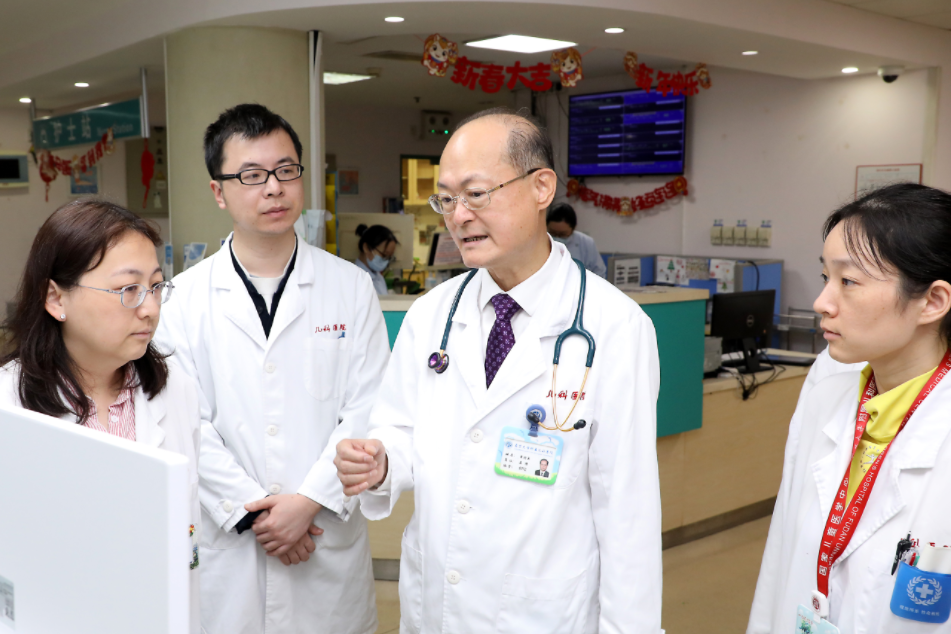
For nearly 20 years, the global medical community has been locked in a contentious debate over whether adjunct hormone therapy can cut the risk of dangerous cardiovascular complications in children with Kawasaki disease, a poorly understood systemic vasculitis that disproportionately affects young kids. Now, a landmark five-year clinical study led by Shanghai’s Children’s Hospital of Fudan University, in partnership with 28 additional medical institutions across China, has delivered a clear, data-backed answer that is reshaping clinical guidelines worldwide.
Kawasaki disease, which triggers inflammation of blood vessels throughout the body, is diagnosed annually in 1 out of every 1,000 children under age 4 in China, and incidence rates are rising across East Asia, the region with the world’s highest prevalence of the condition. While a standard international treatment protocol exists, 10 to 20 percent of patients still develop coronary artery lesions — the disease’s most life-threatening complication — and 0.5 to 1 percent of treated children develop giant coronary artery aneurysms that compromise long-term health and survival. For decades, researchers have searched for additional therapies to improve outcomes, leading to conflicting investigations into the benefits of hormone therapy to reduce inflammation. Past studies were limited by small sample sizes, inconsistent hormone dosing protocols, and heterogeneous patient populations, leaving clinicians around the world with conflicting guidance and widespread uncertainty in daily practice.
Launched in 2021, this new multicenter randomized controlled trial — the largest study of its kind ever conducted globally — enrolled more than 3,200 participants, with 3,058 patients completing full follow-up for the study’s primary endpoint. Researchers compared rates of coronary artery complications between patients who received hormone therapy alongside standard treatment and those who received standard treatment alone, assessing outcomes at two weeks, one month, and three months after disease onset. The trial found no statistically significant difference in coronary artery lesion rates between the two groups. Even more critically, the research revealed that for patients who do not respond to initial standard treatment, adding hormone therapy actually increases the risk of developing coronary complications.
The study’s findings were published online Thursday in the *New England Journal of Medicine*, one of the world’s most prestigious general medical publications. Global medical experts have hailed the research as a transformative contribution to Kawasaki disease care, noting that it will immediately cut unnecessary hormone overuse in treatment, while providing a critical foundation for future research into targeted therapies.
Jane W. Newburger, a leading U.S. cardiologist specializing in pediatric cardiovascular disease, emphasized that future research must move beyond broad anti-inflammatory approaches like hormone therapy to identify the specific biological drivers of tissue-level inflammation, which will enable development of targeted treatments for children at highest risk of life-threatening complications.
Wang Yi, president of the Children’s Hospital of Fudan University, noted that the landmark findings will open new avenues of investigation into Kawasaki disease. The hospital treats more than 7,000 international pediatric patients annually, most with complex, life-threatening conditions, and Wang added that leading high-impact research like this trial will advance clinical practice globally, strengthen medical discipline development, and support Shanghai’s growing role as an international medical hub.
The study addresses a longstanding gap in global pediatric care, offering clarity that will immediately improve clinical decision-making and set the trajectory for the next generation of life-saving treatments for this high-stakes childhood disease.