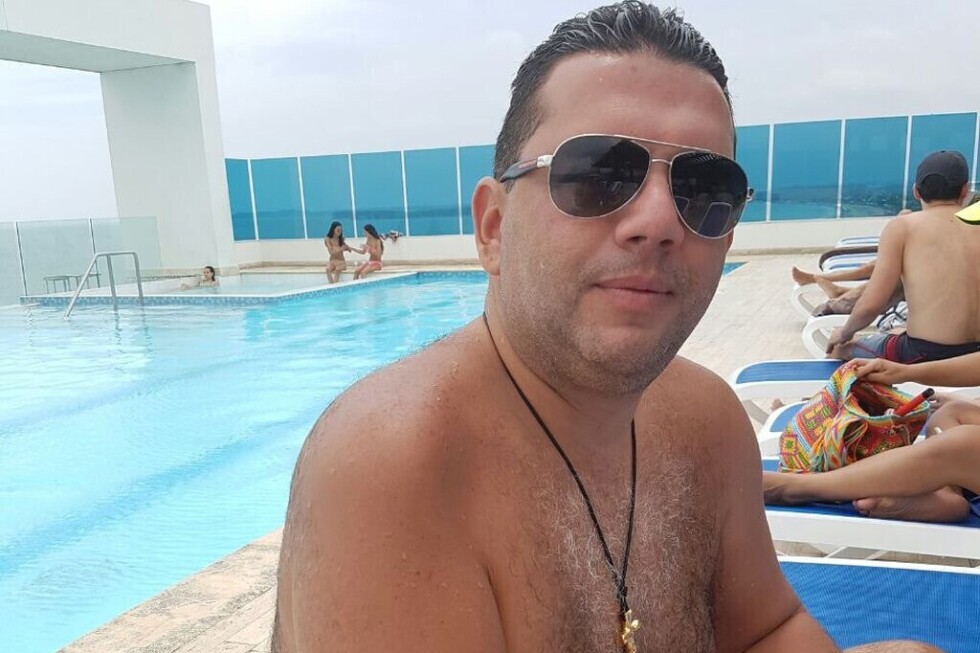
A decades-long confidential informant for the U.S. Drug Enforcement Administration who partied across the globe with rogue agency agents has escaped prison time after pleading guilty to failing to pay income taxes on nearly $4 million earned through his undercover work.
Andres Zapata, 48, received a sentence of time served during a Wednesday hearing in Austin, Texas, according to two anonymous sources with knowledge of the ongoing investigation who spoke to the Associated Press. The sentence was granted in exchange for Zapata’s ongoing cooperation with a 10-year federal inquiry that has already linked multiple DEA agents to professional misconduct.
Zapata, a Colombian national, was extradited to the United States from his home country last year. He had long worked closely with José Irizarry, a former DEA agent currently serving a 12-year prison sentence. Irizarry was convicted of siphoning millions of dollars from money laundering operations to pay for lavish international travel, high-end sports cars, and excessive, party-focused trips that violated agency policy.
Court documents confirm that between 2015 and 2020 alone, the DEA paid Zapata — a professional money launderer working as a confidential informant — $3.8 million for his services. He entered a guilty plea to a single count of income tax non-reporting last July. While DEA rules require all informants to report their informant payments to the Internal Revenue Service, prosecutions for this violation are extremely uncommon.
Neither the U.S. Justice Department’s criminal division, which handled the prosecution, nor the DEA offered immediate public comment on the sentencing outcome.
Zapata’s defense attorney, Don Bailey, argued during the sentencing that prosecuting a cooperating informant for this offense was highly irregular. Bailey noted that unlike standard contractors, informants do not receive standard tax reporting forms such as 1099s or W-9s, leaving many uncertain of their tax obligations. “You don’t know what you owe. You sign a piece of paper for money. You don’t get receipts,” Bailey explained in court, adding that Zapata had put his life at risk to help U.S. law enforcement disrupt violent drug cartel operations and had no intent to violate tax law.
During the hearing, Zapata told U.S. District Judge David Ezra that he was eager to close this chapter of his life, having already spent more than a year in a high-security prison outside his hometown of Medellín while awaiting extradition. “I’ve learned my lesson,” Zapata stated, per a transcript of the proceeding.
Judge Ezra, who praised Zapata for his consistent, substantial cooperation with federal investigators, sentenced him to credit for time already served while in Colombian custody. He also ordered Zapata to pay $1.2 million in restitution to cover the tax revenue lost to the U.S. government, and denied the AP’s request to unseal the full sentencing records.
Internal DEA records reviewed by the AP show the agency first recruited Zapata as an informant back in 1998. At the time, he was working as a vacuum salesman, and his recruitment came after his brother-in-law was arrested on drug trafficking charges. Over the following 20-plus years, Zapata rose to become one of the DEA’s most active informants, organizing covert cash collections and supporting investigations stretching from Peru to Los Angeles. In total, he earned more than $4.6 million in payments from the agency over his career.
Beyond providing investigative tips, Zapata accompanied rogue agents and even some prosecutors from Miami on international trips that Irizarry later called a “world debauchery tour” — events that flagrantly violated DEA rules prohibiting inappropriate close relationships between agents and informants.
A private WhatsApp chat used by the agents to document their three-continent trips details Zapata’s role in arranging for sex workers and bailing members of what Irizarry called “Team America” out of trouble. In one 2018 incident, Zapata was in Madrid drinking with a DEA agent who was briefly detained on allegations of sexual assault against a local woman.
Irizarry has told investigators that Zapata regularly kicked back a portion of his informant payments to corrupt agents. He recalled one incident where Zapata arrived at his Colombian apartment with a bag holding $40,000 in cash — money Irizarry used to purchase a Tiffany engagement ring for his wife.
Court allegations also name Zapata as a middleman for illegal payments Irizarry admitted receiving from Diego Marin, known as Colombia’s “Contraband Czar,” who was himself once a DEA informant. Marin was arrested in Spain earlier this year as part of a large Colombian bribery probe. Video obtained by the AP shows Zapata and Marin partying with DEA agents at a Madrid restaurant together.
Reporting for this story was contributed by Mustian from Natchitoches, Louisiana.