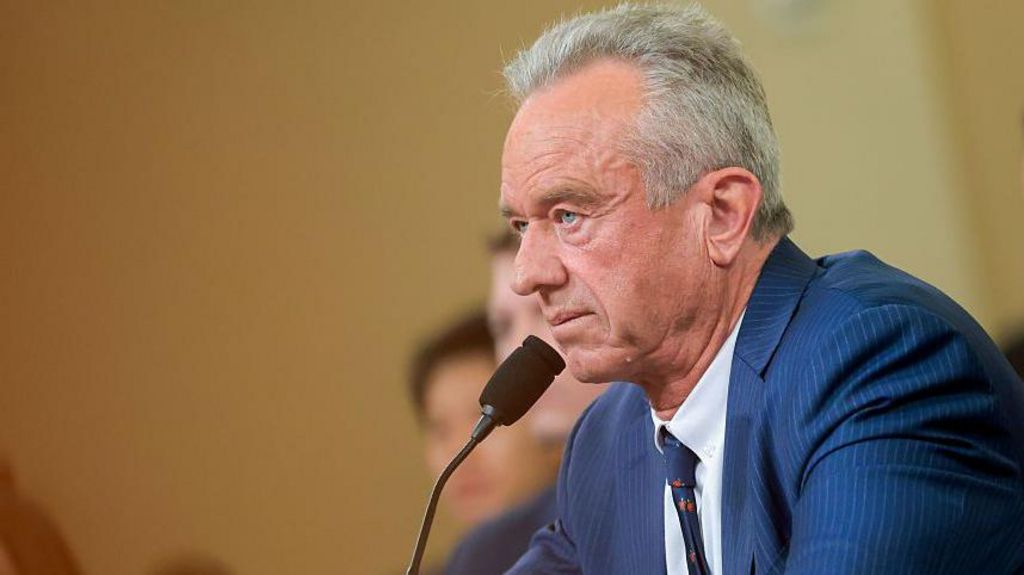
A three-hour congressional budget hearing on Thursday devolved into sharp partisan and policy clashes Thursday, as U.S. Health and Human Services Secretary Robert F. Kennedy Jr. attempted to pivot conversation away from his controversial vaccine stances to a focus on chronic disease prevention, while lawmakers from both parties grilled him on his response to the worst measles outbreak in decades, his proposed agency budget cuts, and questionable public health claims.
The hearing marked Kennedy’s first appearance before the U.S. Congress in months, and centered on the Trump administration’s proposal to slash HHS’ fiscal year budget by roughly $16 billion, a 12.5% reduction from the previous year’s funding level.
Kennedy, a longstanding public skeptic of conventional vaccine safety guidelines, has spent his tenure leading the agency pursuing sweeping overhaul to long-standing U.S. immunization policy. His changes included cutting the number of recommended childhood vaccine doses and reorganizing the agency’s top vaccine advisory panel to seat several prominent vaccine critics. However, a federal judge tossed out the majority of these changes back in March, ruling the new advisory panel appointees had not been properly seated in accordance with federal protocol. While HHS initially announced it would appeal the ruling, the agency has yet to file an appeal, and Kennedy has increasingly avoided public discussion of vaccine policy in subsequent months.
During the hearing, Democratic members of the House Ways & Means Committee repeatedly pressed Kennedy on his mixed messaging around the MMR vaccine amid an ongoing measles outbreak that has recorded nearly 4,000 confirmed cases across the U.S. between 2025 and 2026, including two childhood deaths in Texas last year. Rep. Mike Thompson of California confronted Kennedy with a chart documenting the rising case count, arguing “Your dangerous conspiracy theories are undermining safe and effective vaccines.”
Rep. Linda Sanchez of California asked Kennedy directly whether one of the two Texas child deaths could have been prevented through timely measles vaccination, to which Kennedy responded, “It’s possible, certainly.”
Instead of engaging on questions of vaccine policy, Kennedy attempted to reframe the hearing around his stated priority of ending federal public health policies that he claims have contributed to the nation’s growing chronic disease crisis. “President Trump and I are challenging the status quo and the institutions that defend it as we work to make America healthy again in just 15 months,” he told the committee, adding that the $16 billion budget cut was an unavoidable response to the nation’s $39 trillion national deficit. “Nobody wants to make the cuts,” he said, pushing back on Democratic criticism that cuts to maternal and child nutrition aid and other public health programs would harm population health.
Tensions flared at multiple points throughout the hearing, with Kennedy pushing back against what he framed as Democratic efforts to shut down debate. “They’ve all shut me up and they’ve talked about science, but science is about debate,” he said.
Partisan divides on Kennedy’s leadership were on clear display: multiple Republican lawmakers praised Kennedy’s agenda, with House Budget Committee Chairman Jodey Arrington calling Kennedy “a breath of fresh air” for challenging longstanding institutional norms. However, he drew criticism from at least one Republican lawmaker over his widely debunked claims linking prenatal Tylenol use to autism. Rep. Blake Moore of Utah, who has a neurodivergent son, told Kennedy that the claim had needlessly harmed parents. “My wife was hurt, and she felt for a split-second until we came to our senses and we talked about this, that there was any way she was responsible,” Moore said. “We don’t even know if she took Tylenol during her pregnancy, but that was a hurtful moment for her.” Moore added he was “underwhelmed” by the administration’s autism research efforts to date, a policy area Kennedy has framed as a central mission of his tenure.