As the 2026 FIFA World Cup hosted in North America approaches, Group G has emerged as one of the tournament’s most talked-about sections, melding on-pitch athletic competition with off-field political, social and cultural tensions. The four-team group brings together Iran, Belgium, Egypt and New Zealand, each carrying distinct narratives, challenges and aspirations ahead of their opening fixtures.
Iran, which has qualified for its fourth consecutive World Cup and seventh overall appearance, has never progressed past the group stage in the tournament’s history. Currently sitting 21st in the global FIFA rankings under head coach Amir Ghalenoei — a former Iranian international player — the side lost just one match during its Asian qualifying campaign, marking it as a competitive dark horse in the group. Led by star captain and striker Mehdi Taremi, who has notched an impressive 57 goals across 102 senior national team caps and currently plies his trade at Greek club Olympiacos after successful stints at Porto and Inter Milan, Iran also boasts experienced midfielder Alireza Jahanbakhsh, who plays his club football in Belgium’s top flight.
However, Iran’s participation has been marked by controversy from the outset, exacerbated by long-running geopolitical tensions between Iran and the United States, one of the World Cup host nations. Back in March, Iran’s embassy in Mexico City confirmed the country was in negotiations with FIFA to relocate its three group-stage matches to Mexican venues, though the global governing body has repeatedly stated all fixtures will proceed as originally planned on U.S. soil. Iran has also faced international backlash over its stance on LGBTQ+ rights: the team’s June 26 fixture against Egypt in Seattle is scheduled for the same weekend as the city’s annual Pride celebration, which honors the LGBTQ+ community. Both Iran and Egypt have formally complained to FIFA over the “Pride Match” label applied to the fixture, citing religious and cultural objections. Human rights organizations have also highlighted that same-sex relations carry harsh penalties in Iran, including capital punishment.
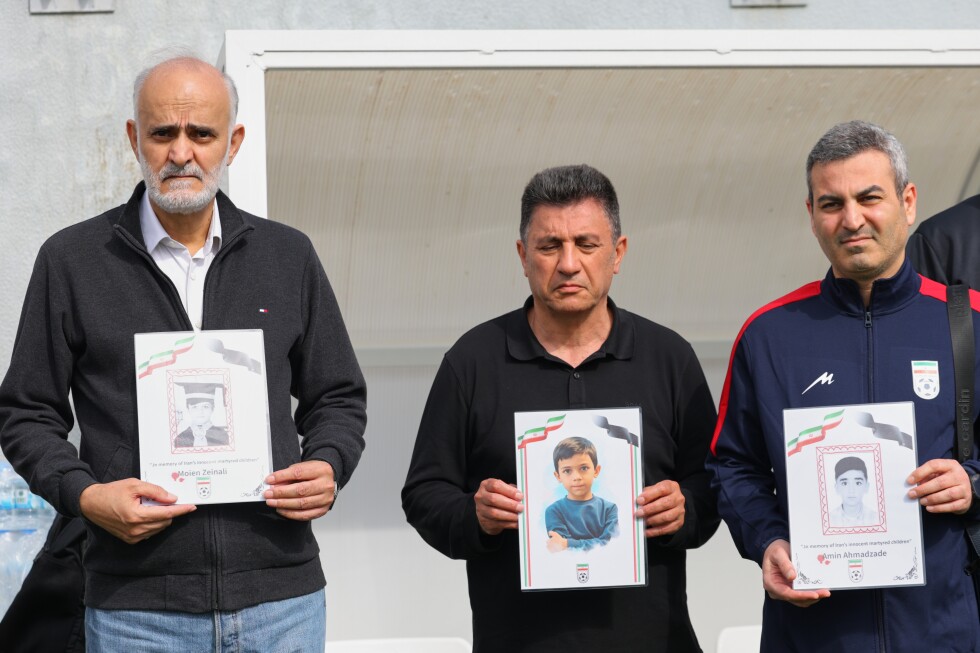
Earlier this year, Iranian players made a political gesture of their own ahead of a March friendly against Nigeria: during the playing of the national anthem, squad members carried small pink and purple backpacks to pay tribute to victims of a February missile strike on an Iranian elementary school, which multiple lines of evidence indicate was carried out by a U.S. missile. In a logistical quirk, Iran is set to host its pre-tournament training camp in Tucson, Arizona, and will kick off its World Cup campaign against New Zealand in Inglewood, California, just outside Los Angeles.
Group G’s clear favorite is Belgium, which is making its 15th World Cup appearance. The Red Devils earned their best-ever tournament finish with a third-place showing at the 2018 World Cup in Russia, but suffered a shock early exit in 2022, failing to advance from their group. Currently guided by head coach Rudi Garcia, Belgium demonstrated their strength earlier this year with a dominant 5-2 win over the United States on American soil in March, cementing their status as the top-ranked side in Group G.
Belgium’s squad blends breakout young talent and veteran experience: 2024 Champions League winner Jeremy Doku of Manchester City is one of the team’s most exciting rising stars, while veteran playmaker Kevin De Bruyne — recently traded to Napoli — returns for his fourth World Cup after recovering from a thigh injury. De Bruyne has scored 36 goals across 117 caps for the Belgian national side. A major question mark hangs over star striker Romelu Lukaku, however, who has been sidelined for months with a hamstring injury, and his availability for the tournament remains unconfirmed. Belgium opens its World Cup campaign against Egypt in Seattle on June 15.
For Egypt, this year’s tournament marks their fourth World Cup appearance overall, and the North African side is still chasing its first-ever win at the global tournament. Their last showing in 2018 was defined by a crushing injury blow to their star captain Mohamed Salah, who missed the opening fixture after picking up a shoulder injury in the UEFA Champions League final. This year, Salah is once again the center of attention: after nine trophy-laden seasons with Liverpool, the winger has confirmed he will leave the Premier League side at the end of the current season, leading to widespread speculation about his next club move in the lead-up to the World Cup. The side is managed by Egyptian legend Hossam Hassan, the country’s all-time leading scorer with 69 international goals. Egypt’s preparations have not been smooth: a March friendly against Spain that ended in a credible 0-0 draw was marred by anti-Muslim chants from a section of the crowd, while Salah missed the fixture with a minor muscle injury sustained in a Champions League match against Galatasaray.
Rounding out Group G is New Zealand, ranked 85th in the world — the lowest ranking of any team in the group. The All Whites, led by head coach Darren Bazeley who has held his role since 2022, are making just their third World Cup appearance after qualifying for the tournament in 1982 and 2010. Like Iran, New Zealand has never advanced past the group stage of a World Cup. The side is captained by striker Chris Wood, who has scored 45 goals for his country, but the Nottingham Forest forward missed five months of club action in the English Premier League with a long-term injury and is still working to regain full match fitness ahead of the tournament. As the tournament draws near, all eyes will be on Group G to see how off-field tensions intersect with on-pitch competition, and which side can claim one of the two knockout stage spots up for grabs.