As Russia escalates deadly targeting of Ukrainian civilians and critical public infrastructure, Ukrainian President Volodymyr Zelenskyy has made securing Western backing for expanded air defense capabilities his nation’s top diplomatic priority during a urgent three-capital tour of Europe this week.
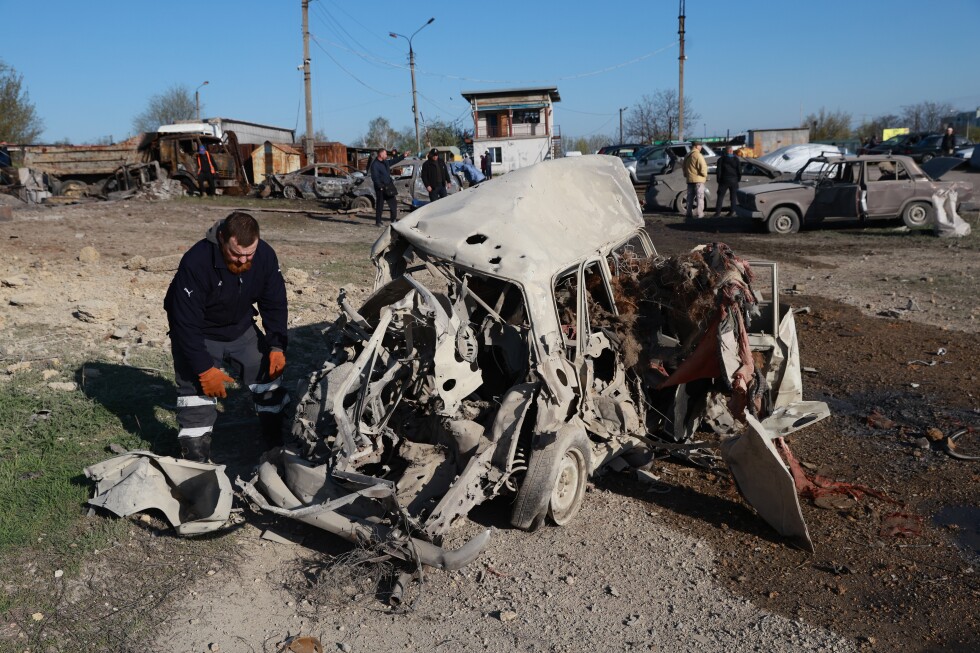
Zelenskyy’s trip, which unfolded across 48 hours with stops in Berlin, Oslo, and Rome, comes amid a fresh wave of Russian long-range attacks that left at least two civilians dead this week, including an 8-year-old boy killed in the central Cherkasy region and a woman killed in a strike on a bus stop kiosk in southern Zaporizhzhia. The strikes hit more than six rear-area regions far from the front lines between Tuesday and Wednesday, extending a relentless campaign of bombardment that has stretched Ukraine’s existing air defense stocks thin.
“Every day we need air defense missiles — every day Russia continues its strikes,” Zelenskyy wrote in a post on the Telegram messaging platform Wednesday. More than four years into Russia’s full-scale invasion, Ukraine has built combat-proven expertise in drone interception and even developed innovative indigenous air defense technologies. But Kyiv has been blocked from leveraging these advances by a critical gap in funding that prevents scaling up domestic production to meet the constant demand for defensive systems.
Ahead of Wednesday’s online coordination meeting of over 50 defense partners supporting Ukraine — chaired by German Defense Minister Boris Pistorius and British Defense Secretary John Healey, with NATO Secretary-General Mark Rutte in attendance — the United Kingdom announced a major new weapons package: 120,000 drones set to be delivered to Ukraine this year, marking the largest single drone commitment London has made to date. The shipment includes long-range strike platforms, intelligence and reconnaissance drones, logistics support drones, and maritime-capability systems, though officials have not yet specified a timeline for deployment.
The latest Russian assault on Wednesday included the largest single drone barrage Ukraine has faced in nearly two weeks: the Ukrainian Air Force confirmed that Russia launched 324 drones and three ballistic missiles into Ukrainian territory overnight, 309 of which were successfully intercepted by existing air defenses. Before dawn Wednesday, Russian forces also dropped a 1.5-ton FAB-1500 glide bomb on central Sloviansk, destroying a landmark children’s sports facility the city relied on for youth programming. A separate overnight strike on Dnipro, a major southeastern Ukrainian city, hit two university campuses, damaging academic buildings, student dormitories, and adjacent residential homes. Dnipro Mayor Borys Filatov confirmed that over 1,000 windows in surrounding structures were shattered by the blast wave, and emphasized that no military targets were located in the strike zone.
On the opposite side of the front, Russian air defenses claimed to have intercepted 85 Ukrainian drones overnight across multiple western and southern Russian regions, the annexed Crimean Peninsula, and the waters of the Black and Azov Seas. Local authorities in Sterlitamak, a Russian industrial city roughly 1,300 kilometers east of the Ukrainian border, confirmed that downed drone debris sparked a fire at a facility in the city’s industrial zone. Radiy Habirov, governor of the Bashkortostan region that hosts Sterlitamak, did not release additional details on the extent of damage or any casualties from the incident.
During his European tour, Zelenskyy has already secured new pledges of military and financial support from Germany and Norway, and is pushing two key priorities to address Ukraine’s air defense gap: first, urging European nations to continue contributing to a shared fund dedicated to purchasing American-made air defense systems, particularly Patriot batteries capable of intercepting Russian cruise and ballistic missiles that regularly target civilian areas. Second, he is advocating for accelerated joint weapons production agreements with European partners for drones and interceptors, while pressing the European Union to quickly disburse a promised €90 billion ($106 billion) support loan that has faced political delays in recent months. No new U.S.-mediated peace talks between Kyiv and Moscow have been announced amid the ongoing escalation.