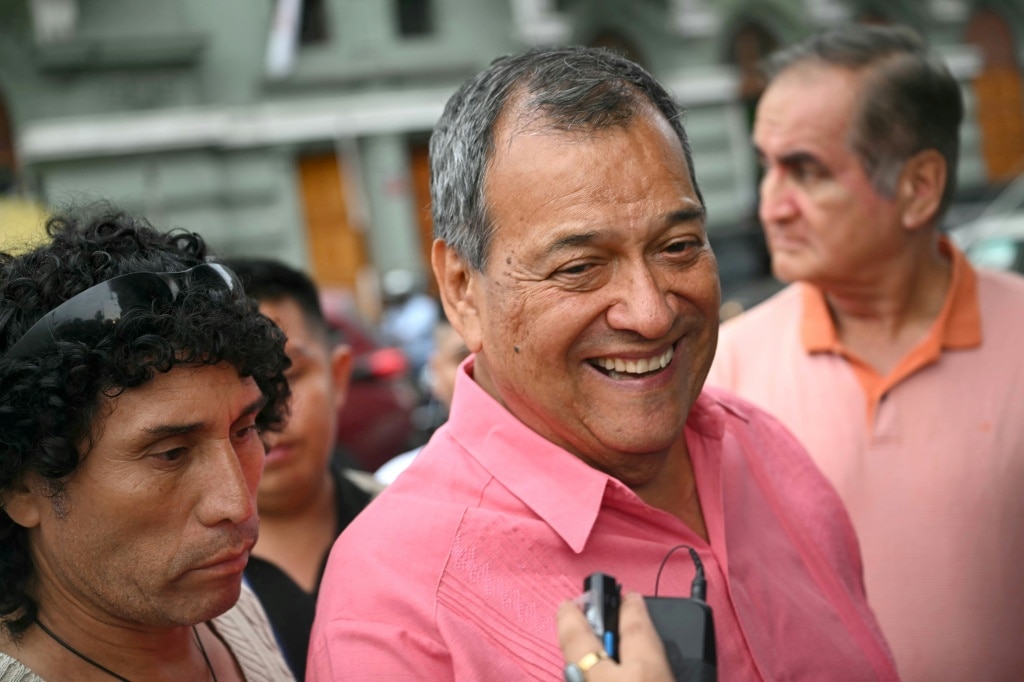
As vote counting continues for Peru’s contentious first-round presidential election, right-wing ultraconservative candidate Rafael Lopez Aliaga has escalated tensions by formally calling for the entire electoral process to be annulled, basing his demand on unproven allegations of systemic voter fraud.
Lopez Aliaga, a Christian nationalist and former mayor of Lima who has openly modeled his political brand on former U.S. President Donald Trump, is locked in a razor-thin three-way race for second place in Sunday’s contest. The top two vote-getters will advance to a June runoff election against current frontrunner Keiko Fujimori, daughter of Peru’s controversial former president Alberto Fujimori.
The first round of voting was marred by widespread logistical failures across the capital city of Lima, where delayed delivery of ballots and other critical electoral materials left tens of thousands of eligible voters unable to cast their ballots on election day. Multiple polling stations were forced to reopen on Monday to accommodate disenfranchised voters, creating widespread disruption and opening the door for unfounded fraud claims to gain traction.
As of Wednesday, with 80 percent of all ballots counted, Fujimori holds a clear lead with approximately 17 percent of the vote. Lopez Aliaga trails in second place with 12.5 percent, with just 0.9 percentage points separating him from third-place social democratic candidate Jorge Nieto, who holds 11.6 percent. Leftist former minister Roberto Sanchez sits just behind Nieto at 10.7 percent, meaning the final outcome of the race for second place remains too close to call.
Speaking to reporters on Tuesday, Lopez Aliaga repeated his baseless fraud allegations and called on Peru’s national electoral commission to invalidate the entire first-round process. “I ask [the electoral commission] to act, declare this entire process null and void, or figure out how to resolve this,” he said. In response to questions from Agence France-Presse, Lopez Aliaga confirmed he was seeking full annulment of the vote to select Peru’s ninth president in just 10 years, and urged his supporters to participate in public protests. “Don’t let them steal our future,” he wrote in a post on his official Facebook page.
Nicknamed “Porky” for his admitted resemblance to the rotund cartoon character Porky Pig, Lopez Aliaga campaigned on a hardline, nationalist platform focused on cracking down on rising violent crime and irregular migration. Among his most controversial policy pledges was a proposal to build maximum-security penal colonies in the Amazon rainforest, surrounded by what he called a “natural fence” of venomous vipers.
Peru has faced chronic political instability over the past decade, with four presidents impeached or removed from office, and this election fielded a record 35 candidates for the nation’s highest office. The entire campaign season was dominated by voter anger over surging extortion and contract killings, as well as widespread public disillusionment with a political establishment broadly viewed as corrupt and ineffective. No candidate is on track to win the 50 percent of the vote required for an outright first-round victory, confirming that a runoff will be held in June as planned.
Independent election observers, including a delegation from the European Union, have publicly confirmed that while the first round was plagued by significant logistical dysfunction, there is no concrete evidence to support Lopez Aliaga’s fraud claims. “Her team found no evidence of fraud,” said Annalisa Corrado, head of the European Union’s election observer mission.
Political analyst Eduardo Dargent, a political scientist based in Peru, told AFP that the widespread logistical failures of the first round handed ammunition to candidates like Lopez Aliaga who are willing to undermine democratic legitimacy to advance their political goals. “The logistics mess has given arguments…to several people who will cry fraud or worse if they are not happy with the result,” Dargent explained.
The chaos has already eroded public trust in Peru’s democratic process among many voters. “We don’t know if the results are true,” Yeraldine Garrido, a 35-year-old Lima receptionist, told AFP. Luis Gomez, a 60-year-old self-employed Lima resident, called the mishap “a major democratic failure.”
In response to the logistical collapse, Peruvian police have already detained one local election official and executed a raid on the private contractor blamed for the late delivery of electoral materials.