Fifty-five years after a group of curious American table tennis athletes crossed a decades-long ideological divide to step onto Chinese soil, the world is once again reflecting on one of the most remarkable turning points in modern diplomatic history. April 2026 marks the 55th anniversary of the groundbreaking “Ping-Pong Diplomacy”, an unplanned, serendipitous breakthrough that softened Cold War tensions between China and the United States and redefined what people-to-people exchange can achieve in even the most strained geopolitical contexts.
The story of this historic thaw did not unfold in a formal cabinet meeting or a high-stakes diplomatic summit. It began on a crowded team bus in Nagoya, Japan, during the 1971 World Table Tennis Championships. When young American player Glenn Cowan accidentally missed his own team’s shuttle and boarded the Chinese national team’s bus, a moment of accidental history was born. At a time when the two nations had cut off formal contact for decades, Chinese champion Zhuang Zedong stepped forward to greet Cowan and offered him a warm gesture of goodwill, a simple act that cut through decades of ideological friction.
That small interaction between two athletes would become a textbook example of how the “small ball” of table tennis could move the “big ball” of global politics. It proved that cultural exchange and mutual respect could open doors that formal diplomatic negotiations had locked for years. More than half a century later, the lessons of that moment still hold powerful resonance for a deeply divided world, reminding global communities that genuine human connection can overcome even the deepest political and social divides.
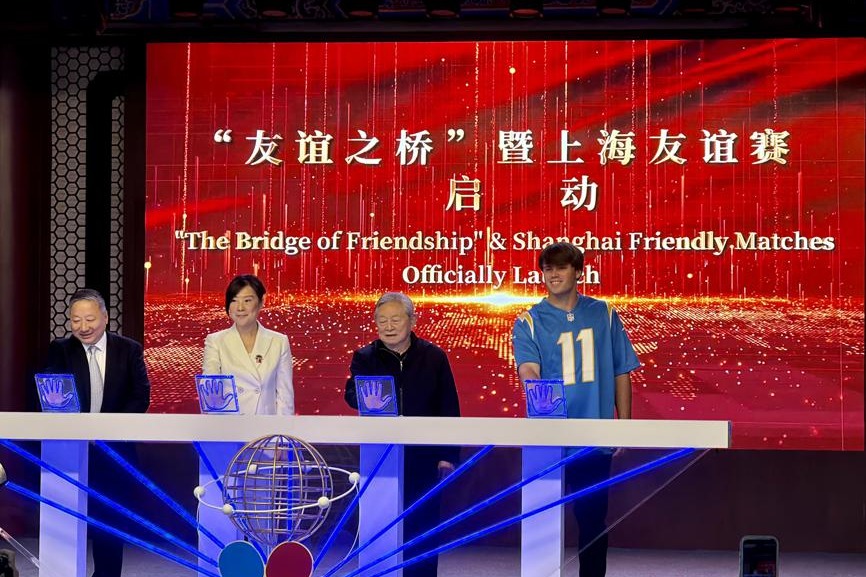
To honor the milestone, commemorative events marking the 55th anniversary and the launch of new China-US youth sports exchange initiatives were held in Beijing on April 10, with a parallel Shanghai leg kicking off at Shanghai University of Sport days later. Members of the original 1971 delegations from both countries gathered in China for an emotional reunion, reaffirming the bonds first forged in that unplanned 1971 encounter. Warm hugs, shared decades-old memories, and a shared commitment to advancing cross-border connection defined the gathering.
The U.S. delegation was led by original 1971 team members Judy Hoarfrost, Olga Soltesez, Connie Sweeris and Dell Sweeris, who were reunited with their Chinese counterparts Zheng Minzhi and Liang Geliang. Liang, who was just 21 years old when the original exchange took place and a contemporary of the late Glenn Cowan, recalled the casual, friendly ten-minute practice the two young players shared half a century earlier.
For Hoarfrost, the memories remain as vivid as the day they were made. “55 years ago, I was 15 years old and the youngest member of the delegation,” she shared. Even after more than five decades, she still carries the roar of 18,000 spectators in a Beijing gymnasium, a sound that has stayed with her for a lifetime. Hoarfrost added that the experience, where she saw Chinese athletes’ incredible skill paired with gentle, open warmth, taught her the core truth of the event’s guiding mantra: “Friendship First, Competition Second.”
The seven-day 1971 trip left an indelible mark on all participating American athletes. Connie Sweeris recalled visiting iconic sites including the Forbidden City and the Great Wall, and sharing the experience of preparing Beijing roast duck, calling these moments “memories I would cherish for the rest of my life”. To this day, a display cabinet at her home filled with trip souvenirs and mementos stands as a permanent tribute to the formative journey.
Speaking to a new generation of young athletes in attendance at the anniversary events, Hoarfrost urged young people to value the unprecedented opportunities for connection they have today. “Please treasure these opportunities to connect. In my day, we had to cross mountains and oceans just to meet face-to-face,” she said. She noted that the digital tools of the 21st century create a bridge between nations that her generation never could have imagined, encouraging young people to maintain open, inclusive minds, immerse themselves in each other’s cultures, and continue learning from one another.
Jan Carol Berris, vice-president of the National Committee on United States-China Relations and a veteran of the original 1971 exchanges, echoed the importance of the milestone. She expressed hope that the 1971 exchange’s “spirit of mutual respect and friendly engagement” can serve as a blueprint for rebuilding a stable bilateral relationship that serves the interests of people in both countries and advances global peace and development.
For Petra Erika Gummesson Soerling, president of the International Table Tennis Federation, the 1971 Ping-Pong Diplomacy exchange stands as both a critical sporting milestone and a landmark in global politics. She described the encounter as a cornerstone of international table tennis history, and expressed hope that its enduring spirit will continue to “strengthen cross-border friendship” in an increasingly fractured world.