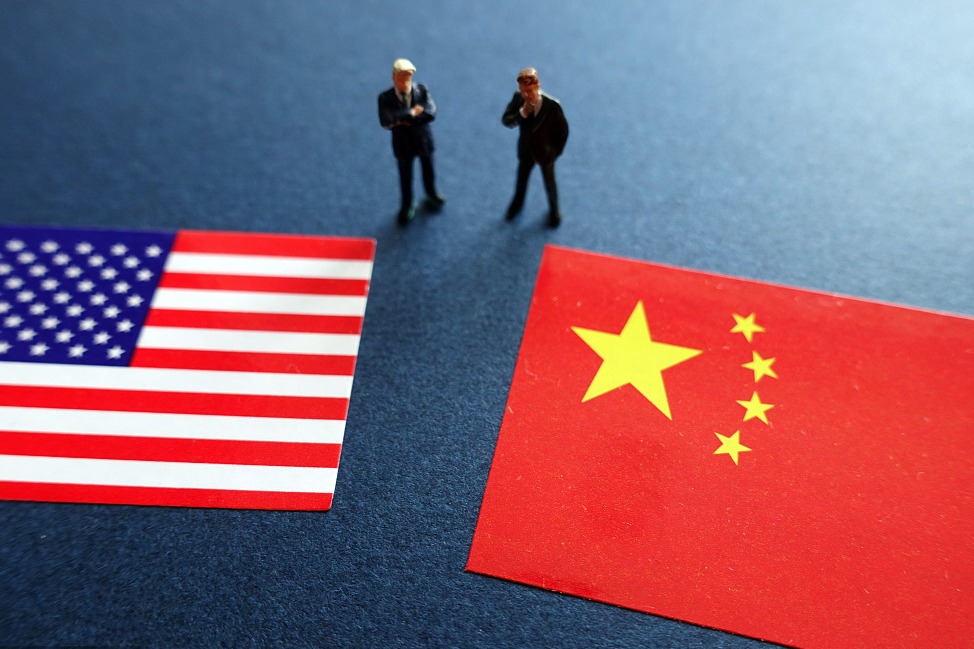
Against the backdrop of ongoing shifts in global trade and cross-border commercial relations, a leading U.S. business leader has articulated a forward-looking vision for collaborative growth between the world’s two largest economic powers, arguing that China and the United States hold unique combined influence to shape the future of global consumer markets. Speaking in an exclusive interview with China Daily on the sidelines of the ongoing China International Consumer Products Expo in Hainan, Sean Stein, president of the US-China Business Council, emphasized that the two countries’ dual status as the world’s largest economies and largest consumer markets gives them unparalleled sway over global industry trends, research and development (R&D) trajectories, and cross-border supply chains. That combined market power, Stein noted, opens up vast untapped potential for collaboration across consumer sectors spanning from premium cosmetics to cutting-edge life sciences — a potential that is on full public display at this year’s Hainan expo. “The US and China together play an incredibly big role in determining trends and what products roll out globally. What’s really interesting is seeing US and Chinese companies collaborate and take things global,” Stein said. He pointed to the successful expansion of Chinese lifestyle brand Pop Mart in San Francisco as a tangible example of this collaborative future in action, noting that the brand’s global success grew directly out of strategic international partnerships with established industry players. “I was incredibly happy to see Chinese brands doing well globally. Their success comes from international partnerships with established brands,” he said. “As the world’s two largest consumer markets, we should have the world’s largest consumer brands working together.” Stein also pushed back firmly against persistent speculation that U.S. firms are accelerating a full exit from the Chinese market, stressing that ongoing investment flows and long-term strategic commitments tell a far different story. “American companies are continuing to invest. American companies aren’t going anywhere,” he said. He added that the core value proposition China offers to international businesses has shifted dramatically over the past three decades: where 25 years ago firms entered the market primarily to access low-wage labor, today they are drawn to China’s growing pool of highly skilled workers and its unmatched ability to scale new products and technologies quickly for global markets. “Twenty-five years ago, no one came to China to do R&D. Now, what I’m seeing is that the best companies are coming and doing some of their most important R&D in China,” he said. Several exhibitors at this year’s expo illustrate that evolution firsthand. Beauty giant Estee Lauder now designs fully customized products specifically for Chinese consumers, a process that extends far beyond simple packaging changes to core product formulation and in-market R&D. Tapestry Inc., the parent company of luxury brands Coach and Kate Spade, has established a dedicated full-fledged R&D center in Dongguan, Guangdong province, where teams design new products locally for distribution to global consumers. This fundamental shift in how global firms engage with China has led Stein to redefine the country’s role in the global economy. “It’s not the China market anymore — it’s the China platform,” he said. “That platform includes consumers, the business-to-business market, partnerships with Chinese firms, R&D, supply chain, and supply chain resilience. All of those are part of it, and that’s only becoming more important.” To unlock the full potential of this collaborative platform, Stein argued that policymakers on both sides need to approach national security concerns in a deliberate, measured way to support more resilient and healthy bilateral trade relations. “We should rationalize security concerns and make it the right size, not over-blow it,” he said. His comments align with recent official statements from Chinese trade authorities: He Yadong, a spokesman for China’s Ministry of Commerce, noted last week at a Beijing press conference that China remains committed to maintaining open communication with the U.S. through existing economic and trade consultation mechanisms to address issues of mutual concern. Despite ongoing macroeconomic and geopolitical headwinds in bilateral relations, Stein said that progressive policy opening initiatives such as the Hainan expo have made China a more profitable and lower-risk destination for foreign direct investment, noting that new policy adjustments from Chinese regulators are continuously removing barriers to market entry. He offered a recent concrete example from Hainan: before new policy changes, a major U.S. firm that specializes in refurbishing pre-owned goods sourced from Southeast Asia and Japan was unable to operate this business model within China. Following the launch of Hainan’s island-wide special customs supervision regime in December 2025, the company has begun establishing a regional refurbishment and re-export base in the province. “That’s a big, encouraging change,” Stein said. The positive impact of Hainan’s policy opening is already visible across a range of foreign firms operating in the province. U.S. electric vehicle maker Tesla has reported a sharp surge in customer activity across its Hainan retail locations. A Tesla spokesperson told China Daily that Hainan’s unique ecological advantages and open policy environment make it “an ideal base for promoting green mobility worldwide”. Driven by new favorable customs policies and local government support incentives, Haikou-based Tesla stores have recorded a 20% month-on-month increase in in-store customer foot traffic, the spokesperson added. Joanne Crevoiserat, CEO of Tapestry Inc., echoed Stein’s optimistic outlook on the Chinese market, noting that Chinese consumers have set a high bar for global brands. “The Chinese consumer is very discerning. They expect high quality and innovation, and that’s why I love being part of this market,” she said. Delivering on those expectations by developing innovative, high-quality products locally for Chinese consumers doesn’t just benefit the company’s domestic performance, Crevoiserat explained — it also strengthens its competitive standing across global markets. Looking ahead, she added, Tapestry sees significant room for further expansion across China, extending beyond established core markets in first- and second-tier cities to fast-growing smaller urban centers across the country.