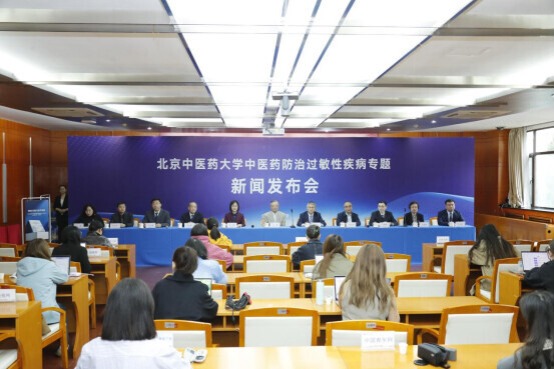
On Monday, a landmark step forward in the management of allergic diseases emerged from China’s capital, as the Beijing University of Chinese Medicine unveiled the nation’s first fully integrated traditional Chinese medicine system that unites theoretical research, clinical application, translational research development, and professional talent cultivation.
Unlike fragmented approaches that have historically separated these core components of medical advancement, this new interconnected framework represents a growing institutional push to address a widespread public health burden that impacts hundreds of millions of people across China. The system’s foundational roots lie in the TCM constitution theory developed by Wang Qi, an academician of the Chinese Academy of Engineering.
Moving beyond the reactive, symptom-focused care that often targets immediate allergic reactions such as sneezing, skin itching, and rashes, the framework adopts a holistic, three-pronged diagnostic approach that evaluates a patient’s overall physical constitution, specific underlying allergic predisposition, and current presenting symptoms. Its core goal is to correct the deeper internal bodily imbalances that trigger allergic reactions at their source, rather than just managing flare-ups after they occur. This patient-centered model delivers customized long-term management plans tailored to each individual’s unique physiological profile.
At the heart of the new system is a three-tier prevention strategy aligned with core TCM principles. The first tier focuses on stopping allergic symptoms before they start by supporting overall bodily health, the second targets early intervention to stop conditions from worsening, and the third works to reduce the chance of recurrence after patients recover.
To turn this theoretical framework into accessible clinical care, the university has launched a cross-institutional allergy treatment alliance across all its affiliated hospitals, alongside the rollout of specialized multidisciplinary allergy clinics. Standardized evidence-based herbal formulas and evidence-backed external TCM therapies have also been introduced to ensure consistent, high-quality care across participating sites.
On the education and global outreach side, Yan Zhanfeng, vice-president of the university’s Dongzhimen Hospital, announced the launch of an international training program focused on integrative allergology. The initiative is designed to cultivate a new generation of medical professionals with expertise in both traditional Chinese medicine and modern immunology.
Liu Cunzhi, vice-president of the Beijing University of Chinese Medicine, noted that the program deepens cross-sector integration between academic research, frontline clinical care, and the healthcare industry. Beyond meeting domestic public health needs, the initiative aims to share Chinese medical expertise with the global community working to address the rising global burden of allergic diseases.