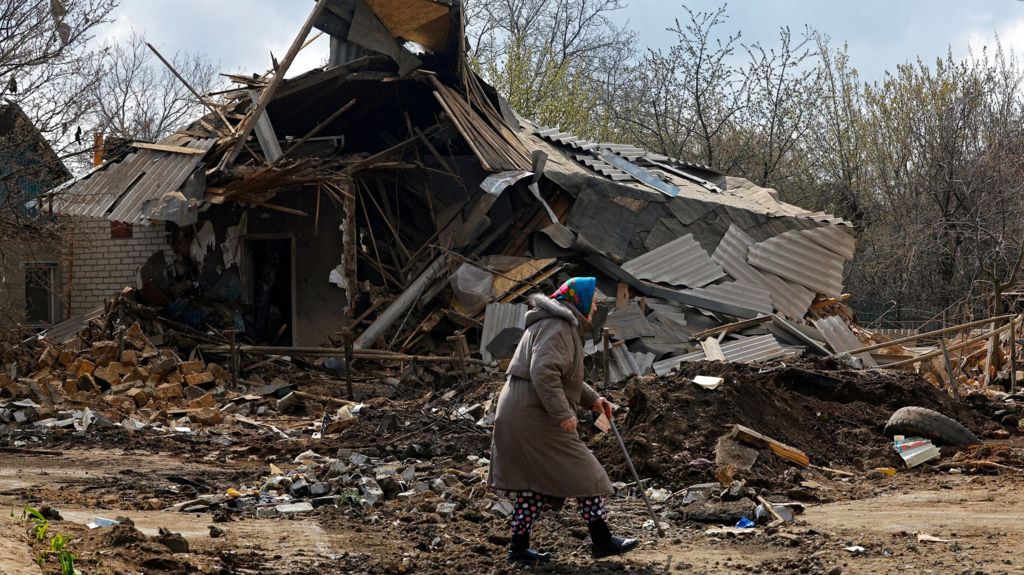
A unilateral Orthodox Easter ceasefire between Russia and Ukraine descended into mutual accusations of widespread violations within hours of taking effect, derailing Ukrainian hopes of extending the truce to kickstart stalled peace talks. The temporary pause in fighting, announced unilaterally by Russian President Vladimir Putin earlier this week after months of rejecting Ukrainian calls for temporary ceasefires, went into force at 16:00 local time on Saturday, coinciding with Orthodox Easter celebrations.
Within less than 24 hours of the truce starting, Ukraine’s military released a damning tally claiming Russian forces had carried out 2,299 separate violations of the cessation of hostilities. According to the Ukrainian account, Russian troops launched 28 ground assaults and conducted nearly 2,000 drone strikes across the front line, though no large-scale bomb or missile attacks were registered. In one of the most high-profile incidents, local authorities in Ukraine’s northern Sumy region, which shares a direct border with Russia, confirmed a Russian drone struck a civilian ambulance overnight, leaving three medical personnel wounded.
Russia quickly hit back with its own set of violation claims, with the country’s defense ministry saying Ukrainian forces had committed 1,971 breaches of the truce. The Russian account included three attempted Ukrainian counter-offensives in the central Dnipropetrovsk region, overnight strikes on Russian positions near Pokrovsk and Otradne, and four failed Ukrainian advance attempts in Sumy and Donetsk regions that Russian forces successfully repelled, per the defense ministry statement.
Long before the full violation counts were released, both sides had already documented smaller, limited breaches in the opening hours of the ceasefire on Saturday, signaling the truce’s fragility from its onset. Even as fighting continued across the front, the two sides completed a long-planned prisoner of war exchange on Saturday, swapping 175 detainees each — a rare point of cooperation that included the release of seven civilians per side.
Ukrainian President Volodymyr Zelensky had previously stated that Ukrainian forces would respond “symmetrically” to any Russian attacks during the ceasefire, framing Easter as a natural moment for peace. He also held out tentative hope that the temporary truce could be extended beyond the Easter holiday, a step he said would create space to restart peace negotiations that have been effectively frozen since the outbreak of the Israel-Hamas war in the Middle East drew global attention away from the conflict.
Russia immediately rejected the proposal to extend the ceasefire, confirming that it planned to resume full-scale offensive operations on Monday. This is not the first temporary pause arranged between the two warring parties this year: earlier in 2025, Putin agreed to a U.S. request to halt strikes on Ukrainian energy infrastructure as the country faced a period of extreme winter cold, a limited concession that held partially through the coldest months.
For frontline Ukrainian soldiers and civilians living through the 3-year full-scale invasion, which launched in February 2022, little optimism surrounds the ceasefire initiative. Kyiv and its Western European allies have long pushed for a full, comprehensive ceasefire as an non-negotiable first step toward negotiating a lasting peace deal to end Russia’s invasion. Moscow, by contrast, has repeatedly insisted that a final peace agreement must be reached before any permanent cessation of hostilities can take effect — a positioning that Kyiv and its allies say proves Russia has no genuine intention of ending the war.