Diplomatic relations between North Korea and longtime ally China are entering a fresh period of deepened cooperation, following high-level talks in Pyongyang that saw North Korean leader Kim Jong Un publicly align with Beijing’s core policy priorities amid shifting global geopolitics, North Korea’s state-run Korean Central News Agency confirmed Saturday.
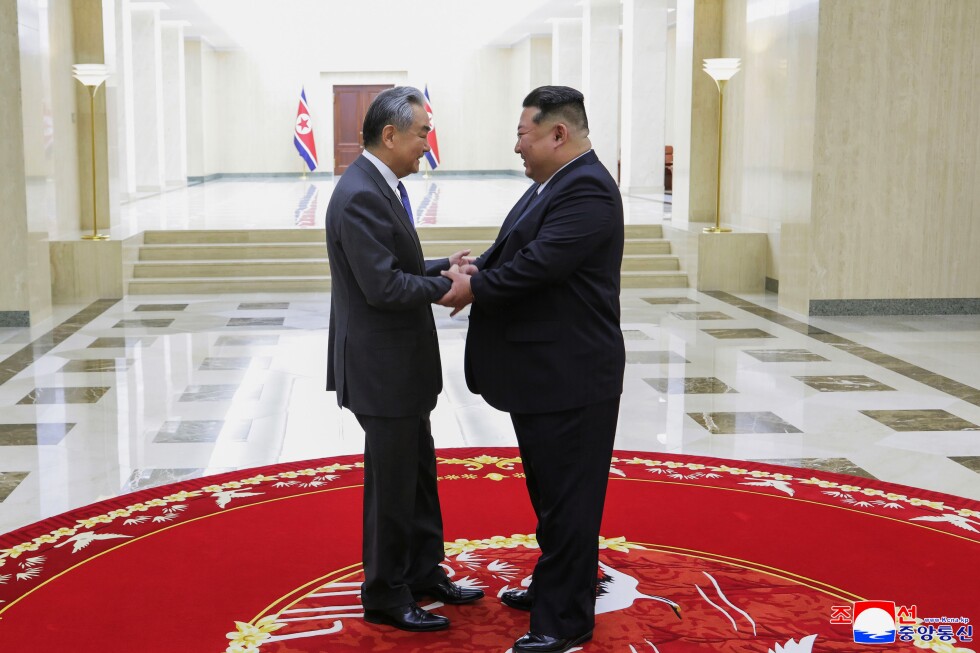
During Friday’s closed-door meeting with visiting Chinese Foreign Minister Wang Yi, Kim made clear that Pyongyang unreservedly supports China’s efforts to safeguard its territorial integrity under the long-held one-China principle — Beijing’s formal stance that Taiwan is an inalienable part of Chinese territory. The North Korean leader also laid out Pyongyang’s positions on a range of unspecified regional and global issues of shared concern, stressing that steady, expanded development of bilateral ties has grown far more critical in today’s tense geopolitical climate, KCNA reported.
Wang, who is wrapping up a two-day official trip to North Korea, noted that the bilateral relationship has advanced to a “new phase” following the 2023 summit between Kim and Chinese President Xi Jinping. This visit marks Wang’s first trip to Pyongyang in seven years, and he held preliminary in-depth discussions with North Korean Foreign Minister Choe Sun Hui on Thursday focused on expanding cooperation, rebuilding people-to-people exchanges, and aligning views on key global affairs. Neither North Korean nor Chinese state media have publicly disclosed whether talks covered U.S. policy or the ongoing conflict in the Middle East.
The high-profile engagement aligns with Kim’s long-running diplomatic strategy: by embracing the vision of a multipolar global order and rejecting what he frames as U.S.-led unipolar hegemony, the North Korean leader has worked to break years of international isolation by strengthening ties with major powers at odds with Washington. While Russia has emerged as Kim’s top foreign policy priority in recent years — with Pyongyang supplying thousands of troops and large stockpiles of weapons to support Moscow’s invasion of Ukraine — Kim has simultaneously moved to rebuild closeness with China, the North’s historical primary ally and most important economic lifeline.
Last September, Kim joined Chinese President Xi and Russian President Vladimir Putin for a World War II commemoration in Beijing, where he held his first summit with Xi in six years, a move designed to frame Pyongyang as a core member of a unified bloc countering U.S. influence. Just last month, the two Asian neighbors completed the first stage of restoring cross-border travel connectivity, resuming direct flights and passenger train services that had been completely suspended at the start of the COVID-19 pandemic in 2020.
Wang’s trip to Pyongyang comes ahead of a widely anticipated rescheduled summit between U.S. President Donald Trump and Xi Jinping, set to take place in Beijing in May. Some South Korean officials have expressed cautious hope that the U.S.-China talks could open a new diplomatic pathway to engage Pyongyang. Kim has cut off all substantive dialogue with Washington and Seoul since the 2019 collapse of his nuclear diplomacy with Trump during the U.S. leader’s first term. In the years since, Kim has adopted an uncompromising hard-line stance toward South Korea — which he now labels North Korea’s “most hostile” adversary — and has repeatedly rejected U.S. offers to restart talks, demanding that Washington drop its requirement for North Korean denuclearization as a precondition for any negotiation.