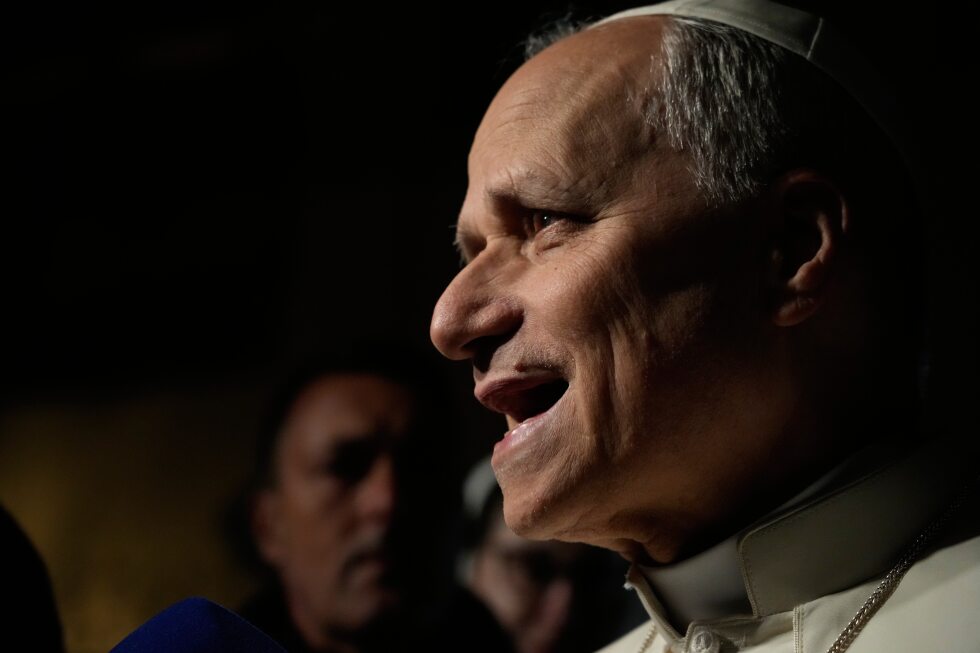
VATICAN CITY – A landmark papal journey is set to kick off Monday, as Pope Leo XIV makes his first visit to Algeria, launching an 11-day, 11,000-mile trek across four African nations that underscores both the rapid growth of Catholicism on the continent and the complex challenges it and local communities face. The sweeping itinerary, which includes stops in Algeria, Angola, Cameroon and Equatorial Guinea, requires 18 separate flights and will see the 70-year-old pontiff deliver addresses and homilies in four languages: French, Spanish, Portuguese and English. The logistical scale of the journey has drawn comparisons to the extensive global travels of a young St. John Paul II. When Leo identified himself as “a son of St. Augustine” on the night of his election, many Algerians initially interpreted the comment as a reference to ancestral ties to the North African nation, where the 5th-century Christian leader lived and died. While the line actually referenced Leo’s commitment to Augustinian spirituality, the connection to one of Christianity’s most influential figures – who is widely recognized by Algeria’s Sunni Muslim majority – has already served as a warm opening for the pontiff’s visit. This tour marks a deliberate priority on Africa, a region that has become central to the global expansion of the Catholic Church, yet carries a unique set of social, political and theological challenges that Leo will directly address. Across the four nations, which span vastly different cultural and historical contexts, Leo’s agenda covers a broad spectrum of pressing issues. Key themes include the human and environmental costs of unregulated resource extraction – a critical concern in a region that supplies much of the world’s oil, yet where a large share of the population lives in deep poverty. He will also address systemic corruption in long-ruling authoritarian regimes, and peace-building in regions torn by sectarian and separatist conflict. In Cameroon, where Catholics make up 29% of the population, organizers expect massive turnout, with as many as 600,000 faithful set to attend one of Leo’s public Masses. The pontiff will also host a dedicated peace gathering in Bamenda, a northwestern city that has been ravaged by years of separatist violence. For local Catholic believers, the visit is a moment of profound spiritual significance. “To see His Holiness Pope Leo XIV arrive in Cameroon, for us who are Catholic Christians, it further strengthens our faith, it further strengthens our ties with our God,” said Simon Pierre Ngombo, a Cameroonian Catholic. “It is a perfect moment to touch each other’s hearts.” For Algeria, the visit offers a high-profile platform for Leo to advance his push for peaceful coexistence between Christians and Muslims, at a moment of heightened global religious tension tied to the U.S.-Israeli conflict in Iran. Notably, Vatican officials confirmed that no additional security measures have been added for the trip despite ongoing regional instability. Leo, who has already positioned himself as a moderate counterweight to U.S. President Donald Trump within American religious circles, will visit the Great Mosque of Algiers, where interfaith dialogue will be a core focus of discussion, according to Algiers Archbishop Cardinal Jean-Paul Vesco. Algeria carries a painful modern history: a brutal 1990s civil war, known locally as the “black decade,” killed an estimated 250,000 people during a government campaign against an Islamist insurgency. Just last year, the country took a major step toward addressing its colonial past, when parliament voted to formally label 130 years of French colonization a crime against the Algerian people, and called for restitution of property seized during colonial rule. “The visit acts as a bridge between the Christian and Muslim worlds, while reflecting the richness of the country’s history,” Vesco told Algeria’s official news agency APS. However, the trip has already seen one notable point of disagreement: Algerian authorities rejected a Vatican request for Leo to travel to Médéa, 30 miles south of Algiers, to pray at the site of the Tibhirine monastery, where seven French Trappist monks were abducted and killed by Islamist fighters in 1996, during the civil war. The monks were among 19 Catholic clergy and laypeople killed during the conflict, and were beatified as martyrs for the faith in 2018, in the first such ceremony ever held in a majority-Muslim nation. In a commentary supporting the government’s decision, state-run daily El Moudjahid noted that “Algeria has no intention of reopening a painful chapter of its history,” though Leo is still expected to acknowledge the monks’ sacrifice during his visit. Beyond interfaith dialogue, the tour shines a light on the dramatic transformation of the Catholic Church in Africa. Recent Vatican statistics show that the continent accounted for more than half of all new Catholic baptisms globally in 2023, adding 8.3 million new faithful to the church. What was once a region dependent on Western missionary work now exports thousands of priests and nuns to congregations around the world every year. Angola and Cameroon are consistently among the top African countries for new priestly vocations: as of December 2024, Angola counted 2,366 seminarians, while Cameroon had 2,218, ranking just behind leading vocation hubs Nigeria, the Democratic Republic of Congo and Tanzania. But this exponential growth has brought significant growing pains, as the church adapts to local cultural contexts while upholding core theological doctrines. Past popes have repeatedly reminded African clergy of the requirement to uphold celibacy vows, and a 2009 visit to Angola and Cameroon by Pope Benedict XVI was overshadowed by global backlash to his claim that condoms worsen the global AIDS crisis, a statement widely condemned by public health experts. Today, one of the most pressing challenges the Vatican faces in Africa is ethnic division within church leadership, particularly in the selection of bishops. According to the Rev. Fortunatus Nwachukwu, second-in-command at the Vatican’s missionary evangelization office, bishops assigned to multi-ethnic dioceses are frequently rejected by local clergy and faithful based on their ethnic origin. Nwachukwu terms this trend the “son of the soil syndrome,” noting that the Vatican emphasizes the identity of “son of the church” over ethnic affiliation. Another longstanding point of tension is the traditional practice of polygamy, which African bishops have repeatedly raised as a critical cultural issue for the church. In response, the Vatican released a full doctrinal document last year reaffirming the church’s commitment to monogamous marriage, and convened a special working group to study the issue. Catholic doctrine holds that marriage is a lifelong, monogamous union between one man and one woman, a position that clashes with longstanding cultural norms in many rural and nomadic African communities, where multiple wives and large families are often seen as an economic necessity for survival. Vatican spokesman Matteo Bruni confirmed that Leo will hold multiple meetings with clergy, bishops and lay faithful during the tour to reaffirm the church’s teaching on Catholic family life. Leo will also turn a spotlight on the harms of resource extraction and corruption in former European colonies that are now major global suppliers of oil, gold, diamonds and iron. While these industries have driven economic growth in recent decades, the benefits have largely accrued to a small elite, while local communities and the environment have suffered severe harm. This issue is particularly acute in Equatorial Guinea, where President Teodoro Obiang Nguema Mbasogo has held power since 1979, and he and his family face widespread international accusations of systemic corruption and authoritarian rule. This focus on environmental justice and economic equity aligns with the legacy of Pope Francis, who centered these themes in his landmark 2015 environmental encyclical *Laudato Si’* (Praised Be), a document Leo has openly endorsed and actively promoted. This Associated Press religion coverage is produced through a collaboration with The Conversation US, with funding from Lilly Endowment Inc. The AP retains sole responsibility for all content.
Pope’s Africa trip takes him to a source of growth for the church, and critical challenges