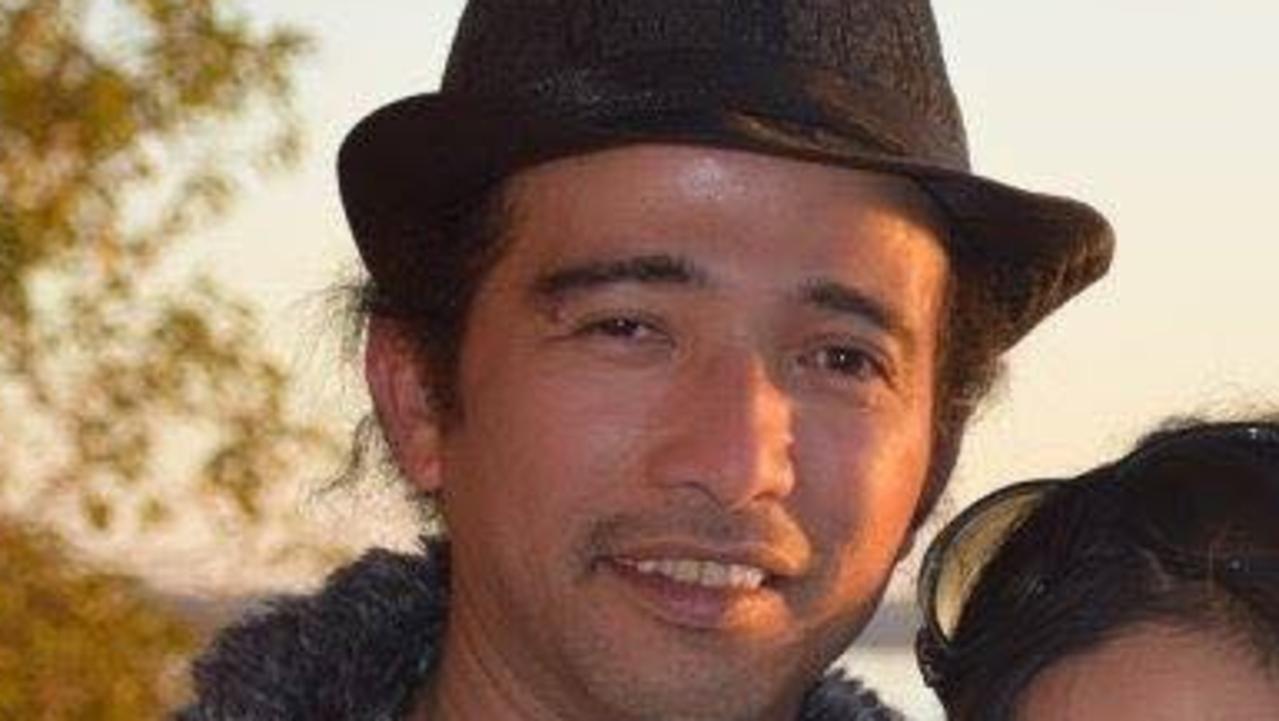
More than two decades after a 34-year-old man was found dead in a New South Wales river, his alleged killer has gone on trial in the NSW Supreme Court, with prosecutors laying out a dramatic case rooted in romantic jealousy, tangled forensic evidence, and a long-unresolved love triangle.
Gofal Baziad, 54, a resident of western Sydney, has pleaded not guilty to a single charge of murder for the death of Jason Palmer, who disappeared in early February 2004 and whose body was recovered three weeks later from the Nepean River at Menangle. Opening the Crown’s case before a jury on Friday, lead prosecutor Brett Hatfield SC outlined the alleged motive: Baziad, who had been romantically involved with Palmer’s wife Renny during a separation between the couple, killed Palmer to rekindle his relationship with her after she chose to reconcile with her husband in late 2003.
Court documents and prosecution arguments detail that at the time of Palmer’s death, he and his wife had an on-again, off-again marriage. The pair separated in 2002, during which time Renny Palmer began a relationship with Baziad, before reconciling in 2003. When Palmer asked his wife to make a final choice between the two men, she selected Palmer, a decision Baziad outwardly accepted, according to Hatfield.
The prosecution alleges Baziad carried out the killing in the late hours of February 6, 2004, or early the next morning at Palmer’s rented unit on Barremma Road, Lakemba. According to the allegation, Baziad first struck Palmer over the head with a heavy glass object, before stabbing him multiple times in the back, hip, and chest. He then wrapped Palmer’s body in a blue-green sleeping bag, weighed it down with two large boulders secured with a thin yellow rope, and transported the corpse to the Nepean River to dump it, Hatfield told the court.
Palmer was last seen leaving his wife’s Belfield home on February 6, and Renny Palmer reported him missing several days later after repeated failed attempts to contact him. Kayakers discovered his wrapped body in the Menangle section of the Nepean three weeks after his disappearance. Crucially, prosecutors say forensic evidence links Baziad directly to the killing. The yellow rope used to tie the boulders to Palmer’s body matches fragments of identical yellow rope recovered from a garden shed at Renny Palmer’s Belfield home – a shed that Baziad accessed the day before the killing, when he borrowed Palmer’s wife’s red Ford station wagon, claiming he needed to move items out of his own unit. The sleeping bag used to wrap the body also came from the same camping gear stored in that shed, the court heard.
Forensic testing of the borrowed station wagon turned up another damning piece of evidence: trace blood stains on the rear passenger seat, footwell carpet, and the car’s boot. A DNA swab taken from the boot’s blood stain matched Jason Palmer’s genetic profile, Hatfield told the jury, leading the Crown to argue Baziad used the vehicle to transport Palmer’s body from his Lakemba unit to the river for disposal.
Beyond physical evidence, the prosecution laid out a pattern of behavior it says supports the allegation against Baziad. Hatfield told the jury Baziad has a well-documented history of violent jealousy toward any man that became romantically involved with Renny Palmer. After the pair began a relationship following Palmer’s death – a relationship that lasted until 2018, during which the couple lived together in Indonesia before returning to Australia – Baziad attacked another man Renny Palmer was dating outside a Gold Coast hardware store in 2018, shortly after his own relationship with her ended. “The Crown case alleges that evidence supports that the accused had these two tendencies: firstly, to be jealous about Renny Palmer and any male that she might be romantically involved with,” Hatfield said. “And the second tendency is to act violently, when he believed Renny Palmer is romantically involved with a person other than himself.”
Prosecutors also noted that Baziad left Australia for Singapore just six weeks after Palmer’s disappearance, on March 28, 2004, and did not return to the country until 2009. At the time of his departure, he told investigators he was leaving to close a business deal and would return to assist with the probe, but his departure still came immediately after Palmer’s killing. Notably, Renny Palmer faces no accusations of any wrongdoing in connection with Palmer’s death, and is scheduled to take the witness stand to give evidence next week, the court confirmed. Baziad himself was only arrested and charged with murder earlier this year, 20 years after the killing, closing a long-running cold case for NSW Police.
In her opening address to the jury on Friday, Baziad’s defense barrister Madeleine Avenell SC pushed back against the Crown’s case, arguing that the evidence presented is too weak to secure a conviction beyond reasonable doubt. Avenell noted that there are substantial points of disagreement between the prosecution and the defense over both the admissibility of evidence and how it can be interpreted, and urged jurors to keep the burden of proof in mind throughout the trial. “My submission to you is going to be this – you won’t be able to be positively satisfied of the ultimate question that is put to you in this trial. Which is: has the prosecution proved beyond reasonable doubt that it was Mr Baziad who is the person responsible for Mr Palmer’s death?” Avenell told the court. “Ultimately, that is the thing you should have at the forefront of your mind.”
The trial against Baziad is ongoing at the NSW Supreme Court.