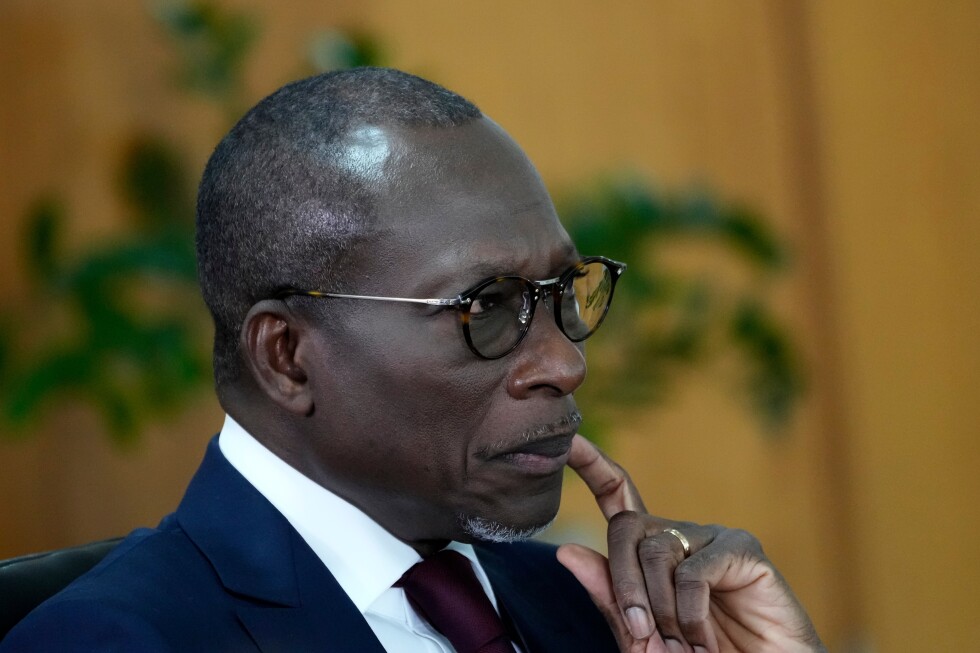
On Sunday, April 12, nearly 8 million eligible voters across Benin will head to the polls to select a new president, bringing to a close 10 years of governance under outgoing leader Patrice Talon, whose tenure leaves behind a deeply mixed national legacy. The race, which pits ruling coalition candidate and former finance minister Romuald Wadagni against sole opposition contender Paul Hounkpè, unfolds against a backdrop of robust macroeconomic growth, rising concerns over democratic erosion, and an escalating jihadi insurgency in the country’s northern borderlands.
Wadagni, 49, is widely recognized as Talon’s handpicked successor, entering the election with significant structural advantages. In January’s parliamentary vote, all opposition parties failed to meet the controversial 20% electoral threshold required to win legislative seats, leaving Talon’s two allied allied political factions in full control of all 109 seats in the National Assembly. Further, the opposition’s most high-profile potential candidate, Renaud Agbodjo of The Democrats party, was barred from running after failing to collect the required number of parliamentary endorsements — a requirement critics argue was deliberately designed to exclude major rivals from the ballot. For Fiacre Vidjingninou, a political analyst at the Lagos-based Béhanzin Institute, these barriers leave the field tilted heavily in Wadagni’s favor, with the ruling candidate also boosted by cross-faction support from influential establishment figures and a clear, verifiable record of economic policy.
“Ten years at the Finance Ministry have given him something rare in African politics: a quantified record — verifiable and difficult to dismantle in a serious debate,” Vidjingninou explained.
Under rules governing the 2024 election, a candidate must win an absolute majority of at least 50% of the vote to claim an outright victory in Sunday’s first round. If no candidate hits that threshold, a runoff election between the top two finishers will be held on May 10.
Wadagni has centered his entire campaign on the strong macroeconomic performance Benin recorded during Talon’s tenure, which overlapped with his 10 years leading the finance ministry. Data from the International Monetary Fund shows Benin’s economy expanded by 7% in 2023, placing it among the most consistent high-growth economies in West Africa. For nearly a decade, the country sustained robust growth driven by agricultural output, cross-border trade, and a major expansion of the port in Cotonou, which transformed Benin into a critical trade transit hub for landlocked neighbors across the region. Major infrastructure upgrades have also been rolled out across the country during this period. However, these economic gains have not been equally distributed: widespread poverty remains entrenched in rural areas and the underdeveloped northern region, leaving many voters disillusioned with the status quo.
Critics of the outgoing administration have highlighted a clear democratic backslide during Talon’s tenure, marking a departure from Benin’s longstanding reputation as one of West Africa’s most stable pluralist democracies. Since taking office in 2016, Talon has overhauled electoral rules and been accused of weaponizing the national justice system to sideline political opponents. In November 2023, a constitutional reform extended presidential terms from five to seven years, created a new senate partially appointed by the sitting president, and raised the electoral threshold for parliamentary representation, further limiting opposition access to power. Leading global human rights organizations Amnesty International and Human Rights Watch have documented a sustained crackdown on dissent under Talon, including arbitrary detention of opposition figures, strict limits on public protests, and growing pressure on independent media outlets. In recent years, widespread protests over soaring living costs were violently suppressed by government security forces.
Compounding political tensions is a growing security crisis that has threatened stability for years. In December 2023, a faction of military officers launched a failed coup attempt to oust Talon’s government, part of a broader wave of attempted and successful military takeovers across West and Central Africa, most of which have followed a pattern of disputed elections, constitutional controversy, security failures, and widespread youth discontent. A core grievance cited by the coup plotters was the rapid deterioration of security in northern Benin, where the country has faced growing spillover violence from the jihadi insurgencies raging in neighboring Burkina Faso and Niger. The tri-border region is the operational heart of Jama’at Nusrat al-Islam wal-Muslimin (JNIM), an al-Qaida-affiliated extremist group, and security cooperation has collapsed since both neighboring states fell under military junta rule in recent coups. Last year alone, an extremist attack on northern military outposts killed 54 Beninese soldiers.
Vidjingninou notes that while the failed coup damaged the outgoing administration’s narrative of steady governance, the climate of uncertainty could ultimately work to Wadagni’s advantage. “In a context perceived as unstable, cautious voters tend to choose continuity and familiarity over the risk of the unknown,” he said.
Voter opinions ahead of Sunday’s vote are deeply divided. Roch Gbenou, a civil servant based in Cotonou, identified two top priorities: more equitable wealth distribution and the restoration of democratic freedoms, which he said “appear to have been substantially restricted” in recent years. Gbenou added that he has little confidence the election will produce meaningful change, suggesting “it will ultimately only serve to legitimize a choice already made.” By contrast, Mathias Salanon, a retired police officer, praised Talon’s tenure and expressed hope that the next president will build on his progress to stabilize national economic and political life. “In more than 50 years of my life I have not seen such a fierce will to develop the country as during President Patrice Talon’s 10 years,” he said. For Cotonou resident Sofiath Akadiri, the most pressing issues are expanded access to affordable health care, quality education, and formal employment, alongside broader demands for social justice and a return to established democratic norms.