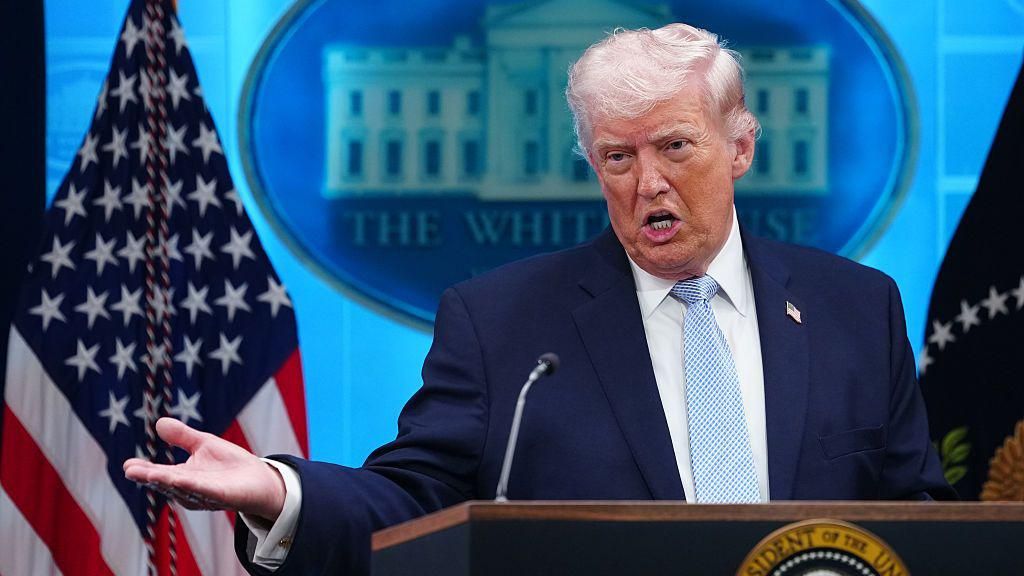
Escalating tensions in the ongoing Iran conflict, U.S. President Donald Trump has issued a stark ultimatum to Tehran: reopen the strategically critical Strait of Hormuz, a linchpin of global energy supply chains, and reach an acceptable deal by 20:00 EDT Tuesday (01:00 GMT Wednesday), or face catastrophic American military action that could wipe out the country’s critical infrastructure overnight. Speaking at a White House press conference on Monday, flanked by Joint Chiefs of Staff Chairman General Dan Caine and Defense Secretary Pete Hegseth, Trump doubled down on aggressive rhetoric, even as he acknowledged uncertainty over whether negotiations will yield a breakthrough. The press appearance came just days after U.S. special operations successfully extracted two downed F-15 fighter jet crew members from southern Iran, a mission Trump repeatedly praised as “heroic” during his remarks. The president warned that if the Strait – through which roughly a fifth of the world’s daily oil supplies pass – remains closed past his self-imposed deadline, the U.S. will launch sweeping attacks that would send Iran back to the “Stone Age”. “The entire country can be taken out in one night – and that night might be tomorrow night,” Trump told reporters. He added that Iran would be left with no standing bridges, no functional power plants, and no working critical infrastructure if it fails to comply. Though Iran has already rejected the U.S.’s current proposals, calling instead for an immediate ceasefire, post-conflict reconstruction, and the full lifting of international sanctions on the country, Trump maintained that he remains optimistic that “reasonable” Iranian leaders are negotiating in good faith, in the wake of successive U.S. and Israeli strikes that killed multiple layers of Iran’s top leadership. “We’re going to find out soon enough,” he said. A regional insider familiar with the backchannel negotiations, speaking on condition of anonymity due to the extreme sensitivity of the ongoing discussions, cautioned that meaningful progress is all but impossible without a preliminary ceasefire, noting that widespread communications blackouts across Iran have made rapid dialogue between the two sides nearly impossible. “To convey messages to Iran, getting a response in a reasonable time is not possible,” the official explained, adding that the average response time for any communications currently sits at roughly 24 hours. Mediators from Pakistan, Turkey, and Egypt have been working to facilitate dialogue between the U.S. and Iranian delegations to de-escalate the crisis, but progress remains stalled by these logistical barriers and incompatible core demands. When pressed for details on his administration’s military and diplomatic plans moving forward, Trump offered little additional clarity, only saying that he holds “the best plan” for resolving the conflict and would not be sharing details with the press ahead of implementation. Legal experts, however, have raised urgent alarms that the large-scale deliberate attacks on Iranian civilian infrastructure that Trump has threatened would amount to clear war crimes under international law. Speaking to CBS News, U.S. partner to the BBC, a former National Security Council legal advisor from the Obama administration noted that “Obliterating all power plants, threatening coercive actions against the civilian population to try to bring a government to the negotiating table, those kinds of things are all flatly illegal.” Earlier this week, Trump said he was unconcerned by these legal warnings, and during Monday’s press conference he pushed back on criticism, claiming that the Iranian people would be “willing to suffer to have freedom”, while also reiterating that toppling Iran’s current government is not an explicit goal of U.S. military action. Beyond his threats against Iran, the president used the platform to renew stinging criticism of key U.S. allies who have declined to join American military operations in the conflict, including the United Kingdom, NATO, and South Korea. When speaking of NATO’s refusal to participate in U.S. operations against Iran, Trump said “That’s a mark on Nato that will never disappear.” He also added that the U.S. does not need military support from the United Kingdom in the conflict. In a Monday operational update from U.S. Central Command, the military confirmed that American forces have carried out more than 13,000 individual strikes across Iranian territory since the outbreak of the war. The update offered no additional details on planned offensive operations ahead of Tuesday’s deadline.
Trump threatens to take out Iran in ‘one night’ if no deal before deadline