Nestled in central Saudi Arabia, the tranquil oasis town of Al-Kharj has long been a beloved escape. For generations, overstretched residents of nearby Riyadh have flocked here to unwind, drawn by its lush palm-lined avenues, world-famous sweet dates, and green agricultural landscapes that stand out dramatically against the kingdom’s endless expanses of arid desert. Today, however, this once-peaceful retreat finds itself at the heart of escalating regional conflict, its quiet daily routine disrupted by the constant threat of incoming projectiles.
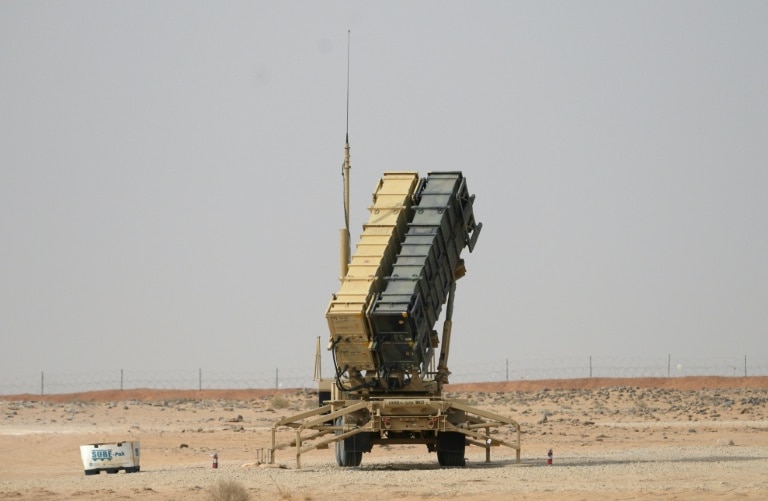
Al-Kharj’s proximity to the sprawling Prince Sultan Air Base, a critical military installation that once hosted U.S. command operations during the 1991 Gulf War and the 2003 invasion of Iraq, has put the town directly in the line of fire. Following the joint U.S.-Israeli strike on Iran that launched on February 28, Tehran has launched repeated waves of attacks targeting Gulf states it accuses of enabling American military operations. Iran’s Revolutionary Guards has openly claimed that Saudi Arabia hosts advanced U.S. fighter jets including F-35s and F-16s at Prince Sultan, alongside refueling and storage infrastructure, making the base a priority target.
Last month, multiple U.S. media outlets confirmed that at least a dozen American service members were wounded in an Iranian attack on the base. While Iranian officials have publicly claimed they destroyed a high-value advanced surveillance aircraft worth hundreds of millions of dollars, additional reports confirm several U.S. aerial refueling tankers also sustained damage in the strike.
For Al-Kharj’s 350,000 residents, the conflict has already spilled into civilian life. The town recorded Saudi Arabia’s first civilian casualties from the current wave of tensions on March 8, when two migrant workers were killed after a projectile crashed into a residential neighborhood. Just last week, two local residents were injured when debris from an intercepted drone fell onto three private homes, and a separate incident damaged six additional properties, according to official Saudi statements.
Despite the repeated strikes and growing risk, however, most Al-Kharj residents have maintained remarkable stoicism, adapting their daily routines rather than succumbing to panic. “We hear the loud booms of missile interceptions, but we rarely spot anything in the sky,” 66-year-old local Abdullah told AFP, requesting only his first name be published due to strict Saudi security sensitivity. Speaking after afternoon prayers at his neighborhood mosque, Abdullah noted: “This is all very new for Al-Kharj, but life goes on as normal — there’s no panic, no change to how we live.”
Government worker Turki, who also only shared his first name, explained that while the town’s newfound place in global headlines has led friends and family across the country to check in constantly, daily public life continues uninterrupted. During a recent lunch rush at a local popular restaurant, AFP observed diners scrolling through war updates on their phones between bites of traditional rice and meat dishes, a small routine adaptation that underscores how residents have integrated the new risk into everyday life.
Even younger residents, who openly acknowledge their fear, refuse to alter their daily schedules. Twenty-one-year-old student Batool, sipping coffee at a downtown cafe, admitted: “I would be lying if I said I’m not afraid when I hear the explosions, or when I heard about the foreign workers who died. But I’m not letting fear change how I live. As you can see, I’m still studying outside, my routine hasn’t shifted at all because of the war.”
While AFP observed no heavy deployment of additional security forces around the town despite the regular strikes, residents confirm the threat is always lingering. Mobile phones regularly receive alert warnings of incoming attacks, and concerns about the next barrage never fully fade.
The presence of U.S. forces at Prince Sultan Air Base carries long-standing geopolitical weight. American troops first withdrew from the base in the early 2000s, after decades of controversy: conservative factions of Saudi society have long viewed foreign military presence on the soil of Islam’s two holiest sites as a religious insult, a grievance infamously cited by Osama bin Laden as a core justification for the September 11 attacks. U.S. forces only returned to the base in 2019 under a new bilateral agreement between Washington and Riyadh, with initial reports indicating hundreds of personnel would be stationed there.