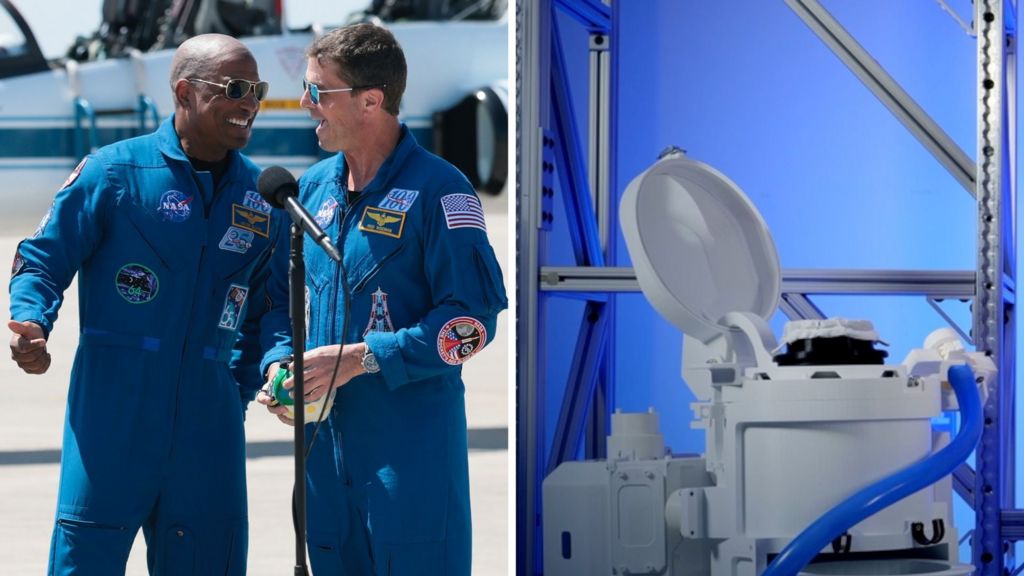
When we talk about preparing for deep space missions, much of the public focus tends to land on rocket propulsion, landing technology, and lunar surface exploration. But behind every successful space mission lies a set of mundane yet mission-critical engineering problems, and one of the most essential of these is how astronauts handle basic biological needs in the microgravity environment. For NASA’s upcoming Artemis program, which aims to return humans to the lunar surface after more than half a century, engineers have dedicated significant work to solving one very practical question: how Artemis astronauts will use the toilet during their time in space.
The Artemis missions are designed to stretch over 10 days of activity, covering everything from launch and lunar orbit to surface operations for crewed missions. This extended duration demands a far more reliable and comfortable waste handling system than the makeshift solutions used in some early space programs, and even upgraded designs used on the International Space Station (ISS). To meet this need, NASA scientists and engineers have developed an entirely new piece of hardware: the universal waste management system, purpose-built for the unique demands of the Artemis program.
Unlike traditional terrestrial toilets, a space commode must operate effectively in a microgravity environment where liquid and solid waste do not flow downward. Early space toilet designs relied on simple suction systems that often had issues with leakage, odor, and usability, particularly for long-duration stays. The new universal system is engineered to address these pain points, with improved suction technology, better containment, and a design that accommodates a wider range of body types, supporting the Artemis program’s goal of sending the first woman and first person of color to the lunar surface.
This new space loo is more than just a convenience for the crew; it is a critical piece of life support infrastructure. Any failure in waste management can not only create unpleasant and unsanitary conditions for astronauts living and working in close quarters, but it can also pose a risk to sensitive equipment on board the Orion capsule that will carry Artemis astronauts to the Moon. By developing a purpose-built system for the 10-day mission profile, NASA is ensuring that even the most basic human needs are met without compromise, allowing the crew to focus on their core scientific and exploration objectives.
The innovation behind this new waste system also reflects a broader trend in human spaceflight: as NASA prepares for longer missions to the Moon and eventually crewed missions to Mars, every component of the spacecraft, no matter how small or mundane, is being reimagined and upgraded to meet the challenges of deep space exploration. What may seem like a trivial question – how do astronauts go to the toilet – actually represents a key engineering challenge that must be solved to make extended human space exploration a reality.