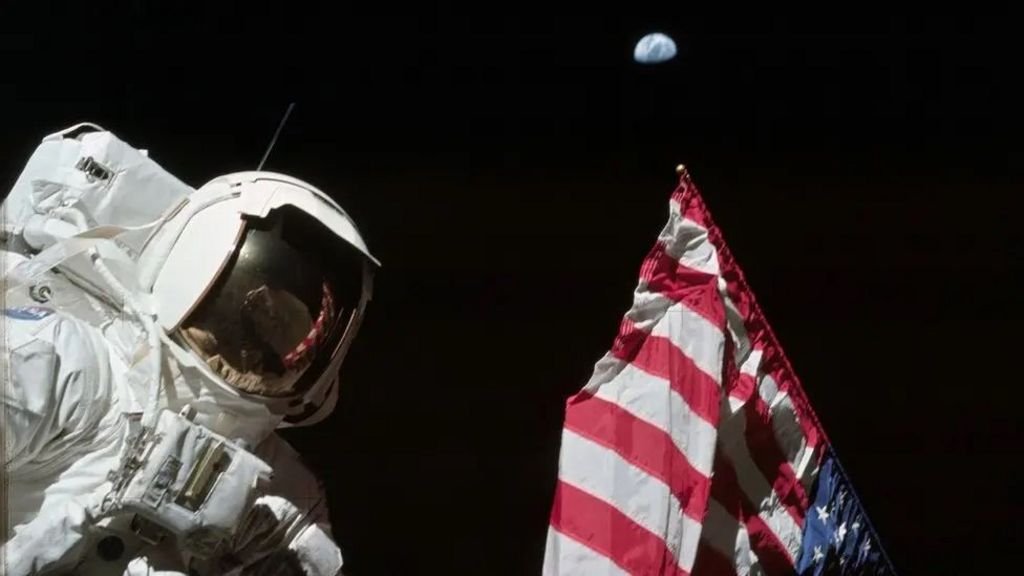
The recent passing of Apollo 13 commander Jim Lovell marks a significant moment in space exploration history, leaving only five surviving astronauts who have ventured beyond Earth’s orbit to the Moon. These pioneers, part of NASA’s Apollo missions in the 1960s and 1970s, represent a dwindling generation of space explorers as humanity stands on the brink of a new lunar era.
With more than five decades elapsed since the last human footprint was left on the lunar surface, the international competition to return to the Moon has intensified dramatically. NASA’s Artemis program, initially scheduled for a 2025 crewed launch, has encountered delays pushing the mission to 2026. Simultaneously, China has emerged as a formidable contender in the new space race, targeting a 2030 lunar landing following their successful far-side Moon probe landing in June 2024.
The commercial space sector presents a mixed landscape of ambition and challenge. Private enterprises have attempted lunar scientific missions with varying outcomes, where technical difficulties have frequently overshadowed successes. Boeing’s Starliner complications, which recently stranded astronauts aboard the International Space Station, and SpaceX’s recurrent Starship prototype failures demonstrate the persistent complexities of space travel.
The five remaining Apollo veterans each carry unique historical significance:
Edwin ‘Buzz’ Aldrin, the second man to walk on the Moon during Apollo 11, has evolved into an enduring advocate for Mars exploration. Now 93, Aldrin continues to champion ambitious space goals, stating, ‘I don’t think we should just go there and come back – we did that with Apollo.’
Charlie Duke, who became the youngest lunar walker at 36 during Apollo 16, served as capsule communicator during Armstrong’s historic landing. Now residing in Texas, Duke acknowledges the challenges awaiting Artemis astronauts: ‘They’ve picked near the South Pole for the landing… it’s really rough down there. But we’ll pull it off.’
Fred Haise, part of the nearly catastrophic Apollo 13 mission, never achieved his lunar landing due to subsequent mission cancellations. Following NASA service, he transitioned to the aerospace industry, embodying the generation that bridged early space exploration with modern advancements.
Harrison Schmitt, the first scientist-astronaut on Apollo 17, represented a new breed of space explorer. The geologist turned senator continues to contribute to academic and consulting work while maintaining his unique perspective on space science.
David Scott, Apollo 15 commander, pioneered lunar driving with the Lunar Roving Vehicle. His post-NASA career has included film consulting, helping preserve the historical accuracy of space exploration narratives for new generations.
As these lunar pioneers age, their legacy fuels inspiration for the next generation of space explorers preparing to write new chapters in humanity’s cosmic journey.