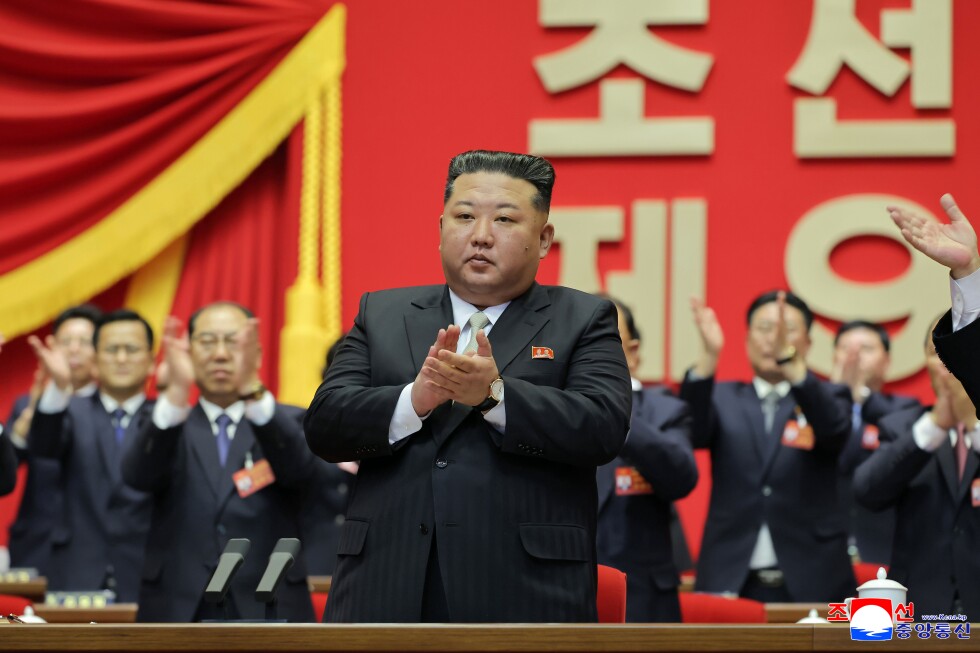
North Korean leader Kim Jong Un has unequivocally reinforced his nation’s position as an irreversible nuclear power while escalating rhetoric against South Korea, which he designated as Pyongyang’s “most hostile” state. During his address to the Supreme People’s Assembly on Monday, the authoritarian leader delivered a stark warning to adversaries while maintaining strategic ambiguity regarding future diplomatic engagements.
Kim’s parliamentary speech, reported by state media Tuesday, demonstrated remarkable consistency with his previous declarations at last month’s Workers’ Party Congress. He intensified his criticism of the United States, accusing Washington of “state terrorism and aggression” in apparent reference to Middle Eastern conflicts. Despite these provocations, the North Korean leader carefully avoided direct confrontation with former President Donald Trump, stating that Pyongyang remains prepared to respond to either “confrontation or peaceful coexistence.”
The parliamentary session concluded with the adoption of constitutional revisions, though specific amendments remain undisclosed. This development follows Kim’s groundbreaking January 2024 announcement abandoning decades-long pursuit of peaceful reunification with South Korea. Geopolitical analysts interpret these moves as strategic recalculations positioning Seoul not as an intermediary but as an obstacle to Pyongyang’s regional ambitions.
Kim’s address highlighted significant pride in North Korea’s accelerated nuclear weapons program, characterizing these developments as essential countermeasures against “gangsterlike imperialists”—a thinly veiled reference to the United States and allied nations. “The dignity of the nation can only be guaranteed by the strongest of power,” Kim declared, vowing to “aggressively wage a struggle against hostile forces.”
Recent geopolitical shifts have influenced Pyongyang’s strategic calculus. Kim’s growing alignment with Russia, demonstrated through substantial military support for Moscow’s Ukraine campaign, suggests potential exchanges of aid and technological transfers. Meanwhile, escalating Middle Eastern tensions, particularly joint U.S.-Israeli operations against Iran, may have raised Kim’s threshold for reengaging with Washington. Despite these complexities, analysts suggest North Korea maintains strategic flexibility, potentially preserving opportunities for future dialogue aimed at securing sanctions relief and tacit nuclear recognition.