In the heart of Nigeria’s Plateau State, a complex humanitarian crisis unfolds against a backdrop of historical tensions and competing narratives. The April 2025 nighttime assault on Zike village, where 52 members of the Christian Irigwe community perished, represents just one episode in a decades-long cycle of violence that has claimed thousands of lives.
Eyewitness Joseph Ize Zino recounts the terror of that night: ‘Around midnight, I heard the first gunshots. All of us in the house, we ran. That was how we survived.’ As he hid in surrounding fields, he heard attackers chanting ‘Allahu Akbar’ while proclaiming ‘We will finish them today.’
The conflict defies simple characterization. While Christian communities describe targeted persecution, Muslim Fulani herders tell mirror stories of victimization. Ardo Wada Waziri, a 70-year-old Fulani elder, remembers the 2001 violence that shattered generations of coexistence: ‘The Irigwe youth just went into our settlements and set them on fire. Fifty-two of our people were killed.’ His own son fell victim to an ambush mere months ago.
Beneath surface-level religious tensions lies a multifaceted struggle over land rights, political representation, and economic survival. The state’s classification system creates entrenched divisions—’indigenes’ (predominantly Christian farmers) receive preferential access to resources, while ‘settlers’ (including Muslim Fulani with generations of residence) face systemic marginalization.
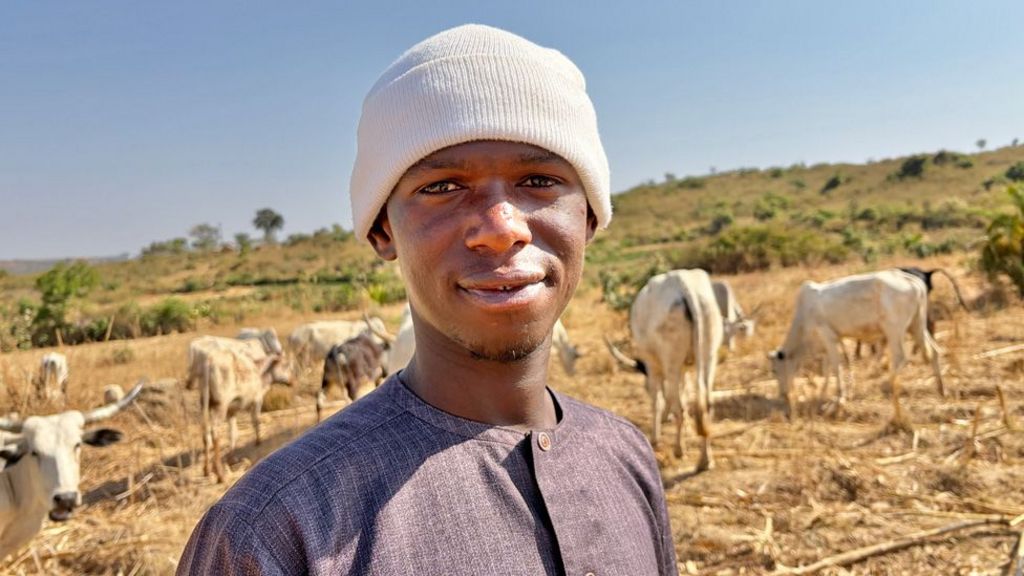
The competition for diminishing resources intensifies as Nigeria’s population grows. Traditional symbiotic relationships between farmers and herders have deteriorated into violent confrontations. Aliyu Abdullahi Isa, a 25-year-old Fulani herder, explains the economic stakes: ‘A cow is worth around 1 million naira ($700)—that represents a family’s wealth built over generations.’ His family lost everything when attackers killed 37 cattle and stole 48 others, murdering his 14-year-old brother in the process.
Despite the violence, islands of coexistence persist. In Mista Ali, Chief Dr Danladi Akinga Kasuwa demonstrates how determined leadership can prevent conflict escalation. ‘Muslim, Christian, no problem. The Fulani are our brothers, the indigenes are our brothers, all,’ declares the Christian traditional ruler who immediately convened community leaders during the 2001 violence to prevent local spillover.
International involvement adds another dimension to the conflict. Recent US military intervention—including missile strikes against suspected Islamist hideouts and deployment of 200 training personnel—has focused primarily on combating extremist groups rather than addressing underlying communal tensions.
Grassroots initiatives offer glimmers of hope. British-funded agricultural projects bring together farmers and herders from opposing communities. As Berom farmer Amos explains while working alongside Fulani friend Abdullahi: ‘We are all together, Berom and Fulani. That’s unity. We want to live together in peace like it was before.’
The path to lasting peace remains fraught with challenges. Jacob Choji Pwakim, founder of Youth Initiative Against Violence and Human Rights Abuse, identifies how criminal elements profit from instability: ‘Some people do not want peace restored because they benefit from it—cattle rustling, robbery, kidnapping.’
Ultimately, the solution may lie in local relationships rather than national policies. As Abdullahi observes while working alongside former adversaries: ‘We have started to see change.’ Amos adds: ‘Peace is a gradual thing that you build and build. We will continue until we get a perfect peace.’