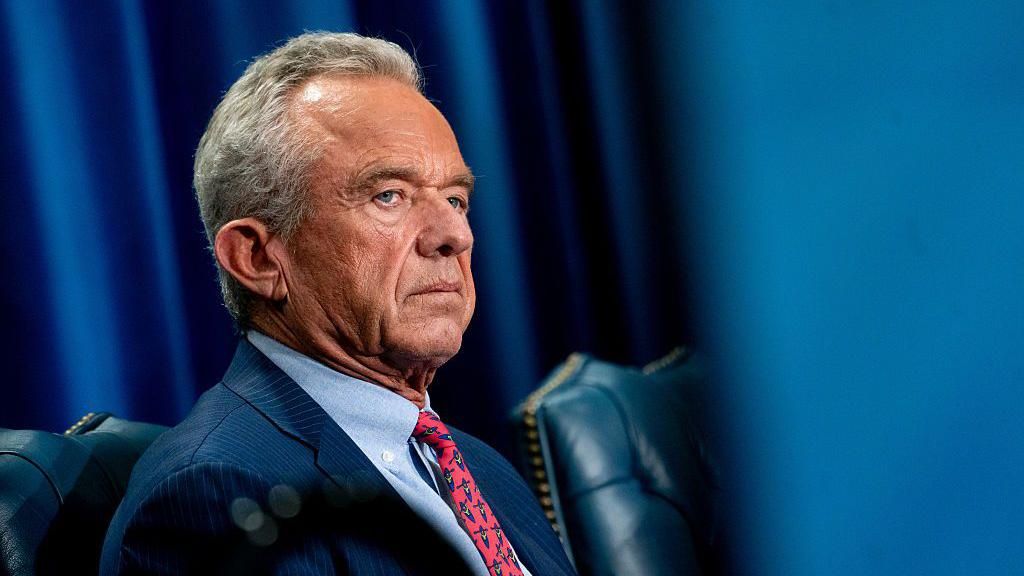
A federal court has delivered a significant setback to Health Secretary Robert F. Kennedy Jr.’s controversial vaccine policy agenda, siding with major medical organizations that challenged the legality of his sweeping changes to childhood immunization guidelines.
U.S. District Judge Brian Murphy issued a ruling on Monday that temporarily blocks implementation of Kennedy’s proposed alterations to the nation’s vaccine recommendations. The decision comes after the American Academy of Pediatrics joined forces with other prominent medical groups in filing a lawsuit alleging Kennedy’s policies violated established federal law.
Since assuming his cabinet position one year ago, Kennedy had pursued a dramatic restructuring of vaccine regulations, including reducing the recommended childhood immunization schedule from 17 to 11 vaccines. The Health Secretary had also completely reconstituted the membership of the influential Advisory Committee for Immunization Practices (ACIP), dismissing all previous members and appointing replacements who predominantly held vaccine-skeptical views.
Judge Murphy’s comprehensive 45-page opinion criticized the administration for abandoning scientific methodology and procedural requirements codified in law. The court found that the government had “disregarded those methods and thereby undermined the integrity of its actions.”
The ruling has immediate practical consequences, forcing postponement of ACIP’s scheduled Wednesday meeting and suspending Kennedy’s appointments to the advisory panel. The legal challenge also addressed other controversial changes implemented by Kennedy, including modifications to hepatitis B vaccination protocols for newborns.
The Department of Health and Human Services, through spokesman Andrew Nixon, indicated the Trump administration would appeal the decision, characterizing it as another judicial attempt to impede executive governance.
Medical associations celebrated the judicial intervention, with the American Medical Association describing it as “an important step toward protecting the health of Americans, particularly children.” The policy changes had created widespread confusion among healthcare providers and parents, prompting some states to coordinate efforts encouraging adherence to pre-Kennedy immunization standards.