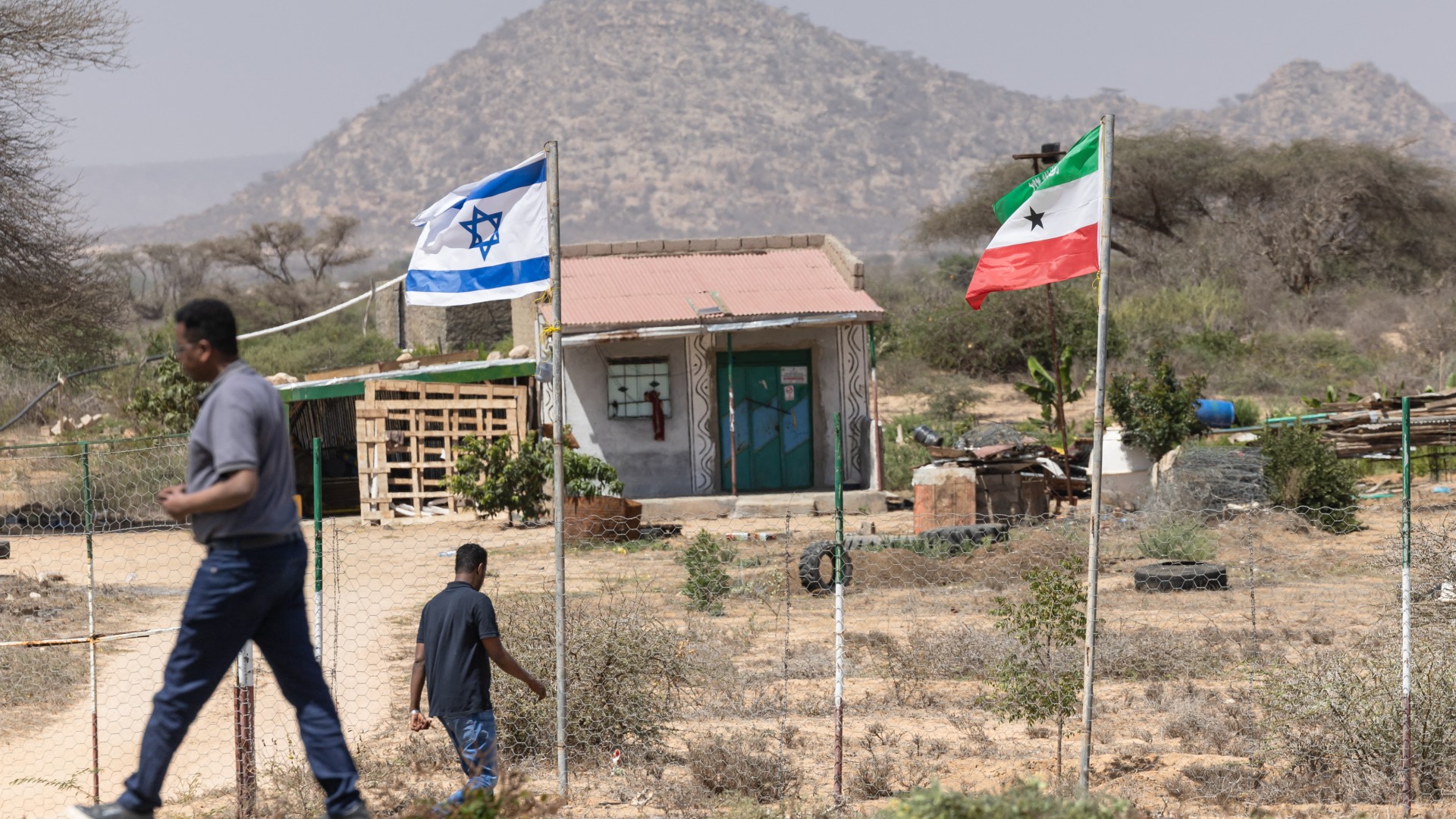
Israel is actively considering the establishment of a strategic military installation in Somaliland to enhance its operational capabilities against Yemen’s Houthi forces, according to a Bloomberg investigation. This development follows Israel’s groundbreaking diplomatic recognition of Somaliland as a sovereign state in December—making it the first nation to extend such acknowledgment.
Anonymous Somaliland officials revealed that the proposed facility would serve dual purposes: intelligence gathering and direct military operations targeting Houthi positions. The strategic location, approximately 260 kilometers from Yemen across the Gulf of Aden, offers geographical advantages for regional security operations.
Preparatory activities have already commenced, with Israeli security delegations conducting coastal surveys along Somaliland’s shoreline in June to identify suitable locations. Concurrently, Israel has secured blast-resistant facilities in Hargeisa’s hotels while scouting for permanent diplomatic premises.
Somaliland’s Minister of the Presidency, Khadar Hussein Abdi, confirmed the evolving security partnership, stating: “We will have a strategic relationship that encompasses many dimensions. While military base discussions remain preliminary, comprehensive analysis will undoubtedly occur.”
The timing of this initiative coincides with heightened regional tensions. The Houthi movement, aligned with Iran, has previously launched missile and drone attacks against international shipping routes and Israeli territory in solidarity with Palestinians during the Gaza conflict. Israeli military officials have established specialized intelligence units dedicated to monitoring the Houthis, whom they consider among Israel’s most significant security threats.
This strategic partnership also intersects with complex regional dynamics. The United Arab Emirates maintains substantial infrastructure in Somaliland, including a military airstrip and port operations managed by DP World. Somalia’s federal government has previously severed ties with the UAE over these developments, while both Somaliland and Puntland administrations rejected Mogadishu’s objections.
The geopolitical implications extend beyond immediate security concerns, potentially reshaping diplomatic recognition patterns and regional alliance structures in the Horn of Africa and Arabian Peninsula.