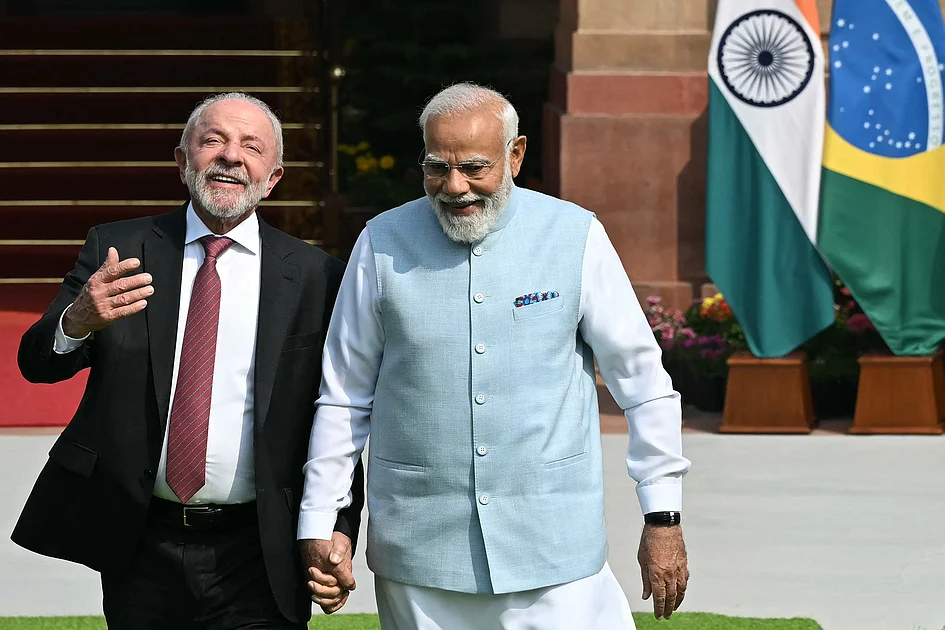
In a significant move to reshape global supply chains, India and Brazil have formalized a comprehensive partnership on critical minerals and rare earths during President Luiz Inacio Lula da Silva’s state visit to New Delhi. The agreement, announced following high-level talks between Prime Minister Narendra Modi and President Lula, represents a strategic alignment between two major Global South economies seeking to reduce dependence on China’s near-monopoly in these essential resources.
The partnership encompasses multiple dimensions including mineral exploration, processing technologies, and sustainable extraction methods. Brazil, possessing the world’s second-largest reserves of critical minerals, offers substantial resource access, while India brings growing technological capabilities and manufacturing demand. The collaboration extends beyond minerals to include nine additional agreements covering digital cooperation, health initiatives, and entrepreneurial development.
Prime Minister Modi emphasized the agreement as “a major step toward building resilient supply chains” that reflects deepening trust between the nations. President Lula characterized the partnership as “pioneering” with renewable energy and critical minerals at its core. The deal complements India’s recent supply chain engagements with the United States, France, and the European Union, creating a diversified network of resource access.
Bilateral trade between the countries reached $15 billion in 2025, with Brazil serving as India’s largest trading partner in Latin America. Both leaders committed to expanding this exchange beyond $20 billion within five years, leveraging complementarities in agricultural products, industrial raw materials, and advanced manufacturing. The defense sector was also highlighted as an area of growing cooperation, described by Modi as a “win-win partnership.”
The timing of the agreement reflects broader geopolitical realignments, with both nations seeking to strengthen South-South cooperation while maintaining strategic autonomy. As Modi noted, “When India and Brazil work together, the voice of Global South becomes stronger and more confident.” The partnership signals a new phase in South-South cooperation that could potentially reshape global trade patterns in critical resources.