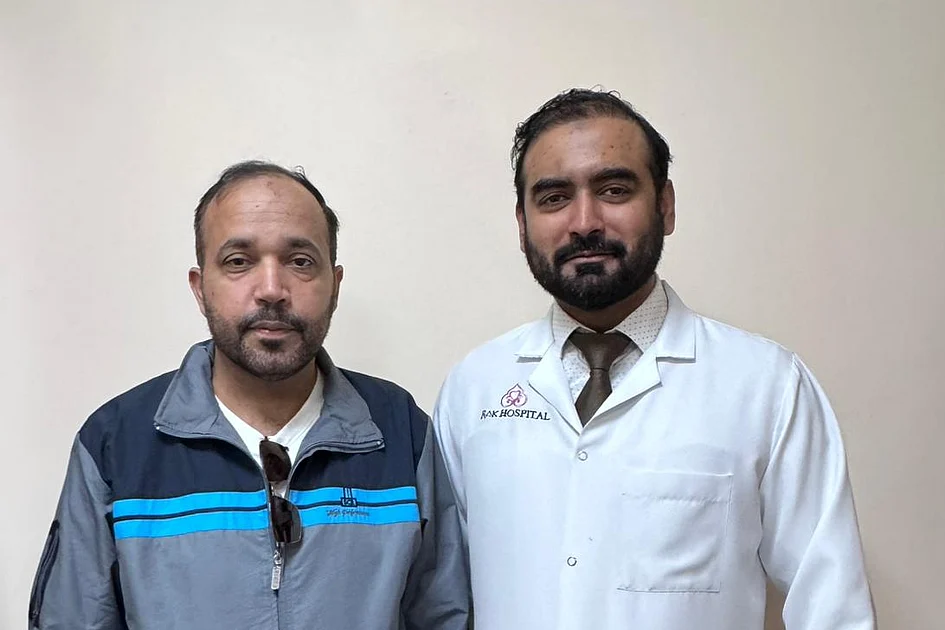
In a remarkable medical case from Ras Al Khaimah, a 49-year-old Syrian imam narrowly avoided permanent paralysis following a serious fall, demonstrating the critical importance of immediate spinal injury response. Abdul Alchahazie, a long-term UAE resident, suffered a three-meter fall that resulted in severe compression of his vertebral column, with bone fragments directly pressing against his spinal cord.
RAK Hospital’s medical team sprang into action following the incident, with diagnostic scans revealing an unstable fracture that placed the patient at imminent risk of irreversible neurological damage. Dr. Adnan Shariq, Consultant Neurosurgeon at the facility, emphasized the crucial medical principle guiding such cases: ‘Time is spine.’ He explained that when the spinal cord experiences compression, delayed intervention can result in permanent loss of motor function and sensation.
The medical team performed urgent minimally invasive surgery to decompress the spinal cord and stabilize the fracture using advanced orthopedic hardware. This prompt intervention proved decisive in Alchahazie’s recovery trajectory. Remarkably, within one week of the procedure, the patient was discharged walking independently without neurological deficits, having undergone intensive physiotherapy.
This case occurs against the backdrop of global spinal injury statistics from the World Health Organization, which indicates over 15 million people worldwide live with spinal cord injuries, predominantly resulting from preventable trauma. Falls and road accidents constitute the primary causes, followed by violence, occupational hazards, and sports-related incidents.
Medical professionals stress that the initial 24 hours following potential spinal trauma represent the most critical window for intervention. Symptoms including severe back pain accompanied by numbness, weakness, or mobility difficulties should be treated as medical emergencies. Experts strongly advise against attempting movement after such incidents, recommending instead that patients remain stationary while awaiting trained emergency personnel who can properly stabilize and transport them.
The successful outcome in this case underscores how coordinated emergency response, rapid diagnosis, and timely surgical intervention can fundamentally alter patient prognosis, potentially determining the difference between complete recovery and lifelong disability.