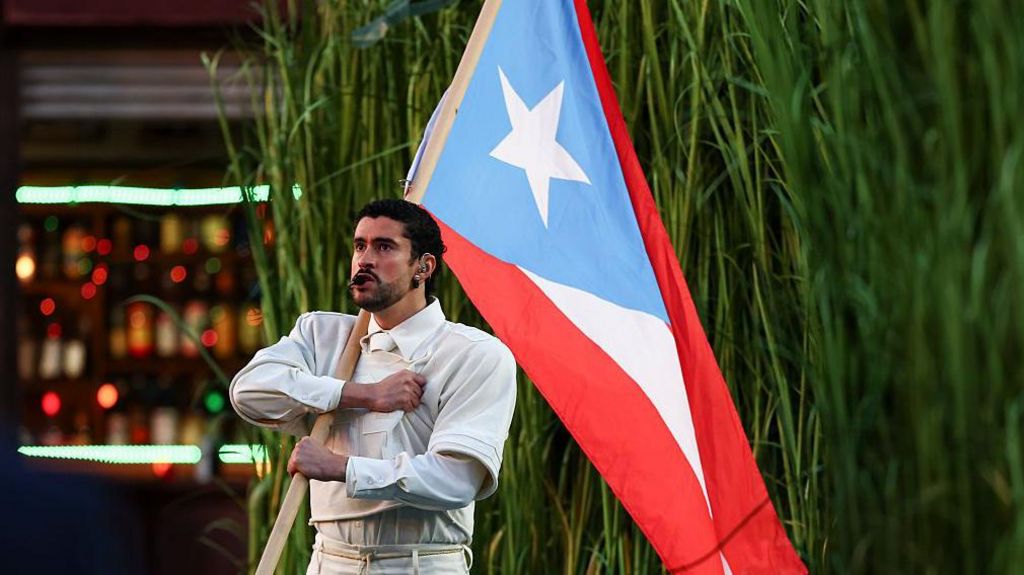
In a groundbreaking moment for Latin music and cultural representation, Puerto Rican superstar Bad Bunny made history on Sunday by delivering the first entirely Spanish-language halftime show in Super Bowl history. Performing before an estimated global audience of 125 million at Santa Clara’s Levi’s Stadium, the artist born Benito Martínez Ocasio transformed the world’s most prestigious entertainment platform into a celebration of Puerto Rican identity.
The 14-minute spectacle featured a meticulously crafted set evoking iconic Puerto Rican imagery—from sugarcane fields that once powered the island’s economy to traditional rural homes and the colonial fort of El Morro in Old San Juan. Bad Bunny moved through this symbolic landscape while performing hits including ‘Tití Me Preguntó’ and ‘El Apagón,’ the latter serving as both performance and protest as he critiqued the island’s fragile electrical grid.
The performance incorporated multiple Puerto Rican musical traditions—reggaeton, salsa, bomba, and plena—creating what scholars have described as an ‘intergenerational conversation’ through sound. Special guests included Lady Gaga and Ricky Martin, while cameos from Pedro Pascal, Cardi B, and Jessica Alba added Hollywood glamour to the celebration.
Beyond the spectacle, the show represented a profound cultural statement. Bad Bunny, who maintains what academics describe as an ‘intimate connection with the island,’ used the global platform to showcase Puerto Rican symbols including the traditional ‘pava’ farmer’s hat and the endangered Puerto Rican crested toad. His lyrics, which frequently address the island’s political and social struggles, reached unprecedented audiences.
This historic performance comes just weeks after Bad Bunny made Grammy history with his entirely Spanish album ‘Debí Tirar Más Fotos’ winning Album of the Year. His success marks the culmination of reggaeton’s journey from persecuted genre—once associated primarily with Afro-Caribbean communities and underground clubs—to global mainstream acceptance.
Perhaps most significantly, Bad Bunny has achieved international stardom while steadfastly preserving Puerto Rican Spanish, challenging historical pressures for Latin artists to anglicize their music. His unapologetic use of local vocabulary and Puerto Rican dialect has created what collaborators describe as a ‘cultural movement’ that allows audiences worldwide to engage with authentic Puerto Rican expression.
Despite criticism from some quarters—including former President Donald Trump who commented on his Truth Social platform that ‘nobody understands a word this guy is saying’—the performance demonstrated how cultural specificity can achieve universal resonance. For Puerto Ricans, who maintain limited political representation within the United States, Bad Bunny’s success represents a powerful form of cultural sovereignty and global recognition.