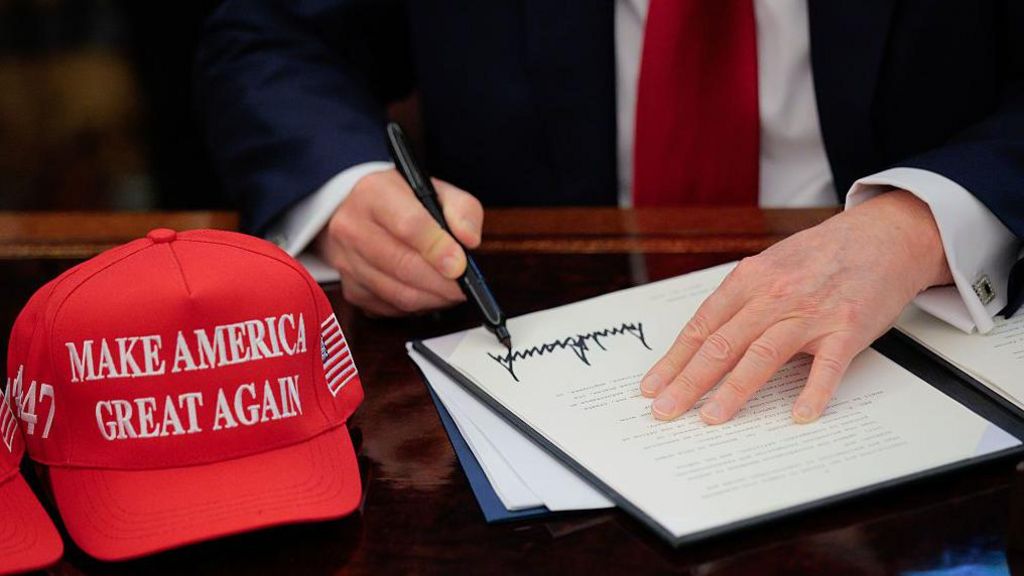
In a bold move to reshape global trade dynamics, former US President Donald Trump has implemented a series of tariffs on imported goods from various countries. Trump asserts that these measures will invigorate American manufacturing, create jobs, and reduce the US trade deficit. However, critics argue that the tariffs could lead to higher consumer prices and disrupt the global economy. Tariffs, essentially taxes on imports, are calculated as a percentage of a product’s value. For instance, a 10% tariff on a $10 item adds $1 to its cost, raising the total to $11. These taxes are paid by importers, who may pass the additional costs onto consumers or reduce their import volumes. Trump’s strategy aims to encourage the purchase of American-made goods and increase government revenue. He has also used tariffs as leverage in negotiations, demanding that countries like China, Mexico, and Canada take stronger actions to curb illegal drug trafficking and migration. Despite facing legal challenges and amendments, Trump’s tariffs have significantly impacted global trade. For example, China and the US have threatened each other with tariffs exceeding 100%, though a temporary truce was extended until November. Canada faces a 35% tariff on most goods, while Mexico deals with a 30% tariff, both under the USMCA agreement. Other countries, including India, Brazil, and South Africa, have also been subjected to varying tariff rates. The UK has negotiated the lowest tariff rate of 10%, primarily affecting its automotive and pharmaceutical exports. Trump’s tariffs have also targeted specific products, such as branded drugs, steel, and furniture, with rates ranging from 25% to 100%. The elimination of the $800 exemption for low-cost imports has further complicated the trade landscape, affecting millions of packages shipped daily. Despite initial economic volatility, the US economy has shown resilience, with consumer spending increasing by 2.5% in the year to June 2025. However, the International Monetary Fund (IMF) warns that US tariffs continue to have a negative impact on global economic stability. As negotiations persist, the long-term effects of Trump’s tariff strategy remain uncertain.