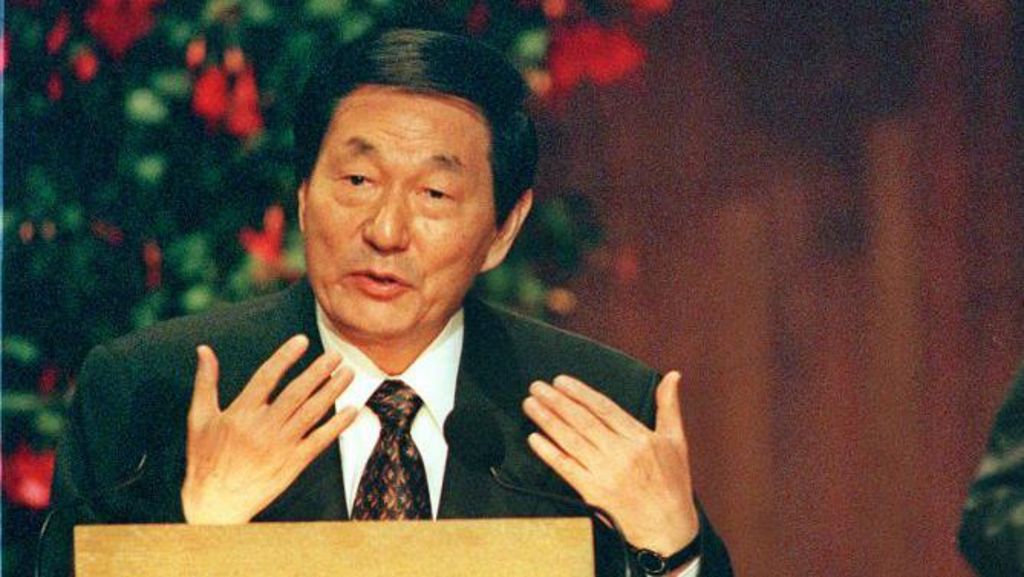
Zhu Rongji, the transformative former premier of China whose bold economic reforms reshaped the nation’s trajectory and cemented its place as a global manufacturing powerhouse, has passed away at the age of 97. Holding China’s second-highest government office from 1998 to 2003, Zhu leaves behind a legacy of sweeping change that laid the groundwork for decades of explosive economic expansion.\n\nBorn in 1928 in central China’s Hunan Province, Zhu earned an electrical engineering degree before entering civil service and joining the Communist Party of China in 1949. His early political career was marked by extraordinary hardship: he was twice purged from the party, first in the 1950s after labeling Mao Zedong’s economic policies “irrational” and being branded a rightist, and again during the 1966–1976 Cultural Revolution. Following Mao’s death, Zhu was rehabilitated and steadily rose through the ranks, becoming vice-premier overseeing economic policy in 1991 before taking the post of premier seven years later.\n\nAs premier, Zhu spearheaded the sweeping structural reforms that remade China’s economy. He led grueling, years-long negotiations that ultimately secured China’s accession to the World Trade Organization in 2001, opening Chinese manufacturing to the global market, unlocking massive inflows of foreign direct investment, and integrating China into the rules-based global trading system. Domestically, he overhauled China’s fiscal system by shifting local taxation authority to the central government, restructured or privatized thousands of underperforming, debt-ridden state-owned enterprises, and rolled out policies that expanded home ownership across the country. His tenure also brought a blunt, unflinching approach to systemic problems: in a 1998 address, he openly acknowledged that China faced “many potential crises that could erupt at any time,” calling out public discontent over official corruption, the widening gap between rich and poor, and the authoritarian behavior of some local officials. Famously, he labeled unethical rogue bankers “half-wits” and famously described shoddily built Yangtze River flood dikes as “flimsy and porous as tofu dregs,” a stark rebuke of corner-cutting infrastructure construction.\n\nUnder Zhu’s leadership, China’s economy achieved sustained double-digit growth, pulled hundreds of millions of people out of poverty, and transitioned from a largely closed, centrally planned system to a global manufacturing hub. Widely remembered by the Chinese public as a tough, pragmatic leader unafraid to speak plainly about systemic problems, Zhu was also a staunch and vocal opponent of official corruption, prioritizing anti-graft efforts during his time in office.\n\nHis reforms were not without controversy, however. The restructuring of state-owned enterprises led to roughly 30 million layoffs over five years, and the rapid economic expansion he spurred exacerbated income inequality, issues that remain persistent challenges for China today.\n\nOfficial Chinese state media has honored Zhu’s legacy in his obituary, describing his life as one of “revolution, struggle and brilliance,” and praising him as “an outstanding member of the Communist Party of China and a loyal Communist fighter, an outstanding leader of the Party and state.”’